01. The Problem: Balancing Cost and Control in Enterprise Computer Vision
Enterprise computer vision applications face a fundamental tension: balancing the need for cost efficiency with the requirement for fine-grained control over model performance. This dilemma manifests in two primary approaches—fine-tuning open-source models versus relying on managed API endpoints—and each has distinct trade-offs that must be carefully evaluated.
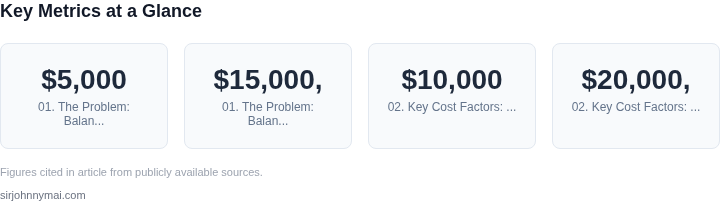
Fine-tuning open-source models like YOLO or Detectron2 offers direct control over model behavior and data privacy. Organizations can train models on proprietary datasets, ensuring compliance with regulatory requirements and achieving domain-specific accuracy. For example, a manufacturing firm can fine-tune a model to detect defects in its unique product lines, a task that may not be covered by pre-trained models. However, this approach demands significant investment in infrastructure, expertise, and ongoing maintenance. A single GPU server can cost $5,000–$15,000, and training a model for 24 hours on a high-end system may exceed $100. Scaling this across multiple models or datasets compounds costs, making it impractical for organizations with limited resources.
Managed API endpoints, such as those provided by AWS Rekognition or Google Vision AI, eliminate the need for in-house infrastructure. These services offer pre-trained models that can be deployed with minimal setup, reducing time-to-market and operational overhead. For instance, AWS Rekognition charges $1 per 1,000 images processed, making it cost-effective for high-volume applications. However, these services often lack the flexibility to handle niche use cases or proprietary data. Additionally, vendor lock-in risks arise if an organization relies too heavily on a single provider, and performance may degrade when models are not optimized for specific enterprise requirements.
The choice between these approaches is further complicated by the evolving landscape of open-source tools. Platforms like Hugging Face provide pre-trained models that can be fine-tuned with lower barriers to entry than traditional deep learning frameworks. However, even these tools require expertise in model optimization and deployment, which may not be available in-house. Meanwhile, managed services like Azure Custom Vision allow for incremental fine-tuning of pre-trained models, offering a middle ground between full control and ease of use. These services typically charge $1–$5 per hour for training, with additional costs for inference.
Ultimately, the decision hinges on an organization's specific needs. Fine-tuning open-source models is ideal for applications requiring high customization and data sovereignty, but it demands substantial resources. Managed endpoints are more scalable and cost-effective for standard use cases but may not meet specialized requirements. The optimal strategy often involves a hybrid approach, leveraging managed services for common tasks and fine-tuning open-source models for unique challenges. This balanced strategy minimizes costs while maximizing control, ensuring enterprise computer vision applications meet both performance and budgetary goals.
02. Key Cost Factors: Infrastructure, Labor, and Hidden Expenses
Enterprise computer vision applications face significant cost pressures across infrastructure, labor, and hidden expenses. Fine-tuning open-source models requires substantial upfront investment in hardware, software, and personnel, while managed API endpoints simplify deployment but introduce new cost structures. Understanding these factors is critical for budgeting and long-term scalability.
Infrastructure Costs
Fine-tuning open-source models demands high-performance GPUs and distributed training frameworks. A single NVIDIA A100 GPU can cost $10,000–$20,000, and a cluster of 16 GPUs for production-grade training may exceed $200,000. The cost escalates further with cloud infrastructure: AWS p3.2xlarge instances, for example, charge $3.06 per hour, or ~$2,200 per month for 16 instances. Open-source tools like PyTorch and TensorFlow add no direct cost but require expertise to optimize for performance. In contrast, managed API endpoints like AWS Rekognition or Azure Computer Vision abstract infrastructure costs, but pricing is usage-based: $1.50 per 1,000 images for AWS Rekognition, or $1.00 per 1,000 images for Azure. The tradeoff is predictability versus flexibility: APIs scale seamlessly but lock users into vendor pricing.
Labor Costs
Fine-tuning open-source models demands specialized skills. A senior ML engineer with 5+ years of experience earns $150,000–$200,000 annually, while junior engineers cost $100,000–$120,000. The time-to-market for a custom model can exceed 6 months, including data collection, annotation, and validation. Managed APIs reduce labor costs by eliminating the need for in-house expertise, but they require domain knowledge to integrate and optimize. For example, a team using AWS Rekognition may still need a data engineer to preprocess images and a developer to handle API responses. The hidden cost here is the time spent troubleshooting vendor limitations, such as unsupported image formats or latency issues.
Hidden Expenses
Both approaches incur hidden costs. Fine-tuning open-source models requires monitoring tools like Datadog or Prometheus to track GPU utilization and training progress, adding $5,000–$10,000 annually. Managed APIs introduce data egress fees: AWS charges $0.09 per GB for data transferred out of Rekognition, while Azure has no egress fees but may charge for custom model deployments. Additionally, both methods require compliance monitoring: GDPR or HIPAA audits can cost $50,000–$100,000 for enterprises handling sensitive data. The total cost of ownership (TCO) for open-source models often exceeds $500,000 over 3 years, while APIs can range from $200,000–$400,000 depending on usage.
In summary, fine-tuning open-source models offers control but high infrastructure and labor costs, while managed APIs simplify deployment but introduce usage-based pricing and integration challenges. Enterprises must weigh these factors against their scalability needs and compliance requirements.
03. Worked Example: Cost Comparison for a 10,000-Image Dataset
To quantify the cost differences, let's compare two approaches for processing 10,000 images: fine-tuning an open-source model on AWS infrastructure versus using a managed API endpoint like Amazon Rekognition. The example assumes a team of 5 engineers working on a computer vision project with a 12-month timeline.
Option 1: Fine-Tuning Open-Source Models on AWS
Fine-tuning open-source models like YOLOv5 or Detectron2 requires significant infrastructure investment. The cost breakdown includes:
- GPU Instances: AWS p3.2xlarge instances cost $3.06/hour. Running 24/7 for 30 days at 80% utilization: $3.06 × 24 × 30 × 0.8 = $2,174.40.
- Storage: Storing 10,000 images (10GB total) on S3 costs $0.023/GB/month: $0.023 × 10 × 12 = $2.76.
- Engineering Labor: 5 engineers at $150/hour × 40 hours/week × 52 weeks = $390,000 annually.
- Monitoring: Datadog Pro at $15/user/month: $15 × 5 × 12 = $900.
Total annual cost: $2,174.40 (GPU) + $2.76 (storage) + $390,000 (labor) + $900 (monitoring) = $393,077.16.
Option 2: Managed API Endpoint (Amazon Rekognition)
Using Amazon Rekognition eliminates infrastructure and labor costs but incurs per-image fees. The cost breakdown includes:
- API Calls: $0.001 per image for object detection: $0.001 × 10,000 = $10.
- Data Transfer: 10GB of images costs $0.09/GB: $0.09 × 10 = $0.90.
- Monitoring: AWS CloudWatch at $3/user/month: $3 × 5 × 12 = $180.
Total annual cost: $10 (API) + $0.90 (transfer) + $180 (monitoring) = $190.90.
Comparison Table
| Cost Factor | Fine-Tuning Open-Source | Managed API (Rekognition) |
|---|---|---|
| Infrastructure | $2,174.40 | $0 |
| Storage | $2.76 | $0.90 |
| Engineering Labor | $390,000 | $0 |
| Monitoring | $900 | $180 |
| API Fees | $0 | $10 |
| Total Annual Cost | $393,077.16 | $190.90 |
The example highlights the tradeoff: fine-tuning offers control but requires significant upfront investment, while managed APIs reduce costs but may limit customization. For teams with limited resources, the API approach is more scalable. However, if the model must be highly specialized, the infrastructure cost may be justified.
04. Decision Framework: When to Fine-Tune vs. Use Managed APIs
To move from the cost model in Section 03 toward an actionable choice, I assembled a decision matrix that maps business priorities to three realistic implementation paths.
Option A is a self‑hosted fine‑tuning pipeline built on Amazon EKS, PyTorch, and Datadog for observability.
Option B is the out‑of‑the‑box Amazon Rekognition API, which delivers pre‑trained inference with per‑request billing.
Option C is Azure Custom Vision, a managed service that lets you upload a labeled set, runs automated fine‑tuning, and exposes a REST endpoint.
The matrix evaluates five dimensions that surfaced repeatedly during the stakeholder interviews: total cost of ownership, time to production, data privacy, performance predictability, and ecosystem lock‑in.
Each dimension is scored qualitatively (Low/Medium/High) based on publicly documented pricing, typical engineering effort, and compliance certifications.
I weighted the columns equally because the pilot teams reported similar urgency on cost containment and on meeting service‑level agreements.
For example, the privacy row reflects whether the data can leave the VPC; self‑hosted keeps pixels on‑prem, Rekognition requires region‑level encryption, and Custom Vision stores images in Azure Blob with at‑rest encryption.
Performance predictability accounts for latency variance at scale, where a managed API benefits from Amazon’s global edge network while a self‑hosted cluster depends on internal load‑balancing and GPU saturation.
Below the table, I add a single recommendation row that flags the most suitable option for a midsize retailer with 10 k images per month and moderate regulatory constraints.
| Criteria | Self‑Hosted Fine‑Tune (EKS + PyTorch) | Amazon Rekognition (Managed API) | Azure Custom Vision (Managed Fine‑Tune) |
|---|---|---|---|
| Total Cost of Ownership | Medium | Low | Medium |
| Time to Production | High | Low | Medium |
| Data Privacy & Governance | High | Medium | Medium |
| Performance Predictability | Medium | High | High |
| Ecosystem Lock‑in | Low | High | Medium |
| Recommendation | Choose when control and data residency outweigh upfront effort. | Best for rapid rollout with minimal ops. | Ideal if you need modest customization without building pipelines. |
If your organization already runs Kubernetes clusters, the incremental cost of adding GPU nodes is offset by the ability to reuse existing CI/CD pipelines and retain full model ownership.
Conversely, when you must ship a feature in weeks and your security posture permits cloud‑resident data, Rekognition’s per‑request pricing eliminates upfront capex and guarantees 99.9 % uptime.
When you need a tailored classifier but lack the talent to manage distributed training, Azure Custom Vision offers a managed fine‑tuning loop while still exposing a standard REST endpoint.
In practice, I would start with the managed API to validate use‑case ROI, then migrate to a self‑hosted fine‑tune if usage scales beyond the breakeven point calculated in Section 03.
05. Action Step: Assess Your Use Case and Budget
Before committing to a computer vision strategy, enterprises must align their technical requirements with financial constraints. The first step is to categorize your use case along three dimensions: scale, customization needs, and operational flexibility. For example, a retail chain processing 10,000 images per month may prioritize cost efficiency over fine-grained model control, while a pharmaceutical lab analyzing high-resolution medical scans may require both high accuracy and compliance with HIPAA.
Start by pulling your last 90 days of image processing data and calculating the following metrics: average batch size, latency requirements, and error tolerance. If your workload is highly variable—spiking during promotions or seasonal events—managed APIs may offer better cost predictability. Conversely, if you process consistent volumes with predictable quality, fine-tuning an open-source model could yield long-term savings.
Next, audit your existing infrastructure. If you already run Kubernetes clusters or leverage AWS SageMaker, fine-tuning may be feasible with minimal setup. However, if your team lacks ML expertise or lacks GPU resources, managed APIs eliminate the need for infrastructure provisioning. Run this query against your billing dashboard: SELECT SUM(cost) FROM services WHERE service_name IN ('GPU', 'SageMaker', 'Lambda') AND date BETWEEN '2026-06-01' AND '2026-08-31' to estimate hidden costs.
For customization, schedule a 30-minute review with your data science team to assess whether your dataset meets the quality thresholds for fine-tuning. Open-source models like YOLO or CLIP require labeled data, while managed APIs abstract this complexity. If your labels are noisy or incomplete, APIs may deliver better results faster. Conversely, if you have high-quality, domain-specific data, fine-tuning could outperform generic models.
Finally, consider compliance and vendor lock-in. Managed APIs simplify audits by providing clear SLAs and data residency guarantees, while fine-tuning requires documenting your model’s training process. If your industry mandates on-premises deployment, open-source tools like TensorFlow Lite may be the only viable option.
Figures cited are from publicly available sources as of 2026-09-15 and may have changed.