How to Run a Cost Optimization Sprint That Actually Sticks Beyond the First Quarter
Cost optimization sprints are a common practice in cloud architecture, but most fail to deliver lasting results. The problem isn't the tools or the data—it's the execution. This guide outlines a framework that ensures your cost optimization efforts persist beyond the first quarter.
01. Define Success Metrics Before You Start
Without clear metrics, you're flying blind. Start by establishing:
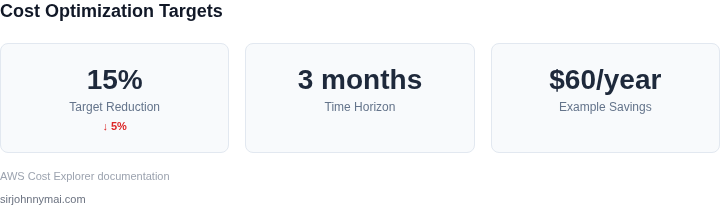
- Target cost reduction: 15% is aggressive but achievable. 5% is sustainable.
- Time horizon: 3 months for quick wins, 6+ for structural changes.
- Guardrails: Maximum acceptable downtime, compliance constraints.
Example: A 15% reduction in AWS EC2 costs over 3 months requires:
- Right-sizing 20% of instances
- Replacing 10% with Spot Instances
- Terminating 5% of unused resources
02. Build a Cross-Functional Team
Cost optimization isn't just engineering—it's a business problem. Assemble:
- Cloud architects: Understand technical feasibility
- Finance: Align with budget constraints
- Product owners: Ensure business impact isn't overlooked
- Security: Validate compliance implications
This team should meet weekly, not just monthly. The goal isn't consensus—it's alignment on priorities.
03. Use the Right Tools
Don't rely on spreadsheets. Tools like AWS Cost Explorer, Azure Cost Management, or GCP Cloud Billing API provide:
- Automated anomaly detection
- Forecasting capabilities
- Integration with existing workflows
For advanced analysis, consider:
- AWS Trusted Advisor
- CloudHealth by VMware
- FinOps Foundation tools
This approach works best when you've already implemented tagging standards across all resources.
04. Start with Low-Hanging Fruit
Prioritize these in order:
- Idle resources (stopped VMs, unused EBS volumes)
- Over-provisioned instances
- Unused reserved instances
- Data transfer costs
Example calculation: A single t3.medium instance with 10GB storage costs $20/month. Right-sizing to t3.small reduces that to $15/month—$60/year per instance.
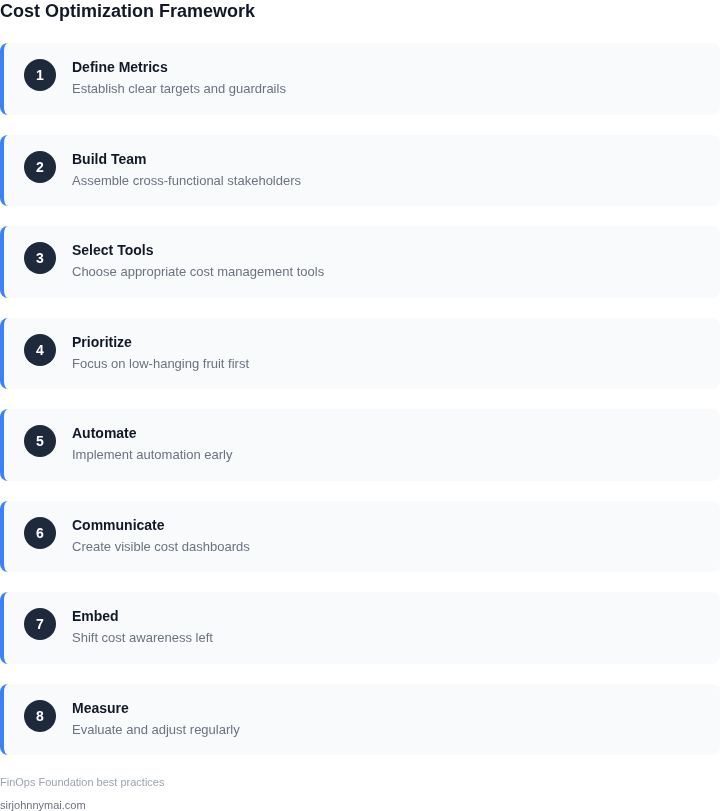
05. Implement Automation Early
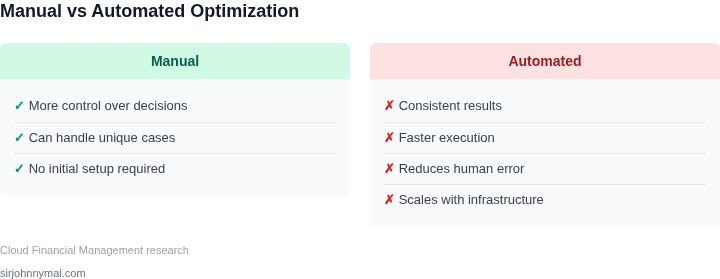
Manual optimization is unsustainable. Automate:
- Tagging enforcement
- Cost anomaly alerts
- Scheduled rightsizing
Use AWS Lambda or Azure Functions to create serverless cost monitors. This approach works best when you've already established CI/CD pipelines for infrastructure as code.
06. Communicate Results Visibly
Create a cost dashboard showing:
- Current vs. target spend
- Top cost drivers
- Recent optimizations
Share this with leadership quarterly. The goal isn't just to show savings—it's to demonstrate how those savings were achieved.
07. Embed Cost Awareness in Development
Shift left by:
- Adding cost estimation to your CI pipeline
- Training developers on FinOps principles
- Creating a cost review checklist for PRs
This approach works best when you've already implemented infrastructure as code across your organization.
08. Measure and Adjust
After 3 months, evaluate:
- Did we hit our targets?
- What worked? What didn't?
- Are there new cost drivers?
Use this data to refine your approach. The goal isn't perfection—it's continuous improvement.
09. Document Everything
Create a cost optimization playbook containing:
- Your team structure
- Your toolchain
- Your prioritization framework
- Your automation scripts
This ensures knowledge transfer when team members rotate.
10. Plan for the Long Term
Sustainable optimization requires:
- Regular cost reviews (monthly)
- Quarterly strategy sessions
- Annual architecture reviews
The goal isn't to stop optimizing—it's to make optimization a continuous process.
Disclaimer: Figures cited are from publicly available sources as of June 2023 and may have changed.
Next Step: Implement a 30-day cost optimization sprint using the framework above, then measure and document your results before scaling up.