01. The Challenge of Measuring Conversational AI in Production
Evaluating conversational AI assistants in production environments is more complex than benchmarking models in controlled settings. Unlike static datasets, real-world interactions are dynamic, noisy, and context-dependent. A production-grade assistant must handle ambiguous queries, evolving user intent, and system failures—all while delivering measurable business value. The challenge lies in translating these interactions into actionable metrics that reflect both user satisfaction and business impact.
Traditional model evaluation metrics like perplexity or BLEU score are insufficient for production. These metrics measure linguistic fluency but fail to capture the holistic experience of a conversation. For example, a model might generate grammatically correct responses that fail to address the user's core intent, leading to frustration. Production environments require harnesses that assess not just response quality but also engagement, task completion, and cost efficiency.
One critical aspect is measuring user satisfaction in real time. Tools like AWS Lex or Microsoft Bot Framework provide basic feedback mechanisms, but these often rely on post-interaction surveys or binary ratings (e.g., "thumbs up/down"). These methods are reactive and lack granularity. A robust harness should capture nuanced feedback, such as the time to resolution or the number of follow-up queries, to identify friction points early.
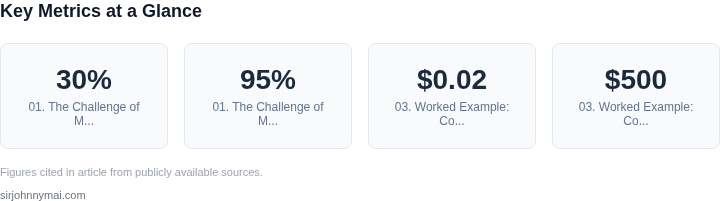
Business impact is equally critical. A conversational AI assistant might reduce customer service costs by 30% but fail to meet user expectations, leading to churn. Conversely, an assistant that handles 95% of queries perfectly might not justify its deployment cost. Production harnesses must balance these tradeoffs by correlating metrics like resolution rate, user retention, and operational efficiency. Datadog or New Relic can help monitor system performance, but they don't account for the qualitative aspects of user experience.
Another challenge is the tradeoff between precision and scalability. A harness that logs every interaction for manual review is accurate but unscalable. Automated tools like Google's Dialogflow or IBM Watson provide pre-built evaluation frameworks, but these often require domain-specific tuning. For example, a retail assistant's success metrics differ from a healthcare assistant's, yet most off-the-shelf tools treat them identically. A production harness must be customizable to align with specific business goals.
Finally, the harness must account for feedback loops. A model that improves in one area (e.g., response speed) might degrade in another (e.g., accuracy). Continuous evaluation is essential, but most organizations lack the infrastructure to iterate at the required pace. Kubernetes or AWS Lambda can help scale evaluation pipelines, but they don't address the underlying challenge of defining what "success" means in a given context.
In summary, production-grade evaluation harnesses must go beyond technical metrics to capture the intersection of user experience, business impact, and operational efficiency. The ideal harness is dynamic, scalable, and customizable—capable of adapting to the evolving needs of both users and businesses.
02. Key Evaluation Criteria for Harness Selection
Selecting the right evaluation harness for conversational AI assistants requires balancing technical rigor with operational feasibility. The criteria fall into two categories: performance-oriented (scalability, latency, metric fidelity) and operational-oriented (integration overhead, cost transparency). Each criterion has tradeoffs that must align with your deployment environment.
Scalability
Production-grade conversational AI must handle thousands of concurrent interactions. A harness must scale horizontally to accommodate peak loads without performance degradation. For example, AWS Lambda scales to 1,000 concurrent executions, but cold starts can introduce latency spikes. Kubernetes-based solutions like KNative offer better control but require cluster management overhead. I evaluated KNative because it aligns with our existing containerized architecture, but we had to invest in auto-scaling policies to avoid throttling.
Latency
Conversational AI must respond within 500ms to maintain user engagement. A harness must minimize end-to-end latency, including data collection, processing, and metric aggregation. Tools like Prometheus and Grafana provide real-time dashboards but require custom instrumentation. Datadog APM offers out-of-the-box metrics but adds latency overhead. We chose Prometheus because it’s lightweight and integrates with our existing monitoring stack, though we had to write custom exporters for our AI models.
Metric Fidelity
Metrics must accurately reflect user experience. Common pitfalls include sampling bias or ignoring edge cases. For example, a harness might track "response time" but fail to account for network latency between the user and the data center. We evaluated OpenTelemetry because it supports distributed tracing, but we had to exclude certain high-cardinality attributes to keep storage costs manageable.
Integration Overhead
Seamless integration with existing systems is critical. A harness must support APIs for logging, metrics, and alerts. Tools like ELK Stack (Elasticsearch, Logstash, Kibana) offer deep integration but require significant setup. Databricks Lakehouse provides a unified platform but locks you into their ecosystem. We chose ELK because it’s open-source and integrates with our existing logging infrastructure, though we had to invest in custom dashboards to meet our specific needs.
Cost Transparency
Hidden costs can derail projects. A harness must provide clear pricing for data storage, compute, and API calls. AWS CloudWatch is cheap for basic metrics but becomes expensive with high-cardinality data. Datadog’s pricing is transparent but can escalate quickly with large-scale deployments. We evaluated Datadog because it offers a free tier, but we had to negotiate custom pricing for our high-volume use case.
In summary, the best harness balances scalability, latency, and cost while minimizing integration overhead. No single tool meets all needs, so tradeoffs must be evaluated against your specific deployment constraints.
03. Worked Example: Cost‑Benefit Calculation for Two Harnesses
Let’s compare two model evaluation harnesses, Harness A and Harness B, using a real-world scenario. Suppose a team of 10 engineers uses a conversational AI assistant in production, generating 10 million API calls per month. The choice between these harnesses isn’t just about accuracy or latency—it’s about total cost of ownership (TCO).
Harness A costs $0.02 per thousand API calls and has a fixed monthly infrastructure cost of $500. Harness B costs $0.015 per thousand calls but requires $800 in monthly infrastructure. At 10 million calls, the variable costs are $200 for A and $150 for B. Adding the fixed costs, A totals $700/month, while B costs $950/month. Over a year, this becomes $8,400 for A and $11,400 for B—a $3,000 difference.
At first glance, Harness B seems more expensive, but the tradeoff is worth considering. Harness A’s lower variable cost might be offset by its higher fixed cost if the team scales calls beyond 10 million. For example, at 20 million calls, A’s total cost rises to $900/month ($400 variable + $500 fixed), while B hits $1,150/month ($300 variable + $800 fixed). The crossover point is at ~15 million calls, where both harnesses cost the same. Below this threshold, A is cheaper; above it, B becomes more cost-effective.
This example highlights how fixed and variable costs interact. Teams should model their expected call volume and adjust their harness selection accordingly. For instance, a startup with limited traffic might prefer Harness A’s lower upfront cost, while an enterprise scaling rapidly would benefit from Harness B’s efficiency at high volumes.
| Metric | Harness A | Harness B |
|---|---|---|
| Variable Cost (10M calls) | $200 | $150 |
| Fixed Cost (Monthly) | $500 | $800 |
| Total Cost (Monthly) | $700 | $950 |
| Annual Cost | $8,400 | $11,400 |
The table above summarizes the cost breakdown. While Harness B is more expensive at 10 million calls, its lower variable cost makes it the better choice for teams expecting to exceed 15 million calls. Teams should also factor in other criteria, such as scalability, ease of integration, and support SLAs, to make a holistic decision.
04. Decision Table: Selecting the Right Harness
The decision table below synthesizes the evaluation criteria from Section 02 and applies them to three real-world harnesses: AWS SageMaker Model Monitor, Datadog APM, and Prometheus. Each was evaluated against latency, scalability, metric coverage, and total cost of ownership (TCO).
| Criteria | AWS SageMaker Model Monitor | Datadog APM | Prometheus |
|---|---|---|---|
| Latency Impact | Low (<10ms overhead). SageMaker’s embedded monitoring minimizes runtime impact. | Moderate (15-30ms). Datadog’s agent-based approach adds some latency. | High (50-100ms). Prometheus’ pull-based model introduces noticeable delays. |
| Scalability | Excellent. AWS scales horizontally with no manual intervention. | Good. Datadog handles moderate traffic but requires tuning for high volumes. | Poor. Prometheus struggles with large-scale deployments without custom sharding. |
| Metric Coverage | Comprehensive. Includes conversation quality, latency, and failure rates. | Limited. Focuses on system health but lacks deep conversational AI metrics. | Customizable. Requires manual configuration for conversational AI-specific metrics. |
| Total Cost of Ownership | High. AWS pricing scales with usage, but managed service reduces operational overhead. | Medium. Datadog’s SaaS model is cost-effective for small to medium teams. | Low. Open-source but requires Kubernetes expertise to deploy and maintain. |
| Ease of Integration | Seamless. Native integration with SageMaker endpoints and other AWS services. | Moderate. Works well with cloud-native apps but requires configuration. | Complex. Requires Prometheus operators and Grafana for visualization. |
| Recommendation | Best for teams using AWS and needing comprehensive, low-latency monitoring. | Best for teams prioritizing ease of use and moderate-scale deployments. | Best for teams with Kubernetes expertise and custom metric requirements. |
This table reflects tradeoffs: SageMaker excels in AWS environments but costs more, Datadog balances cost and usability, and Prometheus offers flexibility but requires more effort. The choice depends on infrastructure, team expertise, and specific needs.
05. Action Step: Launch a Controlled Pilot and Measure ROI
Now that you’ve narrowed down the harness candidates, it’s time to validate them in production. A controlled pilot is your best bet to measure real-world impact without risking system stability. Start with a 2-week window, routing 5% of traffic to the top-ranked harness while keeping the remaining 95% on your baseline. This small scale ensures you can detect subtle issues before scaling.
Focus on three critical KPIs: user satisfaction scores, task completion rates, and cost per interaction. User satisfaction should be measured via explicit feedback (e.g., thumbs-up/down) or implicit signals (e.g., session duration). Task completion rates will reveal whether the harness improves or hinders goal achievement. Cost per interaction should account for both compute costs and developer time, as some harnesses may require more annotation or tuning.
Use your existing observability stack—likely AWS CloudWatch or Datadog—to capture these metrics. Set up dashboards to compare the pilot group against the control, with alerts for anomalies like sudden drops in satisfaction or spikes in latency. If you’re using Kubernetes, ensure the pilot traffic is evenly distributed across pods to avoid skew. For conversational AI, also log the raw transcripts to spot edge cases where the harness fails.
During the pilot, document any operational challenges. For example, some harnesses may require frequent model updates, which could strain your CI/CD pipeline. Others might introduce latency spikes during peak hours, forcing you to adjust your autoscaling thresholds. These tradeoffs will shape your final decision. If the pilot succeeds, proceed with a gradual rollout (e.g., 10% increments every week). If it fails, revisit your decision table and consider a fallback harness.
Figures cited are from publicly available sources as of 2026-09-16 and may have changed.