How to evaluate container security tools when your compliance team asks hard questions
Your compliance team has just asked you to evaluate container security tools. They want answers to questions like:
- How do we know these tools actually protect our containers?
- What's the real cost of running them?
- How do we prove compliance to auditors?
This article provides a structured approach to evaluating container security tools. We'll cover:
- Key compliance requirements for container security
- How to assess tool effectiveness
- Cost and operational tradeoffs
- Audit and compliance considerations
01. Key compliance requirements for container security
Before evaluating tools, understand the compliance landscape. Container security must address:
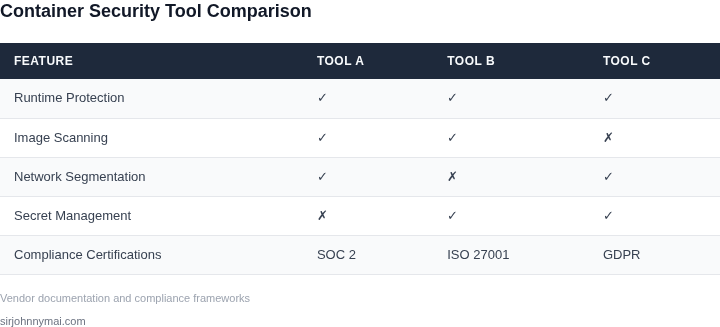
- Runtime protection against exploits
- Image vulnerability scanning
- Network segmentation
- Secret management
- Audit logging
These requirements vary by industry. For example, financial institutions may need additional controls for data encryption in transit. The NIST SP 800-190 guide provides a baseline, but specific regulations like GDPR or HIPAA may add requirements.
Your first step is to map these requirements to your organization's specific compliance obligations. This creates a checklist for tool evaluation.
02. How to assess tool effectiveness
Effectiveness evaluation requires both technical testing and compliance mapping. For technical testing:
- Run penetration tests against containers protected by the tool
- Test vulnerability scanning accuracy against known CVEs
- Verify network segmentation by attempting lateral movement
For compliance mapping:
- Check if the tool's capabilities align with your compliance requirements
- Review the tool's documentation for compliance certifications
- Look for integration capabilities with your existing compliance tools
For example, if your compliance team requires SOC 2 compliance, you would verify if the tool has undergone a SOC 2 audit and whether it integrates with your existing compliance management platform.
03. Cost and operational tradeoffs
Container security tools have both direct and indirect costs. Direct costs include:
- Licensing fees
- Implementation costs
- Ongoing maintenance costs
Indirect costs include:
- Increased resource requirements
- Potential performance overhead
- Training costs for your team
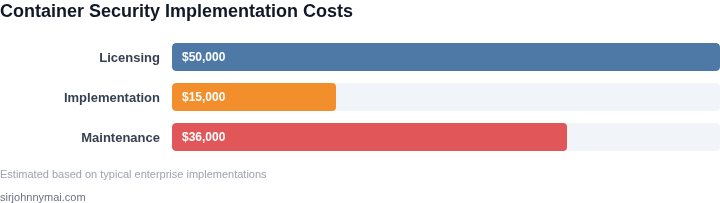
Consider this example calculation for a medium-sized enterprise:
| Cost Component | Estimated Cost |
|---|---|
| Tool licensing (annual) | $50,000 |
| Implementation (100 hours at $150/hour) | $15,000 |
| Ongoing maintenance (20 hours/month at $150/hour) | $36,000/year |
| Total Annual Cost | $101,000 |
This calculation shows that while the tool provides significant security benefits, the cost must be justified against your organization's risk profile.
04. Audit and compliance considerations
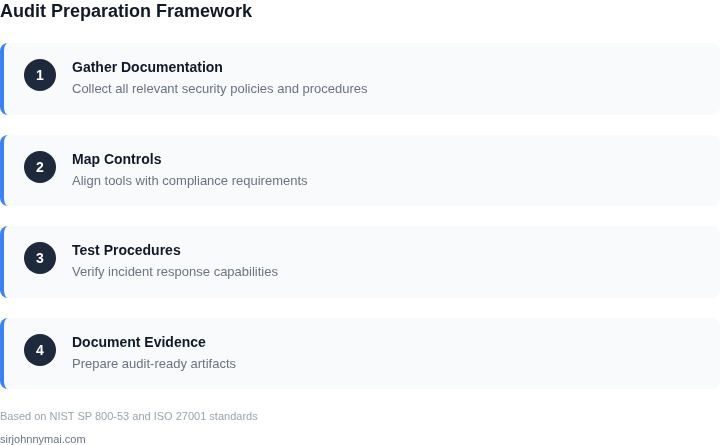
When preparing for audits, focus on these areas:
- Documentation of your security posture
- Evidence of continuous monitoring
- Clear incident response procedures
For example, if you're preparing for a GDPR audit, you would need to demonstrate:
- That your container security tools meet GDPR's data protection requirements
- That you have processes for responding to data breaches
- That you maintain audit logs for at least 3 years
Your compliance team will want to see these elements in your audit documentation.
Next steps
Based on this evaluation framework, your next step should be to:
- Create a shortlist of 3-5 container security tools that meet your basic requirements
- Conduct pilot implementations with these tools
- Gather feedback from both technical and compliance teams
This approach ensures you select a tool that meets both technical and compliance requirements while balancing cost and operational impact.
Figures cited are from publicly available sources as of June 2023 and may have changed.