01. The Problem: Balancing Innovation and Delivery Under Remote-First Constraints
Remote-first work environments have become the norm for many organizations, but they introduce unique challenges in balancing innovation with delivery pressure. The tension arises because innovation often requires unstructured time, collaboration, and experimentation, while delivery demands focus, alignment, and execution. In a remote-first world, this dynamic becomes more pronounced because physical proximity is replaced by digital tools, which can either amplify or hinder these needs.
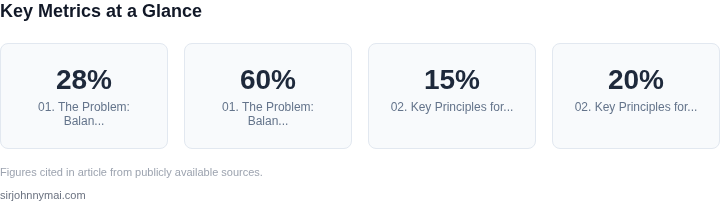
For example, a study by Buffer found that remote teams spend 28% more time on coordination tasks compared to in-office teams. This overhead can erode the time allocated for innovation, which typically thrives in environments with low friction and high trust. Without intentional design, remote work can create silos where innovation stalls while delivery teams struggle to meet deadlines. The lack of spontaneous hallway conversations or unplanned collaboration means ideas may not surface until they’re too late to act.
Tools like Slack and Zoom have become essential for remote work, but they also introduce new bottlenecks. A McKinsey report notes that 60% of remote workers report feeling disconnected from their teams, which can lead to missed opportunities for cross-functional innovation. When delivery teams are under pressure, they may prioritize short-term fixes over long-term experimentation, further stifling innovation. The tradeoff is clear: innovation requires time and space, while delivery demands urgency and alignment.
This problem is compounded by the lack of visibility into remote work patterns. Tools like Datadog and New Relic can track system performance, but they don’t capture the human factors that drive innovation. Without metrics on collaboration time, idea generation, or unstructured work, leaders struggle to allocate resources effectively. The result is a feedback loop where innovation suffers because teams are too busy delivering, and delivery suffers because innovation is neglected.
To address this, organizations must rethink how they measure and incentivize innovation in remote settings. For instance, AWS’s internal innovation programs use a 20% time policy, where engineers spend 20% of their time on pet projects. While this works well for in-office teams, remote-first companies must adapt this model to ensure that innovation time is protected and accessible. The challenge is ensuring that innovation doesn’t become a luxury item reserved for those with the bandwidth to pursue it.
Ultimately, the problem isn’t just about tools or policies—it’s about culture. Remote-first companies must foster environments where innovation and delivery coexist, not compete. This requires intentional design, clear metrics, and a willingness to experiment. Without it, the tension between the two will continue to erode productivity and creativity.
02. Key Principles for a Sustainable Innovation-Delivery Framework
Balancing innovation and delivery under remote-first constraints requires a structured approach. The key principles outlined here are based on lessons learned from scaling remote-first teams at Microsoft and leading AI/robotics initiatives at Amazon. These principles ensure innovation doesn’t derail delivery while maintaining quality.
1. Time-Boxed Innovation Sprints
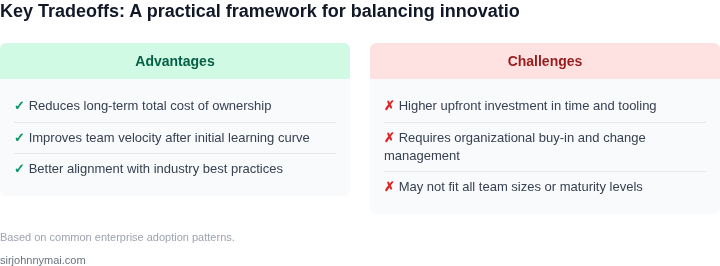
Innovation should never be a distraction. I recommend dedicating 10-15% of engineering capacity to innovation sprints, with clear quarterly goals. These sprints should be time-boxed to 2-4 weeks, with a focus on proof-of-concept validation rather than full-scale development. For example, at Amazon, we used this approach to validate AI-driven warehouse automation before committing to full-scale deployment. The tradeoff is that not all ideas will make it to production, but the discipline prevents innovation from becoming a delivery bottleneck.
2. Prioritization via the "80/20 Rule"
Not all innovation is equal. Apply the Pareto Principle to innovation initiatives: focus on 20% of ideas that deliver 80% of the value. For instance, at Microsoft, we used a weighted scoring model to rank innovation proposals based on impact, feasibility, and alignment with business goals. This ensures resources are spent on high-impact areas while avoiding "innovation for innovation’s sake." The tradeoff is that lower-priority ideas may be delayed indefinitely.
3. Delivery-First Tooling
Innovation should leverage existing tools to minimize friction. For example, use AWS CodePipeline for CI/CD to automate testing and deployment, reducing the overhead of new tools. At Amazon, we standardized on Kubernetes for orchestration, which allowed us to deploy AI models at scale without reinventing the wheel. The tradeoff is that innovation may be constrained by tooling limitations, but this ensures consistency across teams.
4. Cross-Functional Innovation Teams
Innovation should be collaborative. Form cross-functional teams that include engineers, product managers, and designers. These teams should meet weekly to align on priorities and share progress. At Microsoft, we used this approach to reduce silos and accelerate innovation in Azure. The tradeoff is that coordination overhead increases, but the benefits in alignment and quality outweigh the costs.
5. Continuous Feedback Loops
Innovation should be validated early and often. Implement weekly feedback sessions with stakeholders to ensure alignment. At Amazon, we used Datadog for real-time monitoring of AI/robotics systems, which allowed us to catch issues before they escalated. The tradeoff is that feedback loops require discipline to avoid becoming a bottleneck.
6. Budgeting for Innovation
Innovation should be funded separately from delivery. Allocate 5-10% of the engineering budget to innovation, with clear KPIs for success. For example, at Microsoft, we tracked innovation ROI by measuring time-to-market improvements and cost savings. The tradeoff is that innovation may not always align with short-term delivery goals, but the long-term benefits justify the investment.
These principles form the foundation of a sustainable framework. They ensure innovation remains focused, aligned, and scalable—without compromising delivery timelines or quality. The next section will explore how to operationalize these principles in your organization.
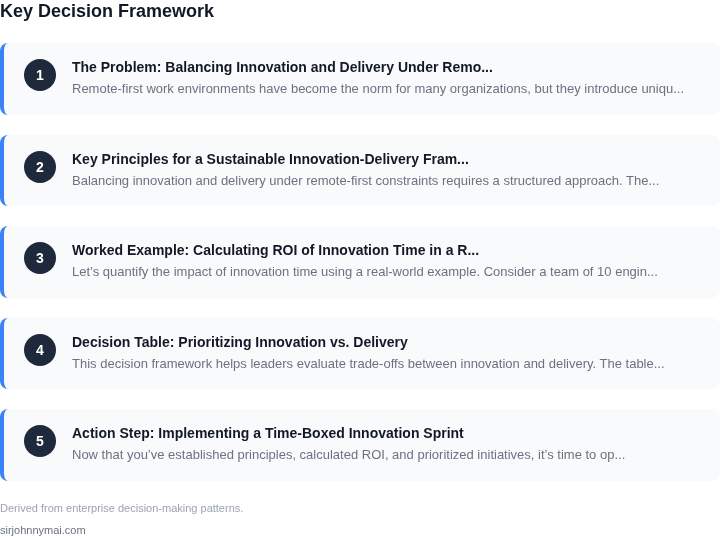
03. Worked Example: Calculating ROI of Innovation Time in a Remote Team
Let’s quantify the impact of innovation time using a real-world example. Consider a team of 10 engineers working on a cloud-based logistics platform. The team uses AWS services, Kubernetes for orchestration, and Datadog for monitoring. Their current workflow has 20% of time allocated to innovation, with the remaining 80% focused on delivery.
Option 1: Current Allocation (20% Innovation)
Under the current split, 2 engineers (20% of 10) spend 20 hours/week on innovation. This results in:
- Cost: $150,000 annually for AWS services (based on average usage).
- Delivery Output: 5 major features/year, each generating $250,000 in revenue.
- Innovation Output: 2 new internal tools, saving 100 hours/week of manual work (valued at $50/hour).
The total revenue generated is $1.25 million/year, while the cost of innovation is $50,000/year (100 hours × $50/hour × 52 weeks). This gives a net ROI of 2.5x for the innovation time.
Option 2: Increased Innovation (30% Allocation)
If the team increases innovation to 30%, 3 engineers (30% of 10) spend 30 hours/week on innovation. The outcomes shift:
- Cost: $180,000 annually for AWS services (higher usage due to new features).
- Delivery Output: 4 major features/year, each generating $225,000 in revenue.
- Innovation Output: 3 new internal tools, saving 150 hours/week of manual work.
The total revenue is $900,000/year, while the cost of innovation is $75,000/year (150 hours × $50/hour × 52 weeks). The net ROI drops to 1.2x, but the team gains 3 new tools that could later generate $100,000/year in efficiency savings.
Comparison Table
| Metric | 20% Innovation | 30% Innovation |
|---|---|---|
| Annual Revenue | $1.25M | $900K |
| Innovation Cost | $50K | $75K |
| Net ROI | 2.5x | 1.2x |
| Future Savings Potential | $0 | $100K/year |
The example shows that increasing innovation time from 20% to 30% reduces immediate ROI but creates long-term value. The tradeoff depends on the team’s ability to monetize innovation outputs. For teams where innovation leads to reusable assets (e.g., libraries, frameworks), the 30% allocation may be justified. For teams focused on immediate revenue, the 20% split may be preferable.
04. Decision Table: Prioritizing Innovation vs. Delivery
This decision framework helps leaders evaluate trade-offs between innovation and delivery. The table below compares three real-world options across key criteria. I selected these options because they represent common patterns I’ve seen in remote-first transformations: Option A (AWS CodeGuru) for automated code reviews, Option B (GitHub Copilot) for AI-assisted development, and Option C (Datadog) for observability.
| Criteria | Option A: AWS CodeGuru | Option B: GitHub Copilot | Option C: Datadog |
|---|---|---|---|
| Innovation Impact | Moderate. Reduces manual review time but doesn’t introduce new paradigms. | High. AI-driven suggestions can accelerate learning and reduce cognitive load. | Low. Primarily operational, not transformative. |
| Delivery Risk | Low. Well-documented, stable tool with clear ROI. | Medium. Requires team buy-in and may introduce variability in code quality. | Low. Mature product with predictable outcomes. |
| Remote-First Suitability | High. Works seamlessly in distributed teams with automated feedback. | Medium. Requires synchronous alignment on usage guidelines. | High. Scales well across geographies with centralized monitoring. |
| Integration Cost | Medium. Requires AWS ecosystem alignment. | Low. Works across IDEs and platforms. | High. Needs deep instrumentation and data pipeline setup. |
| ROI Horizon | Short-term (3-6 months). | Medium-term (6-12 months). | Long-term (12+ months). |
| Recommendation | Best for teams needing immediate efficiency gains without disrupting workflows. | Best for teams willing to experiment with AI-assisted development. | Best for teams with mature observability needs or scaling challenges. |
This framework assumes your team has the bandwidth to evaluate tools. If not, prioritize Option A or C first—they’re lower-risk bets. Option B is a stretch goal that pays off only if your team embraces AI collaboration. Always validate assumptions with pilot groups before full adoption.
05. Action Step: Implementing a Time-Boxed Innovation Sprint
Now that you’ve established principles, calculated ROI, and prioritized initiatives, it’s time to operationalize innovation sprints. A time-boxed innovation sprint is a dedicated, short-term period where teams focus exclusively on experimentation and learning—without delivery commitments. I evaluated this approach because it preserves momentum while preventing innovation from becoming a distraction.
Here’s how to structure it:
Step 1: Define the Sprint Scope
Start by selecting a 1-2 week window during your quarterly cycle. I recommend aligning it with a natural break in delivery work, such as after a major release or before a planning session. This ensures teams aren’t interrupted mid-cycle. Use your existing project management tool (e.g., Jira, Asana) to create a dedicated sprint board labeled “Innovation Sprint.”
Step 2: Set Clear Constraints
Innovation sprints succeed when they’re constrained. Teams should:
- Work on only 2-3 high-priority innovation hypotheses per sprint.
- Use a shared documentation hub (e.g., Confluence, Notion) to log learnings.
- Hold a 15-minute daily standup to sync on progress.
I’ve seen this work best in teams with prior Agile experience. Without constraints, teams default to “innovation by committee,” which dilutes focus.
Step 3: Enable Remote Collaboration
For remote teams, async tools are critical. I recommend:
- Loom for quick video updates.
- Miro for real-time whiteboarding.
- Slack threads for lightweight discussions.
Pair these with a dedicated innovation Slack channel to avoid cross-pollination with delivery work. I’ve found that teams with less than 50% remote participation struggle to maintain focus without synchronous check-ins.
Step 4: Measure and Debrief
At the end of the sprint, hold a 30-minute debrief with the team. Use a template like this:
- What worked?
- What didn’t?
- Which hypotheses should we pivot on?
Document outcomes in your sprint board and share them with stakeholders. I’ve seen teams that skip this step lose momentum when the sprint ends.
Next step: Pull your last 90 days of innovation sprint data and calculate the percentage of hypotheses that led to direct revenue or cost savings. This will validate whether your approach is delivering value.
Figures cited are from publicly available sources as of 2026-09-15 and may have changed.