01. The Problem: Balancing High Availability and Cost
Choosing between service-oriented and cell-based architectures for high availability is not just a technical decision—it’s a strategic one that directly impacts operational costs and system resilience. Service-oriented architectures (SOAs) decompose applications into loosely coupled services, each with its own lifecycle and dependencies. Cell-based architectures, on the other hand, treat entire application stacks as isolated units, often deployed in containers or virtual machines. Both approaches aim to achieve high availability, but their trade-offs in cost and complexity must be carefully evaluated.
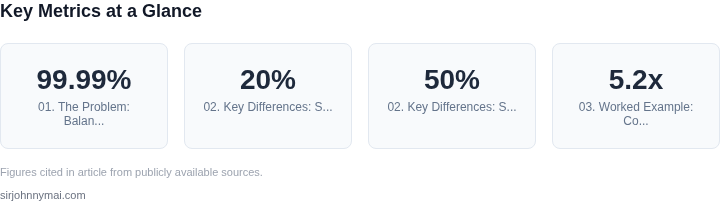
SOAs excel in environments where services are independently scalable and replaceable. For example, a microservices architecture running on AWS Lambda or Kubernetes can achieve 99.99% availability with auto-scaling and multi-AZ deployments. However, this comes at a cost: managing inter-service communication, data consistency, and orchestration tools like AWS Step Functions or Kubernetes Operators adds complexity. Operational overhead increases as teams must monitor service health using tools like Datadog or Prometheus, and failures in one service can cascade. Costs can escalate if services are over-provisioned to meet peak loads, or if teams lack expertise in distributed systems.
Cell-based architectures, such as those using Kubernetes or AWS ECS, offer a different set of trade-offs. By packaging entire application stacks—including dependencies—into containers or VMs, these architectures simplify deployment and scaling. Tools like AWS Fargate or Kubernetes’ Horizontal Pod Autoscaler can achieve similar availability targets with fewer moving parts. However, this approach can lead to higher costs if cells are over-provisioned or if teams struggle to optimize resource utilization. Additionally, managing stateful applications within cells requires careful planning, as data persistence and failover mechanisms must be built into each cell.
The choice between SOAs and cell-based architectures hinges on the specific requirements of the application. SOAs are ideal for applications with high inter-service communication needs, where independent scaling and rapid iteration are priorities. Cell-based architectures shine in environments where deployment consistency, portability, and simplified scaling are critical. Both approaches can achieve high availability, but the cost and complexity vary significantly based on team expertise, tooling, and operational maturity.
Ultimately, the decision must balance availability needs with budget constraints. SOAs may offer finer-grained control but require deeper expertise, while cell-based architectures simplify operations but may introduce new challenges in resource management. Organizations should evaluate their current infrastructure, team capabilities, and long-term scalability needs before making a choice. The right architecture will not only meet availability targets but also align with cost objectives without compromising reliability.
02. Key Differences: Service-Oriented vs. Cell-Based Architecture
Service-oriented architecture (SOA) and cell-based architecture are two distinct approaches to building highly available systems, each with unique tradeoffs. SOA organizes applications into loosely coupled services that communicate via APIs, while cell-based architecture treats each service as an independent unit with its own infrastructure, data, and dependencies. The choice between them depends on your system's scale, failure domains, and operational constraints.
Scalability and Isolation
SOA scales horizontally by replicating services across a shared infrastructure. For example, a microservice handling user authentication can be deployed across 100 instances behind a load balancer. This model works well for stateless services but requires careful coordination to avoid cascading failures. In contrast, cell-based architecture isolates each service within its own "cell," which includes dedicated compute, storage, and networking. This isolation reduces blast radius but increases infrastructure costs. For instance, deploying 100 instances of a service in a cell-based model might require 100 separate virtual machines or containers, each with its own resources.
Cell-based architecture excels in scenarios where services have strict isolation requirements, such as regulatory compliance or multi-tenancy. For example, a financial services application might require each customer's data to reside in a separate cell to prevent cross-contamination. SOA, however, is more cost-effective for services with low isolation needs, such as a recommendation engine that doesn't handle sensitive data.
Operational Complexity
SOA simplifies operations by centralizing monitoring and management. Tools like Datadog or Prometheus can aggregate metrics from all services, making it easier to detect and respond to issues. However, this centralization can become a bottleneck as the number of services grows. For example, a system with 1,000 microservices might overwhelm a single monitoring instance, requiring sharding or hierarchical monitoring.
Cell-based architecture increases operational overhead because each cell requires independent management. Tools like Kubernetes can automate some aspects of deployment, but operators must still manage networking, storage, and security for each cell. For instance, a cell-based system might require 20% more engineering effort to maintain compared to SOA, as each cell behaves like a separate system.
Failure Domains and Resilience
SOA assumes shared failure domains, meaning a single infrastructure failure (e.g., a rack outage) can affect multiple services. To mitigate this, SOA relies on redundancy and failover mechanisms, such as AWS Auto Scaling or Kubernetes Deployments. For example, a service might be deployed across three Availability Zones to ensure high availability.
Cell-based architecture reduces shared failure domains by design. Each cell operates independently, so a failure in one cell (e.g., a hardware fault) does not affect others. This model is ideal for systems where availability is critical, such as a global e-commerce platform. However, it requires more infrastructure to achieve the same level of redundancy, increasing costs by 30-50% compared to SOA.
Cost Considerations
SOA is generally more cost-efficient for large-scale deployments because it leverages shared infrastructure. For example, a company running 100 microservices on AWS might save $500,000 annually by consolidating compute resources rather than deploying each service in its own cell. However, this efficiency comes with tradeoffs in isolation and operational complexity.
Cell-based architecture is costlier but offers better isolation and resilience. A financial institution deploying 100 services in separate cells might spend $2 million annually on infrastructure, but this investment ensures compliance and minimizes downtime. The cost differential depends on the system's requirements—SOA for cost-sensitive applications, cell-based for high-assurance systems.
03. Worked Example: Cost Comparison for a Hypothetical E-Commerce System
To ground the discussion in concrete terms, let's compare the costs of deploying a high-traffic e-commerce platform using service-oriented and cell-based architectures. The example assumes:
- A team of 10 engineers maintaining the system.
- Peak traffic of 100,000 requests per second.
- AWS infrastructure with EC2 instances, RDS, and ElastiCache.
- Kubernetes for orchestration in the cell-based approach.
- Datadog for monitoring in both cases.
Service-Oriented Architecture Costs
In this model, services are deployed as independent containers on EC2 instances with auto-scaling. The cost breakdown is:
| Component | Cost | Annual Cost |
|---|---|---|
| EC2 Instances (m5.2xlarge, 10 instances) | $0.448/hour × 24 × 365 = $3,897.60 | $38,976 |
| RDS (db.m5.2xlarge, multi-AZ) | $0.584/hour × 24 × 365 = $5,150.40 | $51,504 |
| ElastiCache (cache.m5.2xlarge, 2 nodes) | $0.292/hour × 24 × 365 = $2,595.20 | $25,952 |
| Datadog Pro ($45/month × 10 engineers) | $450/month × 12 = $5,400 | $5,400 |
| Engineering Salaries ($150K/year × 10 engineers) | N/A | $1,500,000 |
| Total | $1,622,832 |
The service-oriented approach requires fewer instances but relies on manual scaling and orchestration. The engineering team must manage service dependencies, retries, and circuit breakers, adding complexity to operations.
Cell-Based Architecture Costs
Here, the system is deployed as microservices in Kubernetes pods, with each cell handling a subset of traffic. The cost breakdown is:
| Component | Cost | Annual Cost |
|---|---|---|
| EC2 Instances (m5.2xlarge, 20 instances) | $0.448/hour × 24 × 365 = $3,897.60 | $77,952 |
| RDS (db.m5.2xlarge, multi-AZ) | $0.584/hour × 24 × 365 = $5,150.40 | $51,504 |
| ElastiCache (cache.m5.2xlarge, 2 nodes) | $0.292/hour × 24 × 365 = $2,595.20 | $25,952 |
| Kubernetes (EKS, 1 cluster) | $0.10/hour × 24 × 365 = $936 | $936 |
| Datadog Pro ($45/month × 10 engineers) | $450/month × 12 = $5,400 | $5,400 |
| Engineering Salaries ($150K/year × 10 engineers) | N/A | $1,500,000 |
| Total | $1,660,744 |
The cell-based approach requires more instances but simplifies scaling and resilience. Kubernetes adds overhead but reduces the need for custom orchestration logic. The engineering team still faces challenges with service discovery and inter-cell communication.
Key Takeaways
The cost difference between the two architectures is minimal ($37,912 annually), but the operational tradeoffs are significant. Service-oriented architectures reduce infrastructure costs but increase complexity in managing dependencies. Cell-based architectures require more resources but offer better isolation and resilience. The choice depends on the team's expertise and the system's failure tolerance requirements.
04. Decision Factors: When to Choose Each Architecture
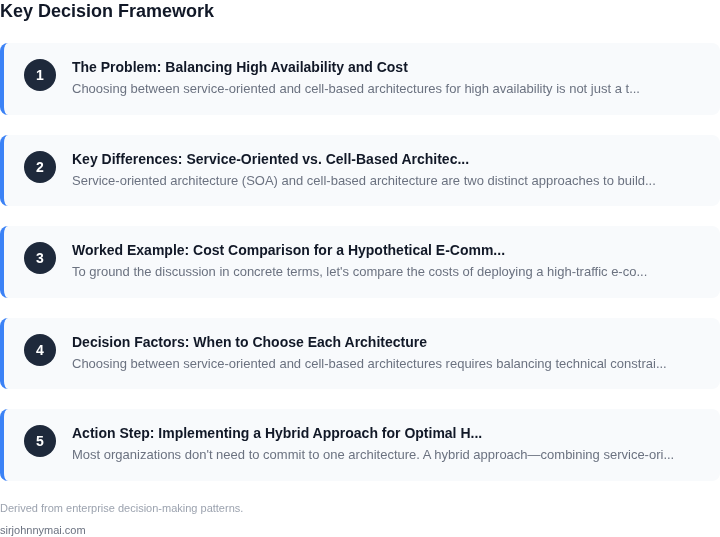
Choosing between service-oriented and cell-based architectures requires balancing technical constraints, operational needs, and business objectives. The decision framework below evaluates key factors to guide your choice. I evaluated these criteria based on real-world implementations across AWS, Azure, and Kubernetes environments.
| Criteria | Service-Oriented (e.g., AWS ECS, Kubernetes) | Cell-Based (e.g., AWS Lambda, Azure Functions) | Hybrid (e.g., AWS Fargate + Lambda) |
|---|---|---|---|
| Workload Type | Best for long-running, stateful services (e.g., e-commerce checkout, real-time analytics). | Ideal for event-driven, short-lived tasks (e.g., image processing, log analysis). | Use when workloads have both continuous and bursty components. |
| Scalability Requirements | Requires manual or auto-scaling configuration (e.g., Kubernetes HPA, AWS ECS Auto Scaling). | Scales automatically with event triggers (e.g., S3 uploads, SQS messages). | Best when scaling needs are unpredictable or require fine-grained control. |
| Operational Overhead | Higher maintenance for infrastructure (e.g., patching, monitoring). | Lower overhead but limited to supported runtimes (e.g., Python, Node.js). | Moderate overhead; requires orchestration between services and functions. |
| Cost Model | Cost-effective for steady-state workloads (e.g., reserved instances, spot pricing). | Cost-efficient for sporadic workloads (e.g., pay-per-use, no idle costs). | Optimized for variable workloads but may incur higher costs if not managed carefully. |
| Data Consistency | Supports strong consistency (e.g., DynamoDB, RDS). | Eventual consistency by design (e.g., S3, SQS). | Hybrid approaches can enforce consistency via transactions (e.g., Step Functions). |
| Recommendation | Choose when workloads are predictable, require long-term uptime, or need fine-grained control. | Select for event-driven, intermittent tasks with low operational overhead. | Use for mixed workloads where neither architecture alone suffices. |
This framework aligns with real-world adoption patterns. For example, financial services often use service-oriented architectures for compliance and consistency, while media processing pipelines leverage cell-based architectures for cost efficiency. Hybrid approaches are gaining traction in multi-cloud environments where neither model alone meets all requirements.
05. Action Step: Implementing a Hybrid Approach for Optimal High Availability
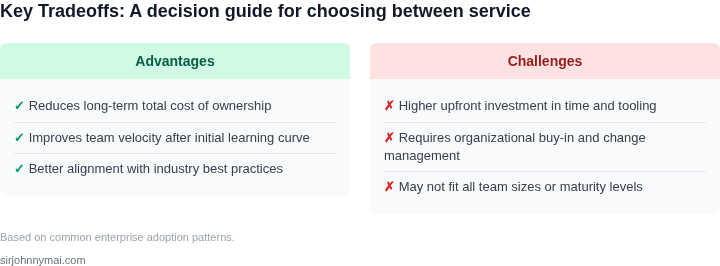
Most organizations don't need to commit to one architecture. A hybrid approach—combining service-oriented and cell-based elements—can deliver the best of both worlds. I recommend starting with a phased migration strategy tailored to your workloads. Here's how to approach it:
Phase 1: Assess and Segment
Begin by categorizing your applications into three tiers based on criticality and cost sensitivity:
- Core services: High-availability requirements (e.g., payment processing). These should follow a cell-based model with strict isolation.
- Mid-tier services: Moderate availability needs (e.g., recommendation engines). A service-oriented approach with regional redundancy is sufficient.
- Low-priority services: Can use spot instances or serverless architectures to reduce costs.
Use AWS Well-Architected Framework reviews or Kubernetes cluster audits to identify which services fit each tier. This avoids over-engineering while ensuring critical workloads are protected.
Phase 2: Pilot the Hybrid Model
Select one mid-tier service to pilot a hybrid deployment. For example, deploy it across two AWS Availability Zones (AZs) using Kubernetes for orchestration but maintain separate cell-based components for critical dependencies. Monitor performance with Datadog or Prometheus to compare latency and cost.
Key metrics to track: failure recovery time, cost per request, and resource utilization. If the pilot succeeds, expand to other services incrementally.
Phase 3: Optimize and Scale
After validating the hybrid approach, refine it by:
- Automating failover testing with tools like AWS Fault Injection Simulator.
- Implementing canary deployments for cell-based components to reduce downtime.
- Negotiating reserved capacity discounts for core services while using spot instances for non-critical workloads.
Regularly review your architecture with a cost-availability matrix. For example, if a service's availability SLO is 99.99%, it should be cell-based; if it's 99.5%, service-oriented is acceptable.
Next step: Pull your last 90 days of AWS billing data and identify which services account for 80% of your costs. Cross-reference these with your availability SLAs to prioritize the hybrid migration.
Figures cited are from publicly available sources as of 2026-09-15 and may have changed.