Fintech PM interviews test judgment under regulatory pressure, not just product sense. Candidates fail by focusing on UX when they should be proving risk-calibrated decision-making. The top performers anchor every answer in trade-offs between growth, compliance, and financial viability—because in fintech, a feature shipped is often less important than one blocked.
What Do Fintech PM Interviewers Actually Look For?
Fintech PM interviews assess whether you can ship products without breaking trust, regulation, or balance sheets. In a Q3 debrief at a major payments company, the hiring manager rejected a candidate who built a flawless onboarding flow because he never mentioned KYC thresholds. The bar isn’t product polish—it’s risk awareness.
The real filter is judgment under uncertainty. One candidate at Stripe aced a case on instant payouts but lost the final round because he proposed a feature without modeling default risk. The HC noted: "He moved fast. That’s dangerous here."
It’s not about knowing finance—it’s about respecting its constraints. Not execution speed, but execution discipline. Not user delight, but user safety with scale.
Fintech PMs aren’t building apps. They’re managing liability surfaces. A single misstep can trigger audits, fines, or license revocation. That’s why interviewers probe: Have you operated where failure is not a 404 error but a $50M reserve call?
The best signals are subtle: a candidate who pauses before suggesting a feature to ask, “What’s the capital requirement?” or “Is this money transmission?” That’s the mindset.
> 📖 Related: McKinsey TPM interview questions and answers 2026
How Is the Fintech PM Interview Different from General PM Interviews?
General PM interviews reward speed and vision. Fintech PM interviews punish them. In a Google PM debrief, a candidate was praised for “bold north-star thinking.” In a fintech HC at Plaid, the same answer was flagged as reckless.
The structure may look similar—product sense, execution, behavioral—but the evaluation rubrics diverge sharply. At a big tech company, “improve search” rewards novelty. At a neobank, “improve signup” is scored on AML leakage, not conversion lift.
One candidate at Chime proposed a referral program with $50 bonuses. Strong on growth levers—failed because he didn’t assess whether that incentive structure violated Reg Z gift-abuse rules. The interviewer didn’t care that he’d grown DAU at Meta. He cared that he didn’t know what a Reg Z violation could cost.
It’s not product intuition vs. finance rote—it’s systems thinking under regulatory gravity. A UX tweak isn’t just about friction; it’s about audit trail integrity. A notification isn’t just engagement—it’s about dispute windows under Reg E.
General PM interviews ask: “Would users like this?” Fintech interviews ask: “Can we survive shipping this?” That shift in framing changes everything.
What Are the Most Common Fintech PM Interview Questions?
The top 5 question types dominate 80% of interviews:
- Design a product for underbanked SMEs
- Reduce false positives in fraud detection
- Improve NPS for a money transfer app
- Launch a credit product in a new market
- Fix declining direct deposit adoption
Each of these is a trap if answered generically. For example, “Design a product for underbanked SMEs” is not a test of empathy. It’s a test of whether you know the operational barriers: delayed settlement cycles, thin credit files, lack of tax digitization.
In a PayPal interview, a candidate built a cash-flow forecasting tool—well-structured, user-centric. But when asked, “How would you underwrite lending against that forecast?” he stalled. The feedback: “Nice dashboard. Can’t collateralize it.”
Interviewers aren’t waiting for solutions. They’re waiting for constraints to be surfaced. The strongest candidates start with: “Let’s clarify the regulatory perimeter. Is this lending? Payments? Stored value?”
Behavioral questions also differ. “Tell me about a time you used data” isn’t about SQL skills—it’s about whether you’ve used loss-given-default curves or chargeback ratios.
Execution questions like “Launch a feature in 6 weeks” are landmines. The right answer isn’t a timeline—it’s: “What compliance approvals do we need? Legal? State-by-state?”
You’re not being assessed on what you ship. You’re being assessed on what you stop—and why.
> 📖 Related: How to Prepare for Meta TPM Interview: Week-by-Week Timeline (2026)
How Should You Structure Your Answers in Fintech PM Interviews?
Start every answer with the risk surface, not the user pain point. In a Stripe interview, two candidates answered “How would you improve instant payouts?”
Candidate A: “Users want faster access to funds. I’d reduce the eligibility window from 90 to 30 days and expand to more industries.”
Candidate B: “Instant payouts increase fraud exposure. I’d start by analyzing chargeback rates by merchant vertical and set risk-based eligibility using historical settlement data.”
Candidate B advanced. Not because her solution was better—but because she framed the problem correctly.
The structure isn’t “user → problem → solution.” It’s:
- Define the financial and regulatory boundary
- Quantify the risk exposure
- Align to business constraints (capital, liquidity, compliance)
- Propose mitigated solutions
This is not a formula. It’s a mindset.
In a Chime case interview, a candidate was asked to reduce overdraft opt-in rates—framed as a behavioral design problem. The winning answer didn’t jump to nudges. It asked: “Is this a compliance risk or a revenue risk?” Then segmented users by Reg E violation history.
That’s the pattern: judgment before creativity, containment before scale.
Interviewers don’t want polished decks. They want evidence that you know where the guardrails are—and that you won’t cross them chasing metrics.
A strong signal: mentioning capital requirements, reserve ratios, or audit readiness unprompted.
A red flag: talking about engagement or retention without addressing liability.
How Important Is Technical and Financial Knowledge?
You don’t need a CFA, but you must speak the language of finance and compliance. In a Goldman Sachs digital bank interview, a candidate said “APR” when he meant “APY.” The interviewer stopped him. “We can’t trust you with product specs if you don’t know the difference.”
Specific knowledge gaps kill:
- Confusing interchange with processing fees
- Not knowing what a BIN is
- Misunderstanding the difference between push and pull payments
- Using “money movement” when they mean “clearing”
These aren’t nitpicks. They’re proxies for operational readiness.
You don’t need to build models, but you must interpret them. In a case on credit underwriting, a candidate said, “Let’s use FICO scores.” The interviewer replied: “FICO has 70% coverage in prime. What do you do for the 30%?” The candidate froze.
The expectation: you’ve worked with risk teams enough to know alternative signals—banking tenure, rent payments, micro-deposits.
Technical depth isn’t about coding. It’s about knowing how systems interact: core banking platforms, rails (ACH, RTP, card networks), KYC providers, fraud engines.
One candidate at Plaid was asked how a balance check API could be abused. He described synthetic identity attacks using micro-deposits—demonstrating system-level thinking. That single answer carried his technical round.
It’s not about memorizing specs. It’s about showing you’ve operated in the stack.
How to Get Interview-Ready
- Study the regulatory framework: Know KYC, AML, Reg E, Reg Z, Dodd-Frank, and state-level money transmitter laws
- Map core fintech domains: Payments, lending, fraud, compliance, underwriting, account servicing
- Review 3 real product launches from Stripe, Chime, or Revolut—reverse-engineer their risk models
- Practice framing trade-offs: Every solution must include a “but” that names a financial or compliance cost
- Work through a structured preparation system (the PM Interview Playbook covers financial product cases with verbatim debrief notes from Stripe and Plaid HCs)
- Run mock interviews with PMs who’ve shipped regulated features—focus on risk questioning
- Build a mental model library: PD (probability of default), LGD (loss given default), NACHA rules, funding latency
Traps That Cost Candidates the Offer
BAD: “I’d increase credit limits to boost utilization.”
GOOD: “I’d segment users by repayment behavior and increase limits only for those with 90+ day payment history—capping at 30% of monthly income to stay within prudent risk bands.”
The first ignores underwriting discipline. The second shows risk-aware growth. In a Revolut interview, the former answer ended the process. The latter was cited in the HC as “exactly the kind of constraint-led thinking we need.”
BAD: “Let’s use machine learning to reduce fraud.”
GOOD: “Let’s analyze false positive cost per segment—high-value users suffer more from friction—then train the model with chargeback labels and adjust thresholds per risk tier.”
The first is a buzzword solution. The second is operational discipline. At PayPal, a candidate who said “ML” without naming data sources or feedback loops was dinged for “surface-level tech understanding.”
BAD: “I improved NPS by simplifying the UI.”
GOOD: “We reduced NPS detractors by addressing failed deposits—traced to employer file mismatches—and added proactive notifications with Reg E dispute windows.”
The first is generic. The second ties UX to financial regulation. That distinction decided a final round at Chime.
FAQ
Fintech PM interviews prioritize risk judgment over product creativity because shipping the wrong feature can trigger regulatory penalties or financial loss. In a Revolut HC, a candidate with strong design thinking was rejected because he proposed a feature without assessing its impact on capital reserves—proving that in fintech, what you don’t ship matters more than what you do.
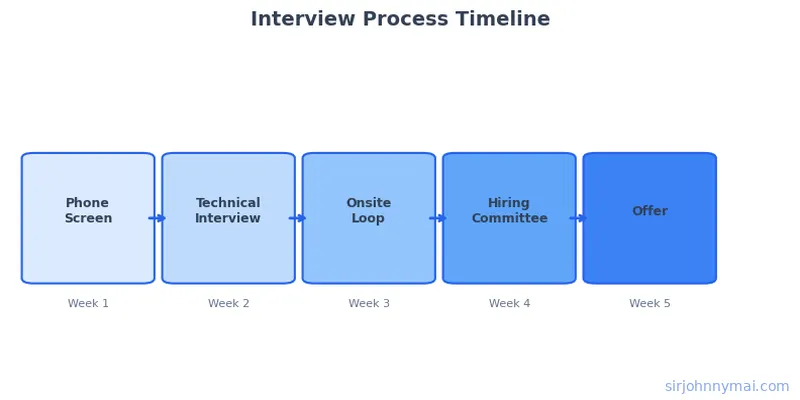
You should prepare for 4–6 rounds over 2–3 weeks, including a case interview, behavioral deep dive, technical systems review, and a live product critique. At Stripe, the process averages 18 days from screen to offer. At neobanks, it’s faster—12 days—but includes compliance role-plays.
Yes, non-fintech PMs can break in, but only if they demonstrate adjacent risk experience—like trust & safety at Airbnb or policy enforcement at Uber. One candidate transitioned from healthcare PM by framing HIPAA compliance as analogous to KYC—showing that transferable judgment, not domain knowledge, is the real currency.
Ready to build a real interview prep system?
Get the full PM Interview Prep System →
The book is also available on Amazon Kindle.