1on1 for Meta Product Designer Transitioning to PM: Key Conversations: Here is a direct, actionable answer based on real interview data and hiring patterns from top tech companies.
This transition succeeds only when the 1:1s produce a visible record of product judgment, not a loose story about ambition. In a Meta-style loop, the room is not impressed by design excellence alone; it wants proof that you can frame problems, make tradeoffs, and carry decisions through engineers, data, and leadership. If your conversations do not create that evidence within 30, 60, and 90 days, the move is not progressing.
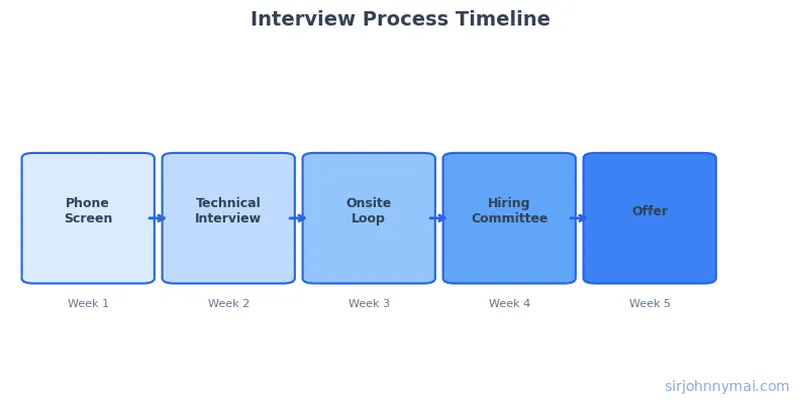
What does Meta actually need to hear from a designer moving into PM?
Meta needs to hear product judgment, not a design-to-PM conversion story. The first real test is whether you can explain why a problem matters, why now, and why your chosen solution is the least bad option under constraints.
In one Q3 debrief, the hiring manager cut off a polished designer mid-answer and said the issue was not talent. The issue was that every example stayed at the level of craft and collaboration, while the room was looking for ownership, scope control, and decision sequencing. That is the pattern. Not “I have strong taste,” but “I know how to move a product bet through ambiguity.”
The problem is not your portfolio. The problem is the signal your examples send about how you think when nobody hands you the answer. A Meta PM conversation rewards a designer who can say, “I narrowed the problem, rejected two attractive directions, and took responsibility for the tradeoff,” not one who narrates a beautiful process after the fact.
There is a psychological trap here. Designers often over-index on articulation because design interviews reward clarity and visual reasoning. PM conversations punish that reflex if it is not paired with ownership. Not a good presentation, but a hard decision trail. Not a clean artifact, but a messy operating record.
Your 1:1 should therefore be about translating design influence into product authority. You are not asking, “Do you think I could be PM someday?” You are establishing, “Here is the evidence that I already operate at that altitude in the rooms that matter.”
What should you say in the first manager 1:1?
Say the transition is a business decision, not a personal wish. The first manager 1:1 should end with a dated plan, an explicit risk assessment, and a clear statement of what evidence will change the answer.
In practice, that conversation is not about enthusiasm. It is about calibration. Your manager needs to know whether promoting you into PM creates leverage or creates a hole in design. In a debrief, that distinction matters more than your ambition because managers are silently asking who absorbs your current responsibilities if the transition starts to work.
Use language that is concrete enough to survive re-telling in a hiring room. “I want to test PM scope on this product area for 60 days” is useful. “I’ve always been interested in PM” is not. The first sentence creates accountability. The second creates delay.
The best manager conversations sound like a controlled experiment. You identify which product problems you already touch, where you are acting as the de facto PM, and what would count as real proof. That usually means owning a problem framing doc, running a cross-functional decision review, or carrying one launch from ambiguity to closure.
This is not a favor request. It is an operating proposal. Not “Can you support my growth?” but “Can we define the work that proves I can do the job?” The distinction is obvious to anyone who has sat through a hiring committee debate. One version is emotional. The other is legible.
You also need to ask the hard question directly: “If I were in the PM loop in 90 days, what would still make you hesitate?” That question changes the room. It surfaces objections early, before they harden into a no with polite wording.
What should you ask your PM, engineer, and XFN partners?
You should ask for friction, not praise. The most useful 1:1s with your PM, engineer, data partner, or content strategist are the ones where they tell you where your judgment still breaks under pressure.
A common mistake is treating these meetings as alliance-building. That is weak use of the room. The better move is to ask: where do I over-explain, where do I under-own, and where do I defer when I should decide? Those answers expose whether you are operating as a contributor or as a product lead.
In one hiring manager conversation, the strongest signal came from a PM partner saying, “This person already runs half the product discussion, but they still describe it like support work.” That sentence killed one candidate and advanced another. The substance was the same. The framing was not. Organizational psychology matters here: people promote the story they hear repeated by peers, not the work you secretly believe should speak for itself.
Ask your engineer what they need from a PM that they are not getting from you today. Ask your data partner where your problem framing gets too narrow or too aesthetic. Ask your PM where you are still reacting to roadmaps instead of shaping them. These are not comfort questions. They are diagnostic questions.
Not “Do I communicate well?” but “Do I change the decision when I speak?” Not “Do people like working with me?” but “Do people rely on me to remove ambiguity?” That is the gap Meta cares about. The title changes only after the habit is already visible.
A designer moving into PM often needs to hear one uncomfortable thing from each partner: you may be too polished, too consensus-seeking, or too late to the actual decision. Any one of those can keep the transition stuck even when your work is strong.
What evidence changes the hiring manager's mind?
Only evidence that looks like ownership changes the hiring manager’s mind. In the loop, a strong story is useful, but a documented pattern of product decisions is what gets discussed after you leave the room.
The wrong evidence is a tour of shipped features. The right evidence is a sequence of decisions where you changed scope, negotiated tradeoffs, or prevented a bad launch. A hiring manager in a Meta-style debrief is listening for whether you can hold product tension without collapsing into design language.
The conversation should produce three kinds of proof. First, a problem you framed before the answer was obvious. Second, a disagreement you resolved by weighing options rather than by consensus theater. Third, a launch or iteration where you owned the outcome after things got messy.
This is where many transitions fail. Designers often bring beautiful case studies and assume that quality will substitute for judgment. It will not. Not a portfolio review, but a decision audit. Not design craft as identity, but design craft as evidence of how you think when stakes are real.
If you want a concrete loop size, expect 4 to 6 interviews before the room forms a stable view. That is enough time for one weak answer to echo. It is also enough time for one strong, specific story to reset the conversation if it proves ownership rather than aspiration.
The best signal is when interviewers stop asking whether you can do product and start asking where your product judgment came from. That shift matters. It means they are no longer evaluating possibility. They are evaluating fit for level.
How do you survive the debrief and HC conversation?
You survive by making the debrief boring in the right way. The room should be able to repeat your product story in one sentence without distorting it.
In a real debrief, people do not remember your adjectives. They remember whether you sounded like someone who would own a messy area with incomplete data and conflicting incentives. If the hiring manager has to translate your story out of design terms before the committee can discuss it, you are already in trouble.
The debrief conversation usually turns on two questions: does this candidate make decisions, and can this candidate defend them without getting defensive. That second question is underestimated. Teams do not want a PM who is clever in a vacuum and brittle in conflict. They want someone who can survive pushback without turning every disagreement into a design principle.
You should also be ready for the organizational subtext. A committee is not just comparing you to other candidates. It is comparing you to the role’s failure mode. If the team recently suffered from weak prioritization, they will penalize vagueness. If the team recently suffered from over-confident PMs, they will penalize swagger. The same answer can be read differently depending on the scars in the room.
Not “I can be flexible,” but “Here is where I made the hard call.” Not “I collaborate well,” but “Here is how I handled conflict when the team was split.” Not “I am ready,” but “Here is the evidence that I already behaved like the person this team needs.”
That is the standard. The debrief is not a ceremony. It is a reliability test for the story you built in your 1:1s.
Smart Preparation Strategy
The transition works when the preparation is operational, not inspirational. Use the following as a working set, not a motivational list.
- Write a 30/60/90-day transition memo that names the product area, the decisions you want to own, and the evidence that would make the move credible.
- Run a weekly 1:1 with your manager that ends with one committed product action, one risk, and one feedback point.
- Ask your PM partner for one hard critique about your judgment, not your communication style.
- Build three stories that show problem framing, tradeoff selection, and post-launch ownership.
- Practice explaining one product decision without any visual artifact, because PM interviews will not give you design context to lean on.
- Work through a structured preparation system; the Design Interview Playbook covers cross-functional tradeoffs and debrief examples that map cleanly to this transition.
- Convert every “I helped” story into a “I decided” story, because hiring rooms hear the difference immediately.
Where the Process Gets Unforgiving
The transition fails for predictable reasons. The bad version sounds reasonable in the moment and fatal in the room.
- BAD: “I want to move into PM eventually, so I’m keeping the door open.”
GOOD: “I want to test PM scope on this area over the next 60 days, and I want us aligned on what proof would make that real.”
- BAD: “My design background shows I understand users.”
GOOD: “My design background shows I can frame problems, but here is where I have already owned tradeoffs, sequencing, and cross-functional decisions.”
- BAD: “Here are three polished case studies from my portfolio.”
GOOD: “Here is one case where I had to choose between competing priorities, absorb pushback, and still carry the launch.”
The mistake is not over-preparing. The mistake is preparing the wrong kind of evidence. Not polished artifacts, but decision history. Not confidence theater, but a record that survives debrief scrutiny.
FAQ
- How long does the transition usually take?
A serious transition usually needs 30, 60, and 90-day checkpoints. If you do not have visible product ownership by day 90, the process has become aspiration without evidence.
- Should I tell my manager before I start interviewing?
Yes, if the relationship is credible and the plan is real. Hidden transitions create political damage. The better move is to make the manager part of the evidence path before the interview loop hardens.
- Can I make the switch without prior PM title experience?
Yes, but only if you already show PM behavior in the work. Titles lag behavior. Hiring managers do not care that you were a designer; they care whether you already think and act like the role.
Ready to build a real interview prep system?
Get the full PM Interview Prep System →
The book is also available on Amazon Kindle.