Internal career changers from Marketing to Product Management at Meta face a steep ascent, demanding a complete re-evaluation of their skill set and a shift from influence-based marketing impact to first-principles product ownership. The interview process, while familiar in structure, holds a significantly higher bar for demonstrating technical acumen, product strategy, and execution rigor for those without direct PM experience. Success requires a deliberate, multi-quarter effort to acquire and prove core PM competencies, not merely to articulate a desire for the role.
1on1 for Career Changer from Marketing to PM at Meta: A Beginner's Roadmap
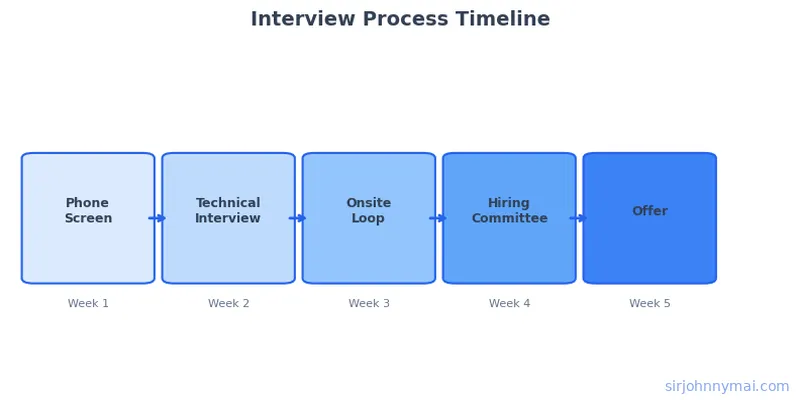
The transition from Marketing to Product Management at Meta for an internal candidate is not a "roadmap" in the traditional sense, but rather a demanding gauntlet designed to filter out those who lack fundamental product thinking and technical depth. This internal shift requires a complete rewiring of one's professional identity and a demonstrated capacity for ownership far beyond marketing scope. Success hinges on strategic, long-term preparation and a clear understanding that existing company knowledge is a baseline, not an advantage.
What are the core challenges for a Meta Marketing professional transitioning to PM internally?
The primary challenge for an internal Marketing professional at Meta transitioning to Product Management is not a lack of company knowledge, but demonstrating first-principles product thinking and genuine technical depth, which marketing roles rarely cultivate. Marketing roles often focus on user acquisition, brand narrative, and market positioning – crucial for product success, but fundamentally distinct from the upstream work of defining, building, and iterating on the product itself. The organizational psychology at play is subtle: internal candidates are expected to leverage their cultural familiarity, but simultaneously prove they can shed their existing functional lens.
In a Q3 debrief I sat on, a highly-rated Marketing candidate for a PM-L5 role presented strong user empathy and market insights during their product sense round. However, the engineering interviewer explicitly noted, "Their solutions felt like marketing campaigns, not product features; they focused on how users perceive the product, not how it works or solves core problems." This is a common pitfall. The problem isn't your understanding of the user, but your judgment signal regarding how to address user needs. It's not about influencing user behavior, but about building the mechanisms that enable it. Candidates frequently struggle to pivot from a mindset of "how do we communicate this feature?" to "how do we design this feature to be robust and scalable?"
How does Meta's PM interview process differ for internal transfers from Marketing?
Meta's PM interview process for internal transfers from Marketing does not fundamentally alter its structure, but the bar for demonstrating technical aptitude and strategic product ownership is significantly higher, and the scrutiny more intense, for candidates without direct PM experience. While external candidates often get some leeway on Meta-specific cultural nuances, internal marketing transfers are expected to be fluent in company dynamics, yet prove new, non-transferable skills. The "known quantity" status, paradoxically, can be a liability rather than an asset.
I observed a Hiring Committee debate where an internal Marketing L6 candidate, known for exceptional leadership in launching major campaigns, received mixed feedback. Her leadership and culture fit were undeniable, but a critical concern emerged: "We know she can lead people, but can she lead a product? Her execution round answers lacked the necessary depth on engineering trade-offs and data infrastructure." The HC questioned whether her "leadership" applied to product definition and execution, or primarily to cross-functional coordination within a marketing context. This isn't a lower bar for familiarity, but a higher one for skill transformation. Interviewers are not just assessing if you can do some PM tasks, but if you can fully embody the role, including the uncomfortable parts like making tough technical calls or navigating ambiguous data.
What specific skills must a Marketing professional cultivate to succeed as a Meta PM?
Beyond typical PM skills like product sense and execution, a Marketing transition to Meta PM requires an explicit, demonstrable understanding of system design, data architecture, and engineering trade-offs, often absent in marketing roles. While a Marketing professional might intuitively grasp user needs and market opportunities, they typically lack the practical experience of translating those into technical specifications, prioritizing against engineering cost, or debugging complex system interactions. This isn't merely about knowing what Meta builds, but how it builds it and why certain technical choices are made.
I once coached an internal Marketing manager who aspired to PM. My explicit guidance was to spend 20% of his week shadowing engineers, attending daily stand-ups, and reviewing technical design documents (TDOCs) for a product he marketed. This was not optional. He needed to internalize that a PM's role is not just to define "what" but to deeply understand the "how" and "why" from an engineering perspective. The insight here is the "impact vs. output" fallacy: marketing often focuses on the impact of a product (user acquisition, brand perception), while PM focuses on building the output (the features, the underlying systems) that drive that impact. A PM must bridge this gap. This is not merely user empathy, but engineering empathy – understanding the constraints, complexities, and potential solutions from the builder's perspective.
What is a realistic timeline and preparation strategy for an internal Marketing to PM transition at Meta?
A successful internal transition from Marketing to PM at Meta typically requires 12-18 months of deliberate, structured preparation, focusing on project-based skill development and strategic networking, rather than just interview practice. This is not a sprint to an interview, but a marathon of acquiring and demonstrating new competencies. The initial 3-6 months should be dedicated to foundational learning and shadowing; the next 6-9 months to actively seeking out and executing PM-adjacent projects; and the final 3-6 months to targeted interview preparation. Rushing this process almost invariably leads to rejection, often with feedback that highlights a lack of practical experience.
In a Q4 performance review, I saw a manager outline a 12-month PM growth plan for a high-potential Marketing IC. The plan included formal mentorship from a PM, taking on ownership of a small feature backlog for a related product, and presenting at quarterly product reviews. This "adjacent role" strategy, where you gradually shift responsibilities within your current role to gain PM-like experience, is far more effective than simply studying interview questions. It signals to potential hiring managers that you're not just interested in PM, but are actively doing PM work. A hiring manager often looks for evidence of PM thinking in your current role, not just promises for a future one. The compensation adjustment for an internal lateral move from Marketing L5 to PM L5 at Meta generally involves moving into the PM L5 band, which, as of late 2023, might see base salaries for new L5s in the $180k-$220k range, with significant equity and bonus components, but the precise numbers depend heavily on performance, negotiation, and market conditions at the time of transfer.
How to Prepare Effectively
- Deep Dive into Meta's Products (Technical & Strategic): Go beyond user-facing features. Understand the underlying data models, API integrations, and technical challenges. Read internal design documents and engineering RFCs.
- Shadow Engineering Teams: Actively participate in daily stand-ups, sprint planning, and technical discussions for a product you are interested in. Observe how technical decisions are made, not just the outcomes.
- Own a PM-Adjacent Project: Seek opportunities within your current role to scope, prioritize, and execute a small feature or initiative, working directly with engineering counterparts. Document the process and outcomes.
- Master Product Sense & Execution Frameworks: Understand how Meta evaluates these core competencies. Work through a structured preparation system (the PM Interview Playbook covers Meta-specific product sense frameworks and execution scenarios with real debrief examples).
- Develop Technical Acumen: Focus on system design fundamentals, common data structures, and how Meta's various platforms (e.g., ads, commerce, social) technically interoperate. You don't need to code, but you must understand the engineering implications of product decisions.
- Network Strategically: Identify PMs and Engineering Managers whose work aligns with your interests. Request informational interviews, focusing on their daily challenges and how they approach problem-solving, not just how they got their job.
The Gaps That Kill Strong Applications
- Presenting Marketing Solutions Instead of Product Solutions:
BAD: "To increase engagement for this feature, we should launch a targeted in-app notification campaign and send email reminders."
GOOD: "To increase engagement, I'd first diagnose why current users aren't engaging. Is it discoverability, utility, or friction? If discoverability, I'd propose integrating an entry point into a high-traffic surface, A/B test its placement and copy, and monitor funnel metrics. If utility, I'd investigate user feedback for missing core functionality, potentially de-scoping a complex future iteration for a simpler, higher-impact immediate solution."
The problem isn't the idea, but the root cause analysis and the type of solution proposed.
- Lack of Technical Depth in Problem-Solving:
BAD: "We should build an AI model to personalize content recommendations better."
GOOD: "To personalize recommendations, we'd need to explore a few ML approaches. For instance, a collaborative filtering model would require historical user interaction data and item metadata. We'd need to assess data pipeline readiness, the computational cost of real-time inference, and trade-offs between precision and recall, especially considering potential cold-start problems for new users or content. This isn't just about building an AI, it's about building a scalable system."
The problem isn't your ambition, but your judgment signal on the feasibility and technical implications.
- Assuming Internal Familiarity Equals PM Competence:
BAD: Relying on your current knowledge of Meta's internal tools and organizational structure as a substitute for demonstrating core PM skills during interviews. "As you know, our internal tooling for X is clunky, so my solution would leverage Y."
GOOD: Acknowledging internal context, but then explicitly mapping how your proposed solution addresses user needs through product strategy, execution, and technical understanding. "While our internal tooling for X does present challenges, my approach for this feature would focus on user workflow efficiency, specifically by integrating Z API to reduce manual data entry points, which directly aligns with our 2024 product pillar of developer velocity."
The problem isn't your understanding of the context, but your assumption that it replaces the need to prove new skills.
FAQ
Can I transition to PM at Meta without a technical background?
A direct technical background (e.g., CS degree, SWE experience) is not strictly mandatory, but a demonstrable understanding of technical systems, architecture, and engineering trade-offs is non-negotiable. Interviewers expect you to understand the "how" and "why" of product construction, not just the "what."
How long should I spend preparing for the Meta PM interview as an internal Marketing candidate?
A realistic timeline is 12-18 months of sustained, deliberate effort. This includes acquiring adjacent project experience, shadowing engineering, and deep-diving into technical concepts, followed by dedicated interview preparation. Rushing the process often results in feedback on insufficient practical exposure.
Does my existing Meta network give me an advantage in the PM transition?
Your network is an advantage for mentorship and gaining PM-adjacent project experience, but not for bypassing the rigorous interview bar. Strong internal references can get you the interview, but only demonstrated, new skills will get you the offer. The "known quantity" status means greater scrutiny, not less.
Ready to build a real interview prep system?
Get the full PM Interview Prep System →
The book is also available on Amazon Kindle.