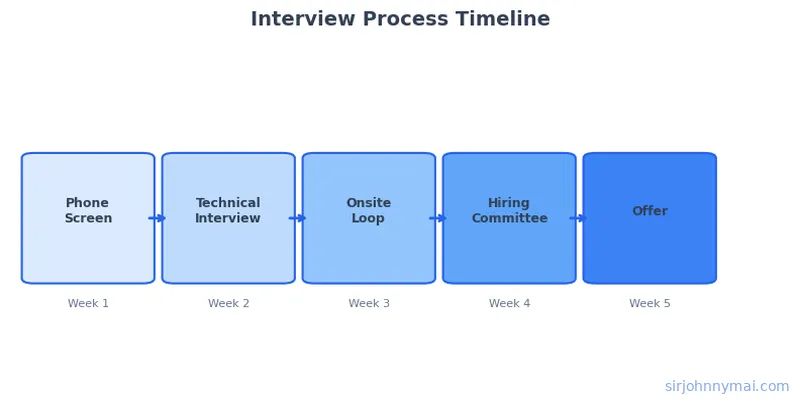
The 1on1 Cheatsheet is worth it for Google PM only as a marginal tool, not as a core prep system. In a loop that usually runs 5 interviews across 2 to 4 weeks, the problem is rarely a lack of information; it is whether your answers survive interruption, pushback, and follow-up. If your budget is tight, spend first on live pressure and story quality, not on another document that makes you feel organized.
Is 1on1 Cheatsheet Worth It for Google PM?
Yes, but only if you are already close to interview-ready. The sheet is a calibration aid, not a rescue plan. If it costs less than one mock and helps you stop rambling, it can be justified. If it becomes your main source of preparation, it is a bad purchase.
In a Q3 debrief, the hiring manager pushed back because the candidate sounded like they were reading from a prep template. The panel did not punish the structure. They punished the lack of judgment signal. That distinction matters. Google interviewers are not grading whether you know the format. They are deciding whether you can think in real time when the conversation stops being friendly.
The organizational psychology is simple. Interviewers trust fluency only when it sounds earned. A polished answer with no tension reads as rehearsed. A compact answer with one sharp tradeoff reads as senior. Not more content, but better selection of content. Not a bigger answer, but a more defensible one. That is where a cheatsheet has value: it helps you subtract noise.
A budget-constrained candidate should also be honest about the economics. If your prep budget is $100 and you still need a mock, the sheet is not the priority. For a Google PM role with a $200k-plus total compensation target, the question is not whether the sheet is cheap. The question is whether it changes one answer that would otherwise fail.
What Does It Actually Fix in a Google PM Loop?
It fixes structure, recall, and pacing. It does not fix weak judgment, shallow ownership, or the inability to defend a decision after the interviewer presses on the metric. That is the line most candidates miss. They think the problem is the answer. Usually the problem is the retrieval path to the answer.
I have watched candidates know exactly what they wanted to say, then lose it the moment the interviewer cut in after minute 1. That happens constantly in product sense and execution rounds. The interviewer asks why you chose one metric, why you rejected the obvious solution, or why you killed the launch. If your notes are too loose, you start searching instead of answering. A good cheatsheet reduces that search time.
The right use case is not memorization. It is compression under pressure. Google loops reward candidates who can take a messy situation and turn it into a clean chain: context, constraint, decision, tradeoff, result. That chain is not about sounding academic. It is about making the interviewer trust that you can operate in an environment where product, engineering, design, and leadership all pull on the same decision.
Not a study guide, but a retrieval scaffold. Not a script, but a constraint system. That distinction is the whole product. If the sheet helps you keep one idea per story and one tradeoff per answer, it is doing useful work. If it gives you extra words, it is making the problem worse.
When Does It Become a Bad Purchase?
It becomes a bad purchase when you are buying confidence instead of competence. If your stories are thin, your metrics are vague, or your ownership is abstract, the sheet will only organize the weakness. It will not remove it.
I saw this in a hiring manager conversation after a mock. The candidate had neat notes and clean phrasing, but every answer dodged responsibility. They said “the team decided,” “we aligned cross-functionally,” and “the launch improved things.” The panel read that as low accountability. The sheet had helped the delivery, but not the substance. That is why it failed.
The deeper pattern is psychological. Budget-constrained candidates often spend on inputs that feel safe. A cheat sheet is a safe purchase because it promises clarity without exposure. A mock is uncomfortable because it reveals what breaks. The uncomfortable thing is usually the higher-value thing. Not rehearsal, but exposure. Not organization, but stress testing. Not a prettier answer, but a sturdier one.
If you are still unable to describe one failed project in 60 seconds without hiding behind the team, skip the sheet for now. A Google PM interviewer will not reward surface polish over ownership. They will not rescue a soft story because the notes were well formatted. The bar is judgment under scrutiny, not presentation quality.
How Should a Budget-Constrained Candidate Spend the Same Money?
Spend for feedback, not for decoration. If you are choosing between a compact cheatsheet and a live mock, the mock usually wins. A document can help you tighten. A person can tell you where the answer collapses.
A practical budget split looks like this: $0 to $30 for a cheap cheatsheet if it is actually concise, $60 to $120 for one serious mock with someone who has sat in debriefs, and the rest on recording, rewriting, and rehearsing aloud. If you have 18 days until the loop, use the sheet first to trim your stories, then use the mocks to break them. That sequence matters. The sheet is for compression. The mock is for failure detection.
The mistake is spending early on content volume. Google PM interviews do not reward the candidate with the most prep artifacts. They reward the candidate whose answers stay stable when the interviewer adds friction. Two focused mocks are usually worth more than five passive reads because they expose the exact point where your story becomes defensive, vague, or over-optimized.
Not more consumption, but more friction. Not more reading, but more retrieval. Not more prep material, but more pressure. That is the correct budget logic. If your goal is to get through 5 rounds without sounding rehearsed, buying another guide is rarely the best use of the next dollar.
What Signal Does Google Actually Reward?
Google rewards calibration under uncertainty. The candidate who wins is usually not the one with the cleanest notes. It is the one who can convert ambiguity into tradeoffs without sounding scripted.
In committee-style hiring discussions, the strongest candidate is often the one who admits the product call was ugly and still owns it. That matters more than a polished acronym. Interviewers are reading for repeatability. They want to know whether the same reasoning survives across different interviewers, different prompts, and different levels of pressure.
This is where a lot of candidates misread the room. They think the interviewer wants the “right” answer. The interviewer wants the shape of your judgment. They want to see whether you can choose a metric, explain the cost of that choice, and hold the line when challenged. That is why generic prep language fails. It sounds safe, but safety is not the signal. Clarity is.
Not performance, but ownership. Not breadth, but selection. Not sounding smart, but sounding durable. A Google PM loop is built to detect whether you can keep making decisions when the conversation gets messy. The cheatsheet is only useful if it helps you sound more durable, not more rehearsed.
What to Focus On Before the Interview
- Write 6 stories before you spend more money: launch, failure, conflict, ambiguity, execution, and leadership.
- Time each story at 90 seconds, then again at 2 minutes. Anything longer is usually drift.
- Record one mock where the interviewer interrupts at minute 1. That is closer to the real loop than a clean rehearsal.
- Replace vague metrics with one decision, one constraint, and one result. If you cannot do that, the story is not ready.
- Use the 1on1 Cheatsheet only after your stories are on paper. It should compress, not invent.
- Work through a structured preparation system (the PM Interview Playbook covers Google Product Sense, Execution, and leadership stories with real debrief examples) if you need to see how strong answers are actually built.
- Spend your last dollar on pressure, not presentation. A polished notebook does not survive a hostile follow-up.
Failure Modes Worth Knowing About
- BAD: Buying the sheet before you have any usable stories. GOOD: Writing the stories first, then using the sheet to trim them.
- BAD: Treating templates as answers. GOOD: Using structure to force a clear decision, then defending the tradeoff when challenged.
- BAD: Reading for hours without speaking aloud. GOOD: Practicing aloud, getting cut off, and fixing the weak points that appear under interruption.
The failure mode is always the same. The candidate confuses preparation with accumulation. Google PM interviews expose that immediately because the real question is not how much you studied. It is whether you can keep thinking once the interviewer starts pushing back.
FAQ
- Is 1on1 Cheatsheet enough on its own for Google PM?
No. It is a compression tool, not a loop substitute. If you already have 6 to 8 strong stories and at least one mock, it can help. If you do not, it is premature.
- Should I buy it before paying for mock interviews?
Usually no. Live feedback has more marginal value when you are close to the bar. A cheatsheet without a pressure test is just organized anxiety.
- What is the right budget threshold for buying it?
If the price is small enough that it does not displace a mock, it is reasonable. If it forces you to skip live practice, it is the wrong first purchase.
Ready to build a real interview prep system?
Get the full PM Interview Prep System →
The book is also available on Amazon Kindle.