1on1 Basics for MBA Grad Joining Amazon as PM: A Beginner's Guide: Here is a direct, actionable answer based on real interview data and hiring patterns from top tech companies.
Your 1:1s at Amazon are not small talk. They are where your manager decides whether you are an owner, a passenger, or a risk.
1on1 Basics for MBA Grad Joining Amazon as PM: A Beginner's Guide
An MBA grad usually loses these meetings by treating them like status syncs. The stronger move is to bring decisions, tradeoffs, and the one thing that is still unclear.
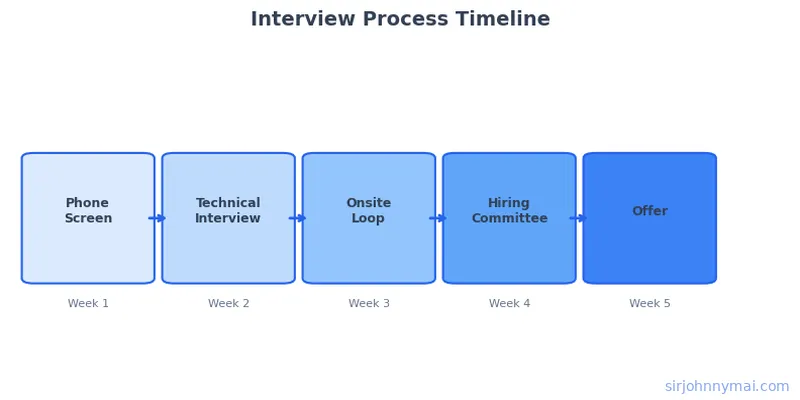
Amazon is already telling you how it thinks: its official PM interview prep says the loop is five 55-minute interviews, the writing assessment arrives two days before the loop, and results come within 5 business days. That same operating rhythm applies after you join. Product Manager Interview Prep
This is for the MBA grad who just joined Amazon as a PM, probably in a first big-tech role, and now has to learn that a 1:1 is a judgment meeting, not a social ritual.
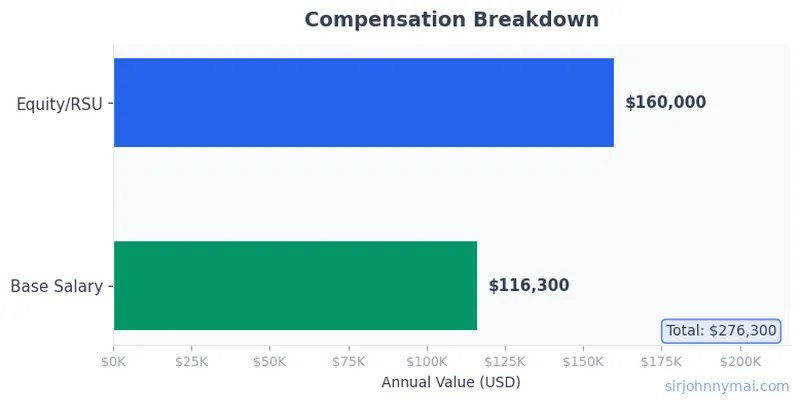
If you are coming in at a current Seattle PM II level, Amazon postings have shown base salary ranges of $116,300 to $160,000, while some MBA-tagged PM roles have been posted around $185,037 to $204,600 before sign-on and RSUs. That compensation comes with high scrutiny. Product Manager II, Product Mgr III Tech MBA
The reader I have in mind is smart, polished, and used to structured environments. That is not enough here. Amazon rewards judgment under ambiguity, not fluent commentary.
What should my first 1:1 with my Amazon manager accomplish?
The first 1:1 is where your manager decides whether you are an operator or a note-taker.
In a Q3 debrief I sat in, the candidate who won confidence did not give the cleanest story. She named the decision she owned, the assumption she was testing, and the point where she needed escalation. The room got quiet because there was nothing fake to object to. That is the model.
Your first meeting should set three things: decision rights, cadence, and the standard for what counts as a good update. Not relationship-building, but operating alignment. Not a tour of your résumé, but a contract for how work will move.
Bring a short readout with four parts. What you know. What you do not know. What you think matters most. What you need from your manager. If you cannot say those four things cleanly, the meeting is already too vague.
The deeper principle is organizational psychology, not etiquette. Managers trust people who reduce uncertainty. A first 1:1 is a test of whether you can compress noise into a clear ask.
How often should 1:1s happen in the first 90 days?
Weekly is the right cadence early on. Anything less usually means the role is not yet real, or the manager is hoping the ambiguity will sort itself out.
The first 8 to 12 weeks are about building a shared operating rhythm. If the scope is still changing, if the dependencies are still moving, or if you are still mapping the org, weekly meetings are the minimum viable cadence. Biweekly only works after the agenda stops being a guess.
This is not a status ritual. It is a pressure test. Not a social calendar block, but a control surface. If each meeting does not change the next week’s work, the cadence is wrong or the meeting is badly used.
I have seen teams pretend fewer meetings means maturity. Usually it means drift. The PM who sends one crisp pre-read and gets one crisp decision has a stronger operating model than the PM who talks every other week and leaves with "let’s keep monitoring it."
There is also a power dynamic here. New MBA grads often hesitate to ask for frequent time because they think it looks needy. That is a mistake. At Amazon, early cadence signals ownership, not dependence.
What does Amazon actually judge in a 1:1?
Amazon judges clarity, ownership, and recovery speed. It does not reward performance art.
That judgment comes straight out of the company’s Leadership Principles. The relevant ones are Ownership, Earn Trust, Dive Deep, Have Backbone; Disagree and Commit, and Deliver Results. Leadership Principles is not a poster. It is the review rubric.
In hiring committee-style debriefs, I have watched strong-looking candidates fall apart because they kept speaking in abstractions. The objection was never "this person is polite." The objection was "this person does not seem to know where the decision lives." The same logic applies in a 1:1.
Not "tell me everything," but "tell me the thing that changes the plan." Not "show me you are busy," but "show me you know what matters." Not "prove you are agreeable," but "prove you can think and then commit."
Amazon managers read 1:1 behavior as evidence of how you will behave under pressure. If you hide misses, minimize risks, or wait for perfect certainty, that signal compounds quickly. If you surface the hard part early and keep the rest of the system informed, you build trust fast.
What should I bring when I do not have data yet?
Bring hypotheses, not excuses.
No one expects a new MBA PM to know the system on day 10. They do expect you to think like an owner. That means you bring a plausible read, the evidence you have, and the question you want answered.
When you do not have numbers, bring one customer story, one dependency map, and one explicit tradeoff. If the only thing you bring is "I’m still learning," you have not done the work. If you bring "I think the bottleneck is X because of Y, and I want your read on whether I should test A or B," you are acting like a PM.
This is where people misunderstand "Dive Deep." Dive Deep is not hoarding data. It is knowing which detail changes the decision. The weak move is to gather more slides. The stronger move is to narrow uncertainty.
I have seen this in Amazon launch reviews. The person who owns the room is rarely the one with the largest deck. It is the one who can say, in one sentence, what is reversible, what is not, and what should happen next.
That is why 1:1s punish vague intelligence. Not because Amazon wants certainty, but because it wants structured uncertainty. The best PMs do not pretend they know. They show how they think.
How do I handle disagreement, escalation, and silence?
Disagreement is normal. Silence is the problem.
If your manager pushes back, do not defend the whole plan. Narrow the dispute to one assumption. In practice, that is how serious Amazon conversations work. The debate is not about your identity. It is about the business consequence of being wrong.
In a hiring-manager conversation I sat through, the strongest candidate did not win by insisting. She won by restating the disagreement, naming the risk, and asking what evidence would change the manager’s view. That is backbone without theater.
Not a complaint log, but a prioritization test. Not a debate about who is right, but a decision about what to do next. Not a plea for reassurance, but a request for a tradeoff.
Silence needs even firmer handling. If your manager goes quiet, ask for a decision, a deadline, or the next checkpoint. Do not leave with "let’s circle back" unless there is a clear owner and date. Ambiguity that survives a 1:1 becomes delay in the rest of the org.
The psychology is simple. People trust the colleague who makes the conversation smaller and more concrete. They distrust the colleague who leaves every issue floating.
How to Get Interview-Ready
Prepare like this, or your first 90 days will turn into expensive theater.
- Write a 30/60/90 plan with three bets, three risks, and one measurable outcome for each bet.
- Bring a one-page agenda to every 1:1: wins, misses, decisions needed, and asks.
- Pre-wire your manager before the meeting if a decision is likely to get stuck.
- Keep a running log of customer feedback, metric movement, and cross-functional friction.
- Practice one crisp status sentence and one crisp escalation sentence until they sound natural.
- Work through a structured preparation system (the PM Interview Playbook covers Amazon Leadership Principle stories and real debrief examples, which is the same judgment muscle you need in a 1:1).
- Learn the names, incentives, and decision rights of the partner teams, because Amazon punishes wrong-room conversations.
Traps That Cost Candidates the Offer
The worst 1:1 mistakes are not technical. They are judgment failures.
- Turning the meeting into a status dump
BAD: "I talked to three people, updated the doc, and I’m waiting on feedback."
GOOD: "The decision is between A and B. I recommend A because it lowers launch risk, and I need your call by Thursday."
- Fishing for reassurance instead of ownership
BAD: "Do you think I’m doing okay?"
GOOD: "These are the two risks I see. Here is how I’m handling them. Tell me which one you think is real."
- Speaking in Leadership Principle slogans
BAD: "I’m customer obsessed and bias for action."
GOOD: "Here is the customer pain, the tradeoff I made, and the metric or signal I used."
FAQ
- How long should my first Amazon 1:1 be?
30 to 45 minutes is enough if there is no live decision. Use a full hour only when the meeting needs depth. If every 1:1 is an hour, you are probably overexplaining and underpreparing.
- Should I talk about promotion in my first month?
No. First establish output and decision quality. Promotion talk before evidence reads as insecurity, not ambition. Amazon rewards visible ownership before it rewards career talk.
- What if my manager gives vague feedback?
Force specificity with options and deadlines. Vague managers become clearer when you present a binary choice and ask what would change their mind. Silence is often a request for structure.
Ready to build a real interview prep system?
Get the full PM Interview Prep System →
The book is also available on Amazon Kindle.