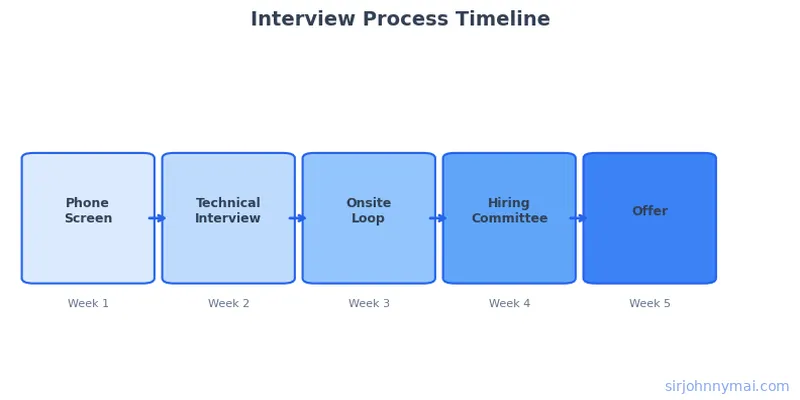
1:1 basics for career changers moving to product management are not about sounding polished; they are about proving judgment early. In a 30 to 45 minute conversation, the manager is trying to cut uncertainty before the loop expands into 4 to 6 rounds. If you walk in with a resume tour, you look like a candidate. If you walk in with a product thesis, you look like someone who can operate.
At the common $140k to $220k total-comp band for early PM roles in the U.S., managers do not pay for enthusiasm. They pay for evidence that you can prioritize, ask clean questions, and absorb ambiguity without performing it.
The candidates who usually fail these 1:1s are not the unprepared ones. They are the ones who mistake warmth for credibility, or biography for signal.
What is a 1:1 actually for when you are changing careers?
A 1:1 is a calibration meeting, not a friendship test. In one debrief I sat in, the hiring manager said the candidate was “pleasant but hard to place.” That was the real failure. The candidate had good stories, but the room could not map those stories to product judgment, so the conversation never moved past surface trust.
The psychology is simple. Managers use 1:1s to reduce uncertainty. They are not looking for a perfect answer. They are looking for a stable signal. Not a networking conversation, but a low-cost audition. Not social chemistry, but evidence that your thinking holds up when the topic becomes tradeoffs, priorities, and ownership.
Career changers make a bad mistake here. They try to be remembered as impressive people instead of useful operators. In practice, that backfires. A polished generalist raises questions. A person who can say, “Here is how I handle ambiguity, and here is the product-shaped pattern in my work,” lowers them.
> 📖 Related: Riot Games PMM career path levels and salary 2026
What should you say in the first 10 minutes?
You should say what kind of product thinker you are and why the transition is happening now. In a hiring manager conversation last quarter, a former consultant opened with a clean thesis about seeing repeated customer pain, influencing decisions without authority, and wanting direct ownership of outcomes. The manager relaxed immediately because the candidate sounded like someone with a point of view, not someone shopping for a better brand.
The first 10 minutes are not for your life story. They are for your operating thesis. Not “I have done a lot of things,” but “this is the pattern across my work.” Not “I’m interested in product,” but “my background has trained me to notice X, and I want a role where X matters.” That framing tells the manager you understand translation, which is half of career change.
A weak opening sounds like a biography. A strong opening sounds like a decision. The difference matters because managers do not hire histories. They hire trajectories they can defend later in debrief. If your opening forces them to do the translation work, you are already making the room work too hard.
How do you answer “Why Product?” without sounding manufactured?
You answer it with evidence from your past role, not with a passion script. In a Q3 debrief, the hiring manager pushed back on a candidate who said they “love building products.” The problem was not the phrase. The problem was that nothing in the rest of the conversation proved the candidate had ever noticed, framed, and resolved a product tradeoff.
That is the hidden test. The room is asking whether product is a destination or a cover story. Career changers often sound manufactured because they over-explain motivation and under-explain evidence. Not “I want to make an impact,” but “I kept getting pulled into prioritization, customer friction, and cross-functional alignment, and that is where my strongest work showed up.”
The better answer is usually narrower than people expect. Product is not a personality choice. It is a work-shape choice. If your old role forced you to synthesize messy input, pressure-test assumptions, and move decisions forward, say that plainly. If it did not, do not pretend it did. Hiring managers are much more forgiving of honest specificity than of generic aspiration.
> 📖 Related: uiuc-cs-to-pm-career-switch
What questions should you ask in a 1:1?
You should ask questions that reveal how the team makes decisions, where the pain sits, and what kind of judgment the manager rewards. In a hiring committee discussion, one candidate asked about roadmap ownership, disagreement patterns, and how the team defines a bad product decision. That candidate sounded serious. Another candidate asked, “What does success look like?” and then waited for a generic answer. That candidate sounded uncalibrated.
The distinction is not cosmetic. Good questions reduce ambiguity for both sides. Bad questions make you look like you are collecting brand impressions. Not “How is the culture?” but “What decision does a PM here actually own in the first 90 days?” Not “What tools do you use?” but “Where do decisions usually get stuck, and who unblocks them?” Those questions show you understand operating structure, not just vocabulary.
There is also a status signal hidden in the question. Strong candidates ask about failure modes, not just nice things. They want to know where the team breaks, because that is where the job is real. In product hiring rooms, that reads as maturity. People who ask only polished questions usually still think the role is mostly storytelling.
How do you read the hiring manager’s signals?
You read them by how deep they go, not by how friendly they sound. If the manager starts shifting from general conversation to scenarios, tradeoffs, and follow-up ownership, that is interest. If they stay in broad, polite territory and never test your thinking, the room is conserving energy.
In one manager debrief I observed, the interview started with small talk and ended with the manager asking how the candidate would handle a feature conflict between sales pressure and customer evidence. That move mattered. It meant the manager was trying to imagine the candidate inside the job, not just across the table. Organizationally, that is the real signal. Managers do not move to scenario testing when they are merely entertained.
Do not confuse warmth with momentum. A friendly conversation can still be a soft no. A skeptical conversation can still be a strong yes. The strongest signal is not praise. It is specificity. If they ask how you would think through a real tradeoff, they are measuring fit for responsibility. If they only ask background questions, they may still be deciding whether you belong in the funnel.
How to Prepare Effectively
- Write a 30-second transition thesis that ties your past role to one product-shaped decision pattern.
- Prepare two stories from your background: one about prioritization and one about ambiguity.
- Bring three questions that expose decision rights, failure modes, and cross-functional friction.
- Practice answering “Why Product?” without using the words “passion,” “impact,” or “love building.”
- Work through a structured preparation system (the PM Interview Playbook covers 1:1 question design and hiring-manager debrief patterns with real debrief examples) so your examples sound like operating evidence, not marketing copy.
- Rehearse a 30 to 45 minute 1:1 aloud, because rambling is usually a sign of weak structure, not weak experience.
- Decide in advance which parts of your background are evidence and which are biography, then keep biography short.
What Separates Passes from Near-Misses
The usual failure is not lack of talent. It is bad positioning.
- Talking like the 1:1 is a resume recital.
BAD: “I started in finance, then moved to consulting, then did ops, then got interested in product.”
GOOD: “My pattern has been moving messy problems into cleaner decisions, and product is the first role that rewards that directly.”
- Asking generic questions that could belong to any company.
BAD: “What does success look like?”
GOOD: “What decision would a PM here actually own in the first 90 days, and where do new hires usually misread the room?”
- Using your prior career as an apology or a sales pitch.
BAD: “I know I’m not traditional, but I really want this.”
GOOD: “My background is not product, but it has trained me to spot tradeoffs, surface constraints, and influence without authority.”
FAQ
- Is a 1:1 an interview or a conversation?
It is an interview with conversational packaging. If the manager is deciding whether to spend more hiring time on you, it is an evaluation. Treat it like one. If you treat it like coffee, you will speak too loosely and leave without signal.
- How much of my non-PM background should I mention?
Enough to prove translation, not enough to tell your life story. The room needs evidence that your previous role built relevant judgment. It does not need every job title. The rule is simple: evidence first, biography second.
- What if the manager seems uninterested?
Treat it as a weak signal, not a personal verdict. Sometimes the manager is busy. Sometimes the fit is thin. Either way, do not chase interest with more talking. Keep your answers sharp, ask one serious question, and leave cleanly.
Ready to build a real interview prep system?
Get the full PM Interview Prep System →
The book is also available on Amazon Kindle.