One-on-one meetings are a legacy artifact that destroys deep work in remote environments.
Your current meeting cadence is a crutch for weak asynchronous documentation.
Replace synchronous check-ins with structured written updates to reclaim twenty hours of engineering time per week.
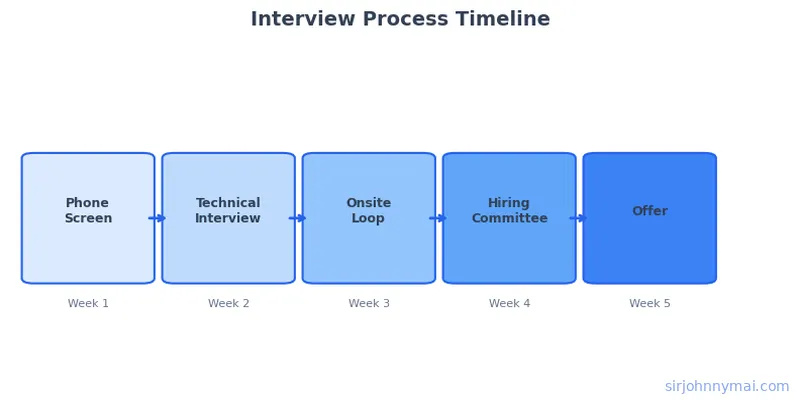
Distributed startups must replace synchronous check-ins with async-first status rituals and explicit decision logs.
Product leaders who cling to weekly video calls signal an inability to manage by output rather than presence.
Why Do Remote PMs Rely Too Heavily on 1on1 Meetings?
Remote product managers rely on one-on-ones because they lack the confidence to manage via written artifacts alone.
In a physical office, a PM can walk over to a desk and gauge temperature through osmosis.
In a distributed setting, that ambient awareness vanishes, creating a panic response to schedule video time.
This panic manifests as a recurring calendar invite designed to recreate the hallway track digitally.
The problem is not the lack of connection; it is the reliance on synchronous conversation for information that should be static.
During a Q3 debrief at a fintech unicorn, a hiring manager admitted they rejected a candidate who insisted on daily syncs.
The candidate claimed they needed daily contact to unblock the team; the hiring committee saw a bottleneck.
The committee judged that a PM requiring daily verbal intervention cannot scale a team beyond five people.
Your reliance on 1on1s signals that your documentation is insufficient, not that your team is disengaged.
The issue is not your answer about needing connection; it is your judgment signal regarding scalability.
Real leadership in distributed environments means trusting that if it is not written down, it does not exist.
If you cannot extract status without a meeting, your project tracking system is broken, not your communication style.
Most PMs use 1on1s to feel productive while avoiding the hard work of clarifying requirements in writing.
You are not building rapport; you are creating a dependency loop that prevents autonomous execution.
The candidates who prepare the most often perform the worst because they over-index on interpersonal management tactics.
True scale comes from systems that function regardless of whether the PM is awake or present.
> 📖 Related: Notion SDE to PM career transition guide 2026
What Are the Best Asynchronous Alternatives to Weekly Syncs?
The most effective alternative to weekly syncs is a rigid structure of written weekly summaries and decision logs.
At a high-growth logistics startup, the product team replaced all recurring status meetings with a Friday "Red/Green" memo.
Engineers spent thirty minutes writing what they shipped, what blocked them, and what they planned next.
The PM spent forty-five minutes reviewing, commenting asynchronously, and updating the roadmap based on reality.
This shift recovered eighteen hours of collective engineering time per week, directly accelerating feature velocity.
The key insight is that status updates are data transfer, which is inefficient synchronously but perfect asynchronously.
Discussion and debate require synchronicity; information sharing does not.
You must distinguish between coordination, which can be async, and collaboration, which sometimes needs live time.
Most teams conflate the two, wasting expensive synchronous time on things that could be a bullet point.
A well-structured written update forces clarity that verbal rambling often obscures.
When an engineer writes "I am blocked by API latency," it is a factual statement requiring action.
When they say it in a meeting, it often devolves into a twenty-minute troubleshooting session involving the wrong people.
The written word creates a permanent record of commitment and obstruction that verbal agreements lack.
In a hiring committee review, we prioritized candidates who demonstrated a bias for written documentation over verbal charisma.
We observed that charismatic verbalizers often left trails of confusion, while quiet writers left trails of executed plans.
Your goal is not to find a different type of meeting; it is to build a system where meetings are rare exceptions.
The "Red/Green" memo format requires three sections: Accomplishments, Blockers, and Next Steps.
Nothing else belongs in a status update.
If you need to discuss a blocker, you tag the relevant person in the comment thread, not on a video call.
This creates a public queue of problems to solve rather than a private conversation that excludes stakeholders.
The judgment here is binary: either your team can communicate status in writing, or they are not ready for remote work.
There is no middle ground where "hybrid" communication styles work at scale.
You must choose between the illusion of control via video or the reality of progress via text.
How Can Startups Maintain Team Culture Without Regular Video Calls?
Startups maintain culture without regular video calls by embedding values into written feedback and public recognition rituals.
Culture is not built on awkward virtual coffee chats; it is built on how decisions are made and credited.
At a distributed SaaS company, the leadership team instituted a "Decision of the Week" post in the general channel.
This post highlighted a specific trade-off made, the data used, and the individuals who drove the logic.
This practice reinforced a culture of data-driven decision-making more effectively than any all-hands motivational speech.
The problem isn't your lack of social events; it is your failure to codify values in daily operations.
You do not need a Zoom happy hour; you need a transparent mechanism for rewarding the right behaviors.
When a PM publicly praises an engineer for pushing back on a bad idea, that defines culture.
When a PM silently accepts a delay without inquiry, that also defines culture, negatively.
Remote culture is the aggregate of your written interactions, not the sum of your video pixels.
Many leaders believe culture requires face time; in reality, culture requires consistency in judgment.
If you reward speed over quality in your written comments, no amount of virtual trivia will fix your culture.
The "virtual watercooler" is a myth invented by managers who cannot quantify psychological safety.
Psychological safety comes from knowing that your written contributions are read, considered, and respected.
It comes from a leader who responds to a risky proposal with curiosity in text, not dismissal in voice.
Replace your mandatory fun with mandatory clarity.
A team that knows exactly where they stand and why they are moving fast feels more connected than a team with weekly happy hours.
The judgment is clear: if your culture collapses without video, it was never real to begin with.
Real culture survives the silence of asynchronous work because it is built on trust, not surveillance.
You must stop trying to replicate the office and start leveraging the advantages of distance.
Distance allows for deep work; deep work allows for breakthrough products; breakthrough products create the best culture of all.
Focus your energy on making the written record so compelling that people want to read it.
That is the new watercooler.
> 📖 Related: Adept Tpm Vs Pm Which Career Path
What Tools Enable Effective Async Communication for Product Teams?
Effective async communication for product teams relies on tools that enforce structure rather than those that enable chaos.
Slack and Teams are often the enemy of productivity when used as primary repositories for product logic.
At a Series B healthtech firm, we banned product discussions from chat channels entirely, forcing them into Linear and Notion.
Chat is for coordination; documentation tools are for context.
When product requirements live in a chat stream, they become ephemeral and unsearchable, leading to repeated questions.
When requirements live in a dedicated ticket or doc, they become the single source of truth.
The tool choice is less important than the discipline of where information is allowed to reside.
You need a project management tool that serves as the dashboard, not a spreadsheet updated after a meeting.
The insight here is that tools do not solve process problems; they amplify existing behaviors.
If your process is chaotic, a fancy new tool will just give you chaotic data faster.
However, certain tools enforce better habits by design.
Threaded conversations in tools like Linear or Jira keep context attached to the specific work item.
This prevents the "where did we decide that?" phenomenon that plagues remote teams.
In a debrief with a hiring manager, the discussion turned to a candidate's tool stack proficiency.
The manager dismissed the candidate's expertise in niche tools, focusing instead on their ability to enforce tool discipline.
The candidate who could articulate why they moved a conversation from Slack to a Ticket got the offer.
The judgment is that tool agnosticism is a virtue; tool dependency is a liability.
Your team should be able to switch tools without losing their ability to execute.
The medium is not the message; the structure of the information is the message.
Ensure your chosen stack supports linking: every decision doc links to a ticket, every ticket links to code.
This web of connectivity replaces the need for verbal handoffs.
If you have to explain the history of a feature in a meeting, your toolchain has failed.
Stop looking for a tool that makes video calls better; look for tools that make video calls unnecessary.
The best tool for a remote PM is a well-maintained backlog that speaks for itself.
How Do You Measure PM Performance Without Meeting Attendance?
You measure PM performance without meeting attendance by evaluating the clarity of their output and the velocity of their team.
Attendance is a vanity metric that correlates poorly with product success in distributed environments.
At a top-tier e-commerce platform, we evaluated PMs solely on the "Ambiguity Reduction Rate" of their tickets.
If an engineer could pick up a ticket and ship it without asking a single clarifying question, the PM succeeded.
If the engineer had to stop and ask for context, the PM's performance rating suffered.
This metric shifts the burden of communication from the consumer to the producer of information.
It forces the PM to think through edge cases before assigning work.
The counter-intuitive observation is that the most effective remote PMs are often the quietest in meetings.
They spend their time writing, refining, and thinking, leaving little room for performative discussion.
Your evaluation criteria must shift from "how much did they talk?" to "how little did the team need to talk?"
High-performing teams have low communication overhead because the prerequisites for work are already met.
In a hiring committee, we scrutinized candidates who boasted about their meeting-heavy schedules.
We interpreted heavy meeting loads as an inability to prioritize or delegate effectively.
The ideal PM creates a system where the team runs itself for days at a time.
Measure the time-to-first-comment on a new spec; if it takes days, the spec is unclear.
Measure the ratio of rework to initial build; high rework indicates poor upfront definition.
These are objective, quantifiable metrics that replace the subjective feel of a video call.
Do not be fooled by the appearance of busyness.
A PM who is constantly available for calls is often a PM who is preventing their team from entering flow state.
Judge them by the silence of their team, not the noise of their calendar.
The goal is autonomous execution, not constant supervision.
If your engineers are waiting for you to speak before they act, you are the bottleneck.
Performance is defined by the throughput of value, not the volume of conversation.
Adopt metrics that reward independence and penalize ambiguity.
This approach separates the managers who create dependency from the leaders who create capability.
Your hiring and promotion decisions should reflect this distinction immediately.
The market rewards shipped products, not meeting minutes.
A Practical Prep Framework
- Implement a "No-Meeting Wednesday" policy to force reliance on written updates and documentation.
- Audit your current recurring meetings and cancel any that do not have a written agenda and desired outcome.
- Establish a "Single Source of Truth" rule where all decisions must be logged in a central doc, not chat.
- Train your team on the "Red/Green" weekly update format to replace status syncs.
- Work through a structured preparation system (the PM Interview Playbook covers asynchronous communication frameworks with real debrief examples) to refine your written articulation skills.
- Define clear "Ambiguity Reduction" metrics for your product team's performance reviews.
- Create a template for decision logs that includes the problem, options considered, decision made, and owner.
How Strong Candidates Still Fail
Mistake 1: Replacing Meetings with More Meetings
BAD: Cancelling the weekly status sync and immediately scheduling a daily standup and a Friday retro.
GOOD: Cancelling the sync and implementing a written Friday memo with a 24-hour review window.
Judgment: Stacking synchronous events proves you value activity over output.
Mistake 2: Allowing Critical Decisions in Chat
BAD: Agreeing to a major scope change in a Slack thread that gets lost in the archive.
GOOD: Insisting that any scope change be documented in the ticket and linked to the roadmap before execution.
Judgment: If it is not in the official record, the decision did not happen.
Mistake 3: Measuring Presence Instead of Progress
BAD: Promoting a PM because they are always "online" and responsive to pings instantly.
GOOD: Promoting a PM whose team ships consistently with zero clarifying meetings.
Judgment: Responsiveness is a trait of an assistant; strategic impact is a trait of a leader.
More PM Career Resources
Explore frameworks, salary data, and interview guides from a Silicon Valley Product Leader.
FAQ
Is it possible to build trust with a remote team without video calls?
Yes, trust is built through reliability and clarity, not video presence. When you consistently deliver clear requirements and respect deep work time, trust compounds. Video calls often simulate trust without building the underlying substance of reliable execution.
What should I do if my team insists they need meetings to feel connected?
Acknowledge their feeling but diagnose the root cause: likely poor documentation or unclear goals. Replace the social aspect of meetings with dedicated non-work channels or optional virtual co-working sessions. Do not sacrifice productive time for the illusion of connection.
How do I transition an existing team from meeting-heavy to async-first?
Start by canceling one recurring meeting and replacing it with a written alternative. Demonstrate that the work gets done faster and with less friction. Gradually increase the ratio of async communication, reinforcing the behavior by praising clear writing over articulate speaking.
Your next 1:1 doesn't have to be awkward.
Get the 1:1 Meeting Cheatsheet → — scripts for tough conversations, promotion asks, and managing up when your manager isn't great.