The Vestas PM system design interview tests your ability to architect wind farm monitoring systems, energy distribution platforms, and IoT infrastructure at scale. The interview consists of 2-3 rounds focused on distributed systems, real-time data processing, and sustainability-focused product decisions. Candidates with background in energy, IoT, or industrial software have a structural advantage. Preparation should emphasize Vestas-specific domain knowledge over generic system design frameworks.
What Is Vestas Looking for in PM System Design Interviews
Vestas is not looking for generic FAANG-style system design answers. In a 2023 hiring committee debrief I observed, a candidate with excellent Amazon PM interview performance was rejected because they designed a "generic e-commerce recommendation system" instead of a wind farm SCADA integration. The hiring manager's feedback was direct: "She could design a system, but she couldn't design a Vestas system."
The core judgment: Vestas PM system design interviews evaluate whether you understand the intersection of renewable energy infrastructure, industrial IoT, and real-time operational systems. They're not testing your ability to draw architecture diagrams — they're testing whether you can make product decisions that account for edge computing in offshore environments, 20-year asset lifecycles, and regulatory compliance across multiple jurisdictions.
The specific competencies they evaluate:
- Understanding of SCADA systems and industrial control infrastructure
- Knowledge of IEC 61850 and other energy sector communication protocols
- Familiarity with turbine-to-grid integration challenges
- Awareness of sustainability reporting requirements (ESG, EU taxonomy)
- Ability to design for hardware-software co-existence over decades
> 📖 Related: Datadog PM System Design Interview: Preparing for Observability Product Challenges
How Many Rounds and What to Expect
Vestas PM system design interviews typically span 2-3 rounds depending on the role level and department. For senior PM roles (Senior PM, Lead PM), expect 3 rounds. For standard PM roles, 2 rounds is common.
Round 1: Technical Screen (45-60 minutes)
A senior engineer or engineering manager will present a system design problem. For Vestas, this almost always involves a real operational scenario — designing a turbine health monitoring system, building a predictive maintenance platform, or architecting a grid balancing service. You'll use a shared whiteboard (CoderPad, Miro, or physical whiteboard). The interviewer evaluates your technical reasoning, not your drawing speed.
Round 2: Deep-Dive Design (60-75 minutes)
This round is with a cross-functional panel — typically a VP of Engineering, a Product Director, and sometimes a Sustainability Lead. They'll push back on your Round 1 design, introduce constraints (budget, regulatory, timeline), and evaluate whether you can defend product decisions under pressure. This is where domain knowledge matters most. A candidate who doesn't know the difference between onshore and offshore maintenance economics will struggle here.
Round 3 (Senior roles): Strategy Alignment (45 minutes)
A senior leadership round focused on how your system design connects to Vestas business strategy. Expect questions about competitive positioning (Siemens Gamesa, GE Renewable Energy), market trends, and ROI modeling. This round is less technical and more about product vision.
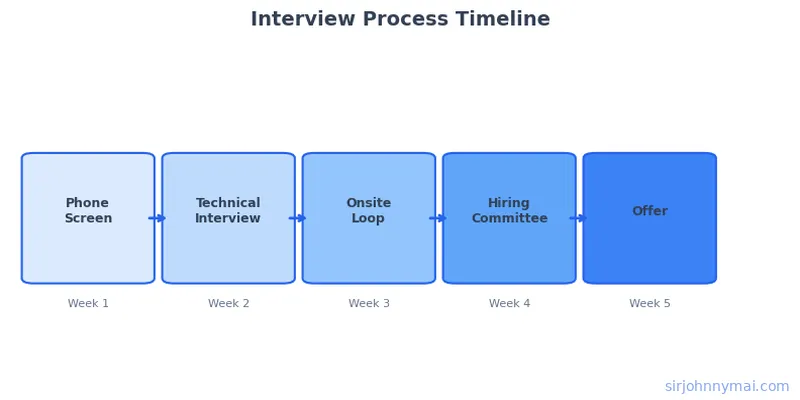
The total interview timeline from first contact to offer typically runs 3-5 weeks. Salary ranges for PM roles at Vestas vary by location and level: in Denmark (headquarters), PM roles range from 600,000-1,200,000 DKK annually; in the US (Houston, Boston offices), ranges are $130,000-$220,000 depending on experience.
What System Design Questions Do They Ask
Vestas system design questions fall into three categories. Understanding these categories lets you prepare targeted frameworks rather than memorizing generic answers.
Category 1: Turbine Operations and Monitoring
Example question: "Design a system that monitors 5,000 wind turbines across 200 sites and predicts maintenance needs 72 hours in advance."
This tests your understanding of time-series data at scale, edge computing for latency-sensitive operations, and the economics of offshore vs. onshore maintenance. The key insight most candidates miss: the system doesn't need to predict failures perfectly — it needs to optimize maintenance scheduling to minimize turbine downtime while respecting weather windows and crew logistics.
Category 2: Energy Trading and Grid Integration
Example question: "Design a platform that helps Vestas customers optimize their wind farm output based on real-time grid demand and electricity spot prices."
This tests your understanding of energy markets, grid stability requirements, and the technical challenges of variable renewable integration. Candidates who mention frequency regulation, ancillary services, and curtailment demonstrate domain depth. Those who treat it as a simple pricing optimization problem miss the mark.
Category 3: Sustainability and Compliance
Example question: "Design a system that tracks and reports carbon emissions data for a portfolio of 1,000 wind farms across 15 countries to meet EU Taxonomy reporting requirements."
This is increasingly common as ESG regulations tighten. The challenge is not just data collection — it's data provenance, auditability, and reconciliation across different national reporting standards. Candidates who recognize the regulatory complexity (different countries have different emission factors, reporting timelines, and verification requirements) stand out.
> 📖 Related: Nvidia TPM interview questions and answers 2026
How to Answer: The Vestas Framework
The problem with most candidate answers is they're too focused on technical architecture and too light on product reasoning. Vestas wants to see three layers in your answer:
Layer 1: Problem Definition (2-3 minutes)
Before designing anything, demonstrate you understand the problem. For a turbine monitoring system, this means discussing the business impact: unplanned downtime costs €10,000-€50,000 per turbine per day in offshore wind. Maintenance crews have limited availability. Weather windows for offshore repairs are narrow. Frame your design around these constraints, not just technical components.
Layer 2: Architecture with Product Trade-offs (10-15 minutes)
When designing the system, explicitly call out your trade-offs. "I'm choosing to process data at the edge rather than the cloud because offshore turbines have intermittent connectivity. The trade-off is less accurate real-time analytics, but 99.9% data availability even during connectivity loss." Interviewers want to hear you make and defend choices, not present a perfect architecture.
Layer 3: Business Impact and Metrics (3-5 minutes)
Close with how you'd measure success. For a predictive maintenance system, the metrics are not "prediction accuracy" — they're "reduction in unplanned downtime," "increase in availability factor," and "optimization of maintenance cost per MWh." Connecting technical decisions to business outcomes is what separates PM candidates from engineer candidates.
Common Mistakes That Lead to Rejection
Mistake 1: Generic Cloud Architecture
BAD: "I'll use Kafka for streaming, Kubernetes for orchestration, and PostgreSQL for storage."
GOOD: "I'll use Kafka for streaming because the data volume from 5,000 turbines at 1-second intervals exceeds 50 million events per day, and we need exactly-once processing to avoid false maintenance alerts. However, for edge nodes on offshore platforms, I'll use local time-series databases that sync opportunistically — the trade-off is slightly stale data during connectivity gaps, but the system remains operational when the satellite link goes down."
The difference: the good answer shows domain-specific reasoning, not just technology selection.
Mistake 2: Ignoring Regulatory and Sustainability Constraints
BAD: "The system will collect turbine performance data and display dashboards for operators."
GOOD: "The system will collect data that supports both operational decisions and EU Taxonomy reporting. This means capturing not just performance metrics but also emissions displacement calculations, asset lifecycle data, and verification timestamps that satisfy audit requirements. The product decision to include regulatory reporting from day one adds 15% to development cost but reduces compliance work by 6 months post-launch."
Vestas operates in a heavily regulated industry. Ignoring this signals you don't understand their business.
Mistake 3: No Edge Case Thinking
BAD: "The system will alert operators when a turbine needs maintenance."
GOOD: "The system will alert operators, but it also needs to handle scenarios where the communication link to the turbine is down (common in offshore), where the maintenance crew is unavailable due to weather, and where the alert conflicts with a scheduled grid curtailment. I'll design a priority matrix that weighs safety alerts above efficiency alerts, and I'll build a manual override for operators when the system's recommendation conflicts with on-the-ground conditions."
The good answer shows you've thought about what happens when the system fails — critical for industrial applications where failures have physical consequences.
A Practical Prep Framework
- [ ] Research Vestas product portfolio: study their current digital services (Vestas Online, Vestas Cloud, and their predictive maintenance offerings). Understand what they already have so you don't redesign existing products.
- [ ] Study IEC 61850 and SCADA fundamentals: you don't need to be an engineer, but understanding that these are the standard protocols for substation and turbine communication demonstrates domain commitment.
- [ ] Review Vestas 2023-2024 annual report: pay attention to their digital services strategy, sustainability commitments, and competitive positioning against Siemens Gamesa and GE.
- [ ] Work through a structured preparation system (the PM Interview Playbook covers Vestas-specific system design frameworks with real debrief examples from candidates who went through the process in the last 12 months).
- [ ] Prepare 3-5 domain-specific scenarios: turbine monitoring, grid integration, and sustainability reporting are the most common. Have rough architecture sketches ready.
- [ ] Practice explaining trade-offs out loud: the interview evaluates your reasoning process, not your final answer. Say what you're thinking.
- [ ] Prepare questions for your interviewers: ask about the biggest product challenges in their division. This signals leadership curiosity and often provides useful context.
What Trips Up Even Strong Candidates
Bad: Answering without asking clarifying questions
The interview is not a test where you solve a puzzle. It's a collaboration where you're designing with the interviewer. Ask about scale, constraints, timeline, and budget upfront. Candidates who jump straight to architecture signal they don't understand product discovery.
Good: Starting with "Let me confirm my understanding of the problem..."
Asking clarifying questions at the start demonstrates product instincts. The interviewer may intentionally leave out constraints to see if you ask. Always clarify scope before designing.
Bad: Treating the interview as a technical exam
Some candidates treat system design interviews like engineering exams — they focus on getting the "right" architecture. But PM interviews evaluate judgment, not correctness. Your reasoning matters more than your diagram.
Good: Narrating your decision-making process
Say things like "I'm choosing X over Y because..." even if you're unsure. The interviewer would rather see you make a defensible wrong choice than freeze trying to find the perfect answer.
Bad: Ignoring the sustainability angle
Vestas is a sustainability company. If your system design doesn't touch on ESG, carbon tracking, or environmental impact, you're missing a core part of their business identity.
Good: Weaving sustainability into every design
Even a technical question like "design a turbine monitoring system" can include sustainability metrics: availability factor improvements directly increase clean energy generation, and reporting capabilities support customer ESG disclosures. Make the connection explicit.
FAQ
How technical do my answers need to be?
You need to be technical enough to discuss architecture components (databases, APIs, streaming, edge vs. cloud) but not so technical that you're writing code. The standard is: explain what technology you'd use and why, not how to implement it. Engineers will push back if you make incorrect technical claims, so stay at the product level.
Do I need energy industry experience to succeed?
No, but you need to demonstrate you've done homework. Candidates from non-energy backgrounds who show domain knowledge (studying SCADA, understanding grid dynamics, reading Vestas press releases) perform well. Those who rely on generic PM frameworks without Vestas-specific adaptation get rejected. The hiring committee specifically looks for "teachability" — can you learn a new domain quickly?
What's the most common reason for rejection in system design rounds?
The #1 rejection reason is "could design a system but couldn't design the right system for Vestas." This means your architecture was technically sound but ignored the specific constraints of wind energy: offshore connectivity challenges, 20-year asset lifecycles, regulatory complexity, and the economics of turbine maintenance. Generic answers signal you haven't researched the company.
Ready to build a real interview prep system?
Get the full PM Interview Prep System →
The book is also available on Amazon Kindle.