Microsoft’s product leadership model prioritizes long-term platform thinking over rapid feature shipping, which creates structural tension in fast-moving markets. The company rewards political skill and cross-group influence more than individual product brilliance, especially at senior levels. If you thrive in matrixed environments where consensus is currency, Microsoft offers unmatched scale—but if you need autonomy and speed, you’ll stall.
How does Microsoft define product leadership differently from Google or Amazon?
Microsoft measures product leadership by influence across entrenched engineering orgs, not by ownership of roadmap or P&L. At Amazon, a Principal PM can single-handedly kill a service; at Microsoft, even a Partner PM must negotiate buy-in from three engineering leads before prototyping begins.
In a typical debrief for an Azure AI PM hire, the hiring committee approved the candidate not because of her technical depth, but because she’d previously managed conflict between two competing data platform teams at Snowflake. That experience signaled she could survive Microsoft’s internal friction.
The calculus isn’t about speed or innovation. It’s about survivability in a matrix where peer approval is required for even minor architectural changes.
Not innovation velocity, but ecosystem navigation defines success.
Not individual decision rights, but coalition-building determines promotion.
Not customer obsession alone, but internal stakeholder mapping separates L65 from L70.
Google rewards the fastest mover. Amazon rewards the most customer-obsessed. Microsoft rewards the most politically resilient.
What leadership traits does Microsoft actually promote—despite what their careers page says?
Microsoft’s public leadership principles emphasize “growth mindset” and “customer obsession,” but internal promotion criteria prioritize sustained influence across reporting lines, especially in engineering-heavy divisions.
I sat in on a 2022 HC meeting where a strong external candidate was rejected despite flawless customer story delivery because he couldn’t articulate how he’d align three Azure infrastructure teams with conflicting incentives. One committee member said, “He speaks like a solo founder. We need diplomats.”
Promotions to L70+ require documented examples of cross-org alignment under resistance—such as negotiating API access from a rival team or forcing standardization across siloed platforms. The bar isn’t shipping; it’s changing behavior in peers who don’t report to you.
This isn’t about charisma. It’s about leveraging formal and informal power levers: escalation rights, alliance networks, and data-backed mandates.
Not transparency, but strategic information control gets you heard.
Not bold vision, but incremental coalition gains get you promoted.
Not customer quotes, but internal stakeholder testimony dominates promo packets.
How do Microsoft PMs gain real decision-making power without direct reports?
Power at Microsoft flows through dependencies, not titles. A PM gains leverage by controlling access to regulated resources: compliance sign-offs, security reviews, or go-to-market budgets.
In 2021, a mid-level PM in Dynamics managed to shift roadmap priorities not by asserting authority, but by tying a new feature to GDPR compliance delays. She didn’t own security—but she positioned her team as the bottleneck. Engineering complied within 72 hours.
Senior PMs weaponize process. They don’t bypass gates; they become the gate. Whether it’s delaying a launch over accessibility checks or requiring AI ethics reviews, the most effective leaders insert themselves into mandatory workflows.
This isn’t dysfunction—it’s the system working as designed. Microsoft’s size demands friction to prevent chaos.
Not roadmap ownership, but control of approval chains creates power.
Not team size, but breadth of dependency determines influence.
Not direct authority, but procedural leverage breaks deadlocks.
What are the real career progression paths for PMs at Microsoft?
L60 to L65 progression typically takes 3–5 years and hinges on shipping a visible feature within a major product (e.g., Teams integration, Copilot extension). But L65 to L70 is not time-bound—it’s event-driven. You need one “step-function” contribution: unifying two platforms, leading a turnaround, or securing a strategic enterprise deal.
I reviewed a failed L70 packet in 2023 for a PM who shipped consistently but never altered org behavior. The feedback: “You executed well, but no one changed how they worked because of you.”
External hires rarely reach L70 unless they come from equally complex environments (e.g., Oracle, SAP, or large financial institutions). Microsoft distrusts “lone genius” narratives. It promotes those who’ve already operated in peer-stalled systems.
The fastest path to L75? Lead a cross-product initiative under a CVP who’s up for promotion. Your success becomes their proof point.
Not tenure, but scale of systemic impact accelerates promotion.
Not output volume, but organizational rewiring triggers L70 approval.
Not individual brilliance, but enablement of others unlocks executive tiers.
What does the Microsoft PM interview process really test at senior levels?
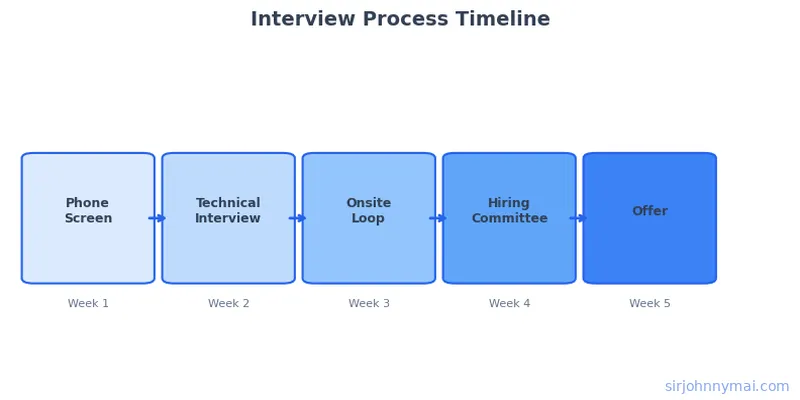
For L65+, the interview loop tests political foresight—not product fundamentals. You’ll face 5–6 rounds over 2–3 weeks, including 2 behavioral, 1 design, 1 metric, and 1 executive review. But the deciding factor is whether you signal awareness of Microsoft-specific trade-offs.
In a 2023 panel, a candidate aced every case but was rejected because he suggested “letting the best idea win” in a conflict between Azure and Windows teams. The debrief note read: “Unrealistic. At this level, you must assume the best idea loses without sponsorship.”
Interviewers probe for:
- How you’d handle a feature blocked by a peer PM with stronger executive backing
- Whether you escalate early or build grassroots support
- If you prioritize customer need or internal momentum
They’re not assessing correctness. They’re assessing alignment with Microsoft’s unwritten rules.
Not problem-solving, but conflict navigation determines outcome.
Not customer-centric answers, but org-aware responses earn top scores.
Not speed of execution, but sensitivity to power dynamics separates hires from rejections.
How to Get Interview-Ready
- Map the top three power centers in your target division (e.g., Azure Infrastructure, Office Platform, Security + Compliance) and understand their KPIs
- Prepare 2–3 stories that demonstrate influence without authority, focusing on peer team conflicts and resolution tactics
- Study Microsoft’s recent $1B+ enterprise deals and identify which product leaders were involved
- Anticipate escalation scenarios—be ready to explain when you’d loop in a director vs. fix it laterally
- Work through a structured preparation system (the PM Interview Playbook covers Microsoft org dynamics and HC review patterns with real debrief examples)
- Practice answering “What would you do if your roadmap conflicts with a higher-priority initiative from another team?” using Microsoft’s “win-win reframe” approach
- Review Microsoft’s last three annual reports and internalize Satya Nadella’s stated strategic themes (AI, cloud, enterprise trust)
Traps That Cost Candidates the Offer
- BAD: Framing a past conflict as “I proved them wrong with data”
In Microsoft’s culture, winning by pure logic is seen as naive. You may have been right, but you ignored relationship tax.
- GOOD: “I let their team own the solution, but steered it to include our requirements through joint discovery”
- BAD: Saying you’d “move fast and ask for forgiveness”
This signals disregard for compliance, security, and partner channels—three non-negotiables at scale.
- GOOD: “I’d run a controlled pilot with governance guardrails, then scale with shared KPIs”
- BAD: Presenting a 3-year vision without naming internal stakeholders who’d block it
Leadership means anticipating resistance, not pretending it doesn’t exist.
- GOOD: “Here’s how I’d align the security and infrastructure leads early—even if it slows phase one”
FAQ
Why do strong external PMs fail at Microsoft despite stellar track records?
Because they underestimate the cost of internal friction. At startups or even Google, you ship and learn. At Microsoft, you align, negotiate, then ship—if consensus holds. The failure isn’t competence; it’s misjudging the operating model. One L70 PM from Facebook lasted 11 months before exiting, saying, “I spent 80% of my time in internal meetings. I wasn’t hired to do that.”
Is it harder to advance as a product leader at Microsoft versus Amazon or Google?
Yes, but differently. Amazon promotes based on single-threaded ownership; Google on technical leverage. Microsoft promotes on sustained influence across independent fiefdoms. The barrier isn’t skill—it’s tolerance for prolonged negotiation. If you measure impact in quarters, Microsoft feels slow. If you measure in years, the scale justifies the grind.
Can you be an innovative product leader at Microsoft, or is it all politics?
Innovation exists, but only through political channels. The leaders who ship breakthroughs don’t bypass the system—they use it. They align compliance early, attach projects to executive priorities, and distribute credit widely. The most innovative PMs aren’t rebels; they’re master operators of the machine. Not resistance, but orchestration drives change.
Ready to build a real interview prep system?
Get the full PM Interview Prep System →
The book is also available on Amazon Kindle.