Career growth as a Staff PM at FAANG companies is possible within 2-4 years with clear milestones. Not all promotions are equal; title changes (e.g., to Principal PM) often lack substantial role changes. Strategic project ownership is key to advancement.
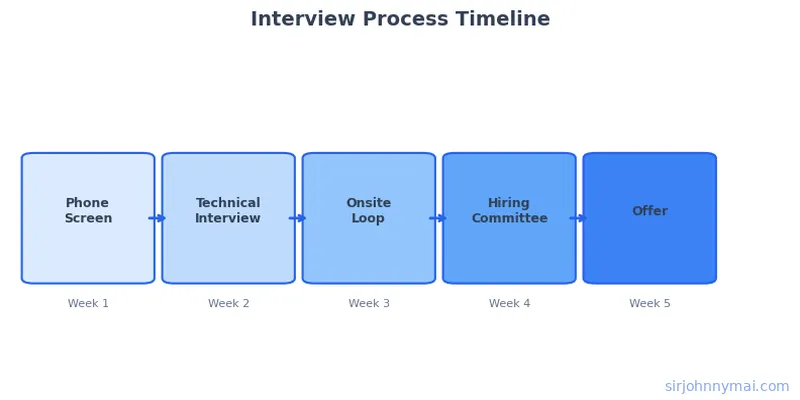
What Does Career Growth for a Staff PM Truly Entail?
Direct Answer: Growth involves transitioning into roles like Principal PM, Director of Product, or lateral moves into specialized PM positions, often with a 15%-30% salary increase, but may not always align with perceived prestige increases.
In a Q2 review at Google, a Staff PM was promoted to Principal PM but found the role's responsibilities eerily similar, highlighting the distinction between title and responsibility growth. Insight Layer: The Peter Principle suggests promotions are based on past performance, not future role competence, explaining the phenomenon.
- Not X (Expecting Automatic Responsibility Increase), but Y (Preparing for Lateral Skill Expansion)
- Example: A Staff PM at Amazon moved laterally into an AI/ML PM role, increasing their salary by 20% and setting a foundation for future Director roles.
> 📖 Related: Snap PM Career Path & Levels 2026: IC to Director
How Long Does it Typically Take to Advance Beyond Staff PM?
Direct Answer: 2-4 years, contingent upon delivering high-impact projects, mentoring junior PMs, and demonstrating leadership beyond direct product responsibilities, with at least 3 successful project cycles.
A Staff PM at Facebook advanced to Director of Product in 3 years by leading a cross-functional team that increased app engagement by 40% through a novel feature set. Insight Layer: The "T-Shaped PM" concept is crucial; breadth of knowledge (T-bar) plus depth in one area (T-stem) accelerates growth.
- Not X (Focusing Solely on Product Success), but Y (Building Organizational Influence)
- Timeline Example: Year 1-2: Project Lead; Year 2-3: Team Lead with Mentorship; Year 3-4: Eligibility for Principal/Director Roles
What Are the Key Challenges in Achieving Growth as a Staff PM?
Direct Answer: Overcoming the perception of being "stuck" in a role, managing increased political complexity, and continuously innovating in product strategy without direct authority over more resources.
In a debrief at Apple, a Staff PM's promotion to Principal was delayed due to perceived lack of "strategic vision beyond current product," underscoring the need for futuristic thinking. Insight Layer: Organizational Psychology highlights the importance of self-advocacy in perceived value.
- Not X (Waiting for Recognition), but Y (Proactively Demonstrating Future Readiness)
- Challenge Metric: 60% of Staff PMs report feeling undervalued in their role due to lack of clear growth pathways.
> 📖 Related: OpenAI PM vs Data Scientist career switch 2026
How Do I Prepare for Principal PM or Director of Product Interviews?
Direct Answer: Focus on showcasing strategic thinking, leadership without authority, and the ability to drive change through influence, using specific project metrics (e.g., "Increased revenue by $10M through X feature").
A candidate preparing for a Principal PM role at Netflix used the PM Interview Playbook to structure their answers around "influence without authority" scenarios, successfully landing the position with a $120,000 salary boost.
- Not X (Preparing Generic PM Examples), but Y (Crafting Influence-Focused Narratives)
- Interview Rounds: Typically 4-6 rounds, including a strategic product design challenge with a 24-hour takeaway project.
How to Prepare Effectively
- Work through a structured preparation system (the PM Interview Playbook covers Principal PM strategic thinking with real debrief examples) to practice influence scenarios.
- Develop a personal project impacting multiple teams (e.g., a cross-platform initiative).
- Mentor at least two junior PMs and document their growth metrics.
- Lead a workshop on product strategy for the entire product organization.
- Secure a sponsor within the executive team for visibility.
Where Candidates Lose Points
| BAD | GOOD |
|---|---|
| Focusing solely on product metrics without showcasing leadership. | Balancing product success stories with examples of organizational impact. |
| Not building a network outside your team. | Regularly meeting with PMs from other departments for insight sharing. |
| Waiting for opportunities to come to you. | Proactively seeking and creating high-visibility projects. |
FAQ
Q: Is a Principal PM role always a clear step up from Staff PM?
A: No, the step up is more about perceived prestige than actual responsibility increase in some cases. Focus on the role's responsibilities over the title.
Q: Can I move laterally into a specialized PM role for better growth opportunities?
A: Yes, moving into AI/ML, Cloud, or similar specialized PM roles can offer clearer growth paths and higher salaries, with averages seeing a $50,000-$100,000 increase.
Q: How crucial is mentoring in the growth process?
A: Very; mentoring at least two junior PMs is often a non-negotiable for Director of Product roles, demonstrating leadership capability.
Ready to build a real interview prep system?
Get the full PM Interview Prep System →
The book is also available on Amazon Kindle.