Asana’s PM interviews test execution over vision—candidates fail when they over-index on strategy. The bar is higher on cross-functional clarity than at most SaaS companies. Your success hinges on proving you can ship, not just think.
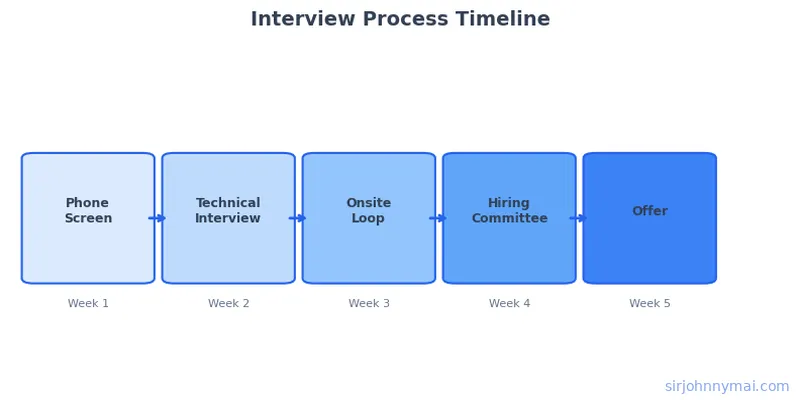
How many interviews does Asana have for PMs?
Five: recruiter screen, hiring manager, product sense, execution, cross-functional.
In a Q2 debrief, the hiring manager flagged a candidate who aced product sense but bombed execution—Asana’s non-negotiable. The signal isn’t your ability to ideate; it’s your ability to de-risk. They run a 45-minute execution round where you’re given a half-baked PRD and must identify the top 3 risks in 10 minutes. The problem isn’t your answer—it’s your judgment signal. Not creativity, but prioritization.
> 📖 Related: Walmart TPM system design interview guide 2026
What’s the hardest part of the Asana PM interview?
The execution round, where they force you to choose between speed and quality.
The interviewing loop is designed to expose PMs who hide behind ambiguity. Asana’s PRD template is infamous: it demands a single metric, a single risk, and a single success criterion. In one loop, a candidate listed 5 risks—automatic reject. The framework is brutal: if you can’t rank-order, you can’t lead. Not breadth, but depth.
How do Asana PMs prioritize work?
They don’t use RICE or WSJF—Asana’s framework is “Impact per Effort per Strategic Alignment.”
In a hiring committee, an HC member vetoed a candidate who defaulted to RICE scoring. Why? Asana’s roadmap is tied to company OKRs, and any prioritization that doesn’t ladder up is noise. The insight: your answer must reference Asana’s public OKRs (e.g., “adoption of new workflows” in 2024). Not generic frameworks, but company-specific leverage.
> 📖 Related: workday-pm-interview-prep-timeline-2026
What’s the salary range for Asana PMs?
P3: $165–190K base, $50–70K bonus, $100–150K RSU. P4: $190–220K base, $70–90K bonus, $150–200K RSU.
Comp is competitive but not FAANG—Asana trades total comp for work-life balance. In a 2023 offer negotiation, a candidate pushed for FAANG-level equity and was told, “We’re not Google.” The judgment: Asana optimizes for retention, not bidding wars. Not max TC, but max stability.
How do Asana PMs work with engineering?
They use a “shared doc” model—no tickets until the PRD is locked.
In a debrief, a candidate described their process as “Jira tickets + biweekly grooming.” The interviewer’s note: “Wouldn’t survive here.” Asana’s engineering org expects PMs to write the first draft of the tech spec. The insight: your execution answer must include how you’d collaborate on a doc, not a tool. Not process, but partnership.
What’s the biggest mistake in Asana PM interviews?
Over-engineering the product vision instead of the execution plan.
In a product sense round, a candidate spent 20 minutes whiteboarding a 3-year roadmap. The interviewer cut them off: “We need this shipped in Q1.” The signal: Asana’s PMs are measured on quarterly impact, not North Star thinking. Not long-term, but next-term.
Building Your Interview Toolkit
- Reverse-engineer Asana’s 2024 OKRs from their investor deck—your prioritization answers must tie to these.
- Practice writing a 1-page PRD with a single metric, single risk, single success criterion.
- Prepare a story where you shipped a feature under tight constraints (time, resources, or scope).
- Master the “Impact per Effort per Strategic Alignment” framework—Asana’s internal prioritization model.
- Work through a structured preparation system (the PM Interview Playbook covers Asana’s execution round with real debrief examples).
- Mock the 45-minute execution round with a peer—focus on identifying risks, not solving them.
- Research Asana’s “shared doc” engineering model—know how to describe your collaboration style.
What Trips Up Even Strong Candidates
- BAD: “I’d use RICE to prioritize.” GOOD: “I’d rank by Impact per Effort per Strategic Alignment to Asana’s 2024 OKR on workflow adoption.”
- BAD: “I’d create a Jira ticket.” GOOD: “I’d draft a shared doc with engineers to align on scope before ticketing.”
- BAD: “The risk is low adoption.” GOOD: “The top risk is engineering underestimating the API changes—here’s how I’d de-risk it.”
FAQ
Do Asana PM interviews include take-homes?
No—they’re all live rounds, but the execution round feels like a take-home in real-time.
How long does Asana’s interview process take?
14–21 days from recruiter screen to offer—faster than FAANG, slower than startups.
What’s the most underrated skill for Asana PMs?
The ability to write a crisp PRD. Asana’s doc culture means your writing is your product.
Ready to build a real interview prep system?
Get the full PM Interview Prep System →
The book is also available on Amazon Kindle.