A Compliance PM in fintech owns regulatory outcomes, not just policy tracking. They are embedded in product teams to prevent violations before code ships. The role isn’t about saying no—it’s about designing guardrails that protect users without breaking the experience.
What does a Compliance PM actually do in a fintech firm?
A Compliance PM prevents regulatory breaches by integrating controls into the product lifecycle. They are not auditors—they are designers of enforceable systems. At Stripe, during a Q3 2023 launch of a cross-border payout product, the Compliance PM led the sprint to embed real-time transaction monitoring into the API flow. The engineering team wanted to reduce latency; the compliance team wanted full audit trails. The PM didn’t compromise. They re-architected the event logging to batch non-critical data, meeting both needs.
The job is not policy interpretation—it’s productization of regulation. When the UK’s FCA released new anti-scam rules for payment apps, a Compliance PM at Revolut didn’t just summarize the mandate. They turned it into a product spec: mandatory confirmation screens for first-time payees, dynamic risk scoring, and a user-facing scam alert system. The feature shipped in 11 weeks, not 6 months, because the PM had already pre-aligned legal, fraud, and engineering.
Not every compliance task belongs in product. The distinction isn’t between “compliant” and “non-compliant”—it’s between systemic risk and operational noise. A PM who treats every legal comment as a user story will drown the roadmap. But one who maps regulations to customer harm chains—like how missing KYC checks enable identity theft—can prioritize what matters.
One PM at Chime rebuilt their entire onboarding funnel after a $25M enforcement action. Instead of adding more forms, they introduced step-by-step ID verification with real-time feedback. Drop-off decreased by 18%, while fraud attempts dropped 34%. That’s the outcome: security that doesn’t feel like friction.
> 📖 Related: Career Changer PM (No Tech Background): How to Negotiate RSU Grants
How is a Compliance PM different from a Risk PM or Legal PM?
The Compliance PM owns regulatory adherence; the Risk PM owns financial loss; the Legal PM owns contractual exposure. These roles are often conflated, but in mature fintechs, they report to different VPs and have separate OKRs.
In a hiring committee at Plaid, a candidate was rejected because they described “managing AML risk” as their core goal. The feedback: “That’s a Risk PM responsibility. A Compliance PM ensures we meet the Bank Secrecy Act’s reporting thresholds, not just detect suspicious behavior.” The distinction isn’t academic—it shapes what they build.
A Risk PM at Robinhood might optimize fraud models to reduce false positives. A Compliance PM ensures those models generate audit logs that satisfy SEC Rule 17a-4. One focuses on accuracy, the other on defensibility.
Legal PMs, meanwhile, often handle data privacy—like GDPR consent flows—and IP-heavy products. But when a feature touches both privacy and regulation, tension arises. At a major neobank, the Legal PM wanted a one-click opt-out for marketing emails. The Compliance PM insisted on a two-step process to prove consent withdrawal was captured—required under Canada’s CASL law. The compromise wasn’t in the interface—it was in the event schema. The Compliance PM mandated a timestamped server-side confirmation, invisible to users but critical for audits.
Not all companies split these roles. Startups blur titles. But as firms scale, the separation becomes structural. At Square, Compliance PMs sit within the Trust & Safety org, not Product. At N26, they rotate quarterly between Compliance and Core Banking squads to maintain context.
The judgment signal isn’t your title—it’s where escalation ends. If regulators call, whose name is on the remediation plan? That’s the Compliance PM.
Why do fintech companies need Compliance PMs now?
Fintechs face more regulatory scrutiny per line of code than any other tech sector. In 2023, the CFPB opened 47 investigations into digital banking apps—up from 12 in 2020. Each enforcement action costs an average of $18M in fines and remediation. Compliance PMs exist to reduce that liability before launch.
The problem isn’t ignorance—it’s velocity. Fintechs move fast, but regulations don’t adapt quickly. When crypto wallets surged in 2021, most lacked travel rule compliance (FATF’s Recommendation 16). The PMs building them focused on UX, not data sharing with VASPs. By 2022, regulators cracked down. Firms without embedded compliance had to retrofit systems—delaying product launches by 5–7 months.
A Compliance PM anticipates this. At Coinbase, the team built a transaction screening layer two years before the U.S. Treasury finalized crypto AML rules. Not because they predicted the rule—they saw the trajectory. The same pattern repeated with open banking in Europe: PSD2 wasn’t a surprise. Firms that waited for the deadline lost 6–9 months of integration time.
The cost of late compliance is not just fines—it’s opportunity cost. One challenger bank paused all international transfers for 72 days while rebuilding compliance logic. Daily revenue drop: $2.3M. A Compliance PM would have flagged the gap during the initial wireframe review.
Not every market demands this role yet. In Brazil or India, local teams often handle compliance through ops. But globally scaling fintechs—those processing >$1B in volume—now treat Compliance PMs as force multipliers. They reduce rework, enable faster GTM, and protect brand trust. That’s not overhead. It’s leverage.
> 📖 Related: Meta PM E4 to E5: Compensation Jump and RSU Strategy for Career Growth
How do Compliance PMs balance user experience with regulatory requirements?
They treat compliance features as UX challenges, not legal checkboxes. When the SEC mandated clearer risk disclosures for options trading, a Compliance PM at SoFi didn’t just add a modal. They tested six versions of dynamic tooltips that surfaced only when users hovered over complex terms. Completion rates rose 29% compared to static pop-ups.
Regulations often force binary choices—disclose or don’t, verify or block. But PMs can design graduated responses. At Monzo, first-time high-value transfers trigger a soft friction layer: a 12-hour wait with an option to verify instantly via biometrics. This satisfies PSD2’s SCA requirements while reducing abandonment. The team measured a 41% opt-in rate for instant verification—far higher than mandatory 24-hour holds.
The key is reframing “compliance UX” as trust architecture. Users don’t care about AML—they care about safety. One PM at Varo redesigned the deposit limit warning from “Regulation D violation” to “Your account is protected—here’s how to increase access.” The message wasn’t about rules. It was about control.
Not all friction can be eliminated. But it can be contextualized. When the FDIC requires error resolution timelines, display them as progress trackers—like delivery estimates. One credit app shows: “We’ll resolve this in 10 days—here’s what we’re checking.” Users perceive transparency, not bureaucracy.
The worst approach is retrofitted compliance. BAD: launching a savings product, then adding a 5-step KYC flow at the end. GOOD: designing onboarding with incremental verification—collect minimal data at sign-up, escalate only when needed. That’s what Brex did for business accounts. Fraud dropped, and time-to-first-transaction improved by 22%.
The insight isn’t that UX and compliance can coexist—it’s that great compliance is UX when done right.
How do you get hired as a Compliance PM in fintech?
You need domain fluency, not just PM skills. In a hiring committee at Ripple, a candidate with 8 years of consumer PM experience was rejected because they couldn’t explain the difference between MSB registration and FinCEN’s SAR thresholds. “We don’t expect everyone to know Title 31,” the HC lead said, “but they should know where to look.”
Hiring managers want PMs who speak both product and regulation. At a late-stage interview for a Compliance PM role at Adyen, candidates were given a redacted ECB opinion and asked to draft a product response. One stood out by identifying the implied risk threshold—€1,000—and proposing a tiered verification flow. Others focused on text changes to disclaimers. The difference wasn’t effort—it was judgment.
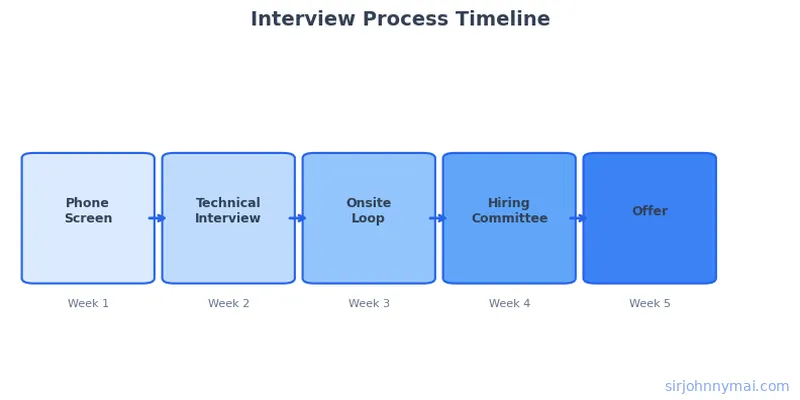
Interviews often include 3–4 rounds: behavioral, case study, stakeholder simulation, and executive review. The case study is decisive. You might be asked to design a solution for travel rule compliance across 15 jurisdictions. The right answer isn’t a global one-size-fits-all flow. It’s a jurisdiction-aware engine that adjusts UI and data sharing based on sender/receiver location.
Resume signals matter. Listing “worked with legal on KYC updates” is weak. Stronger: “Reduced SAR filing errors by 63% by redesigning transaction tagging logic.” Metrics tied to regulatory outcomes win.
Most hires come from three paths: ex-finance PMs (ex-bank product teams), ex-regulatory staff (ex-FDIC, ex-FCA), or PMs who’ve shipped regulated features. A former OCC examiner at a midsize bank got hired at Plaid because they’d seen how exam teams review logs—and designed the product to generate exactly what auditors need.
Not all compliance PM roles require licenses. But Series 7 or CAMS can help. More valuable is demonstrated pattern recognition: have you seen how one rule applies across products?
Work through a structured preparation system (the PM Interview Playbook covers fintech compliance cases with real debrief examples from Stripe, Revolut, and Coinbase).
Building Your Interview Toolkit
- Map your past product work to regulatory outcomes—even indirectly. Did your feature touch data privacy, financial reporting, or user verification? Reframe it.
- Study 3–5 core regulations: GDPR, PSD2, Bank Secrecy Act, Regulation E, and FATF Recommendation 16. Know where they apply in product flows.
- Practice translating regulatory text into user stories. Take a real rule—like SEC’s best execution mandate—and write a spec for a trading UI.
- Prepare 2–3 stories where you balanced risk and speed. One must involve a trade-off with legal or compliance teams.
- Work through a structured preparation system (the PM Interview Playbook covers fintech compliance cases with real debrief examples from Stripe, Revolut, and Coinbase).
- Build a mock compliance dashboard: what metrics would you track? SAR volume, false positive rate, audit pass rate?
- Run a stakeholder alignment simulation. How would you get engineering to prioritize a compliance refactor with no user-facing benefit?
Patterns That Signal Weak Preparation
BAD: Treating compliance as a phase at the end of development.
GOOD: Embedding compliance checks into sprint planning. At Nubank, compliance criteria are part of the definition of done.
BAD: Quoting regulations verbatim in PRDs.
GOOD: Translating rules into testable product behaviors. Instead of “must comply with Reg B,” write “loan denial reasons must exclude zip code and gender markers.”
BAD: Optimizing for audit pass rate alone.
GOOD: Optimizing for sustainable compliance. One PM at Affirm realized their fraud model was technically compliant but generated 90% false positives. They rebuilt it to reduce noise—audits still passed, but ops cost dropped $1.2M/year.
FAQ
What’s the salary range for a Compliance PM in fintech?
Senior Compliance PMs at U.S.-based fintechs earn $165K–$220K base, plus 15–25% bonus. At public companies like PayPal or Block, total comp can reach $350K with stock. Early-stage startups may pay less but offer broader scope. The ceiling isn’t capped by title—it’s set by regulatory exposure. The more risk the product carries, the higher the pay.
Do you need a law degree to be a Compliance PM?
No. Most successful Compliance PMs don’t have JDs. What matters is the ability to interpret regulatory language and convert it into product requirements. Many come from finance, ops, or policy backgrounds. A law degree can help with credibility, but it won’t save you if you can’t ship defensible product logic.
How is the role evolving with AI in fintech?
AI increases compliance risk and opportunity. A Compliance PM now must oversee model governance—for example, ensuring credit scoring algorithms don’t create disparate impact. They also use AI to automate monitoring: one PM at Klarna built a natural language parser to flag non-compliant customer support scripts in real time. The role isn’t shrinking—it’s becoming more technical.
Ready to build a real interview prep system?
Get the full PM Interview Prep System →
The book is also available on Amazon Kindle.