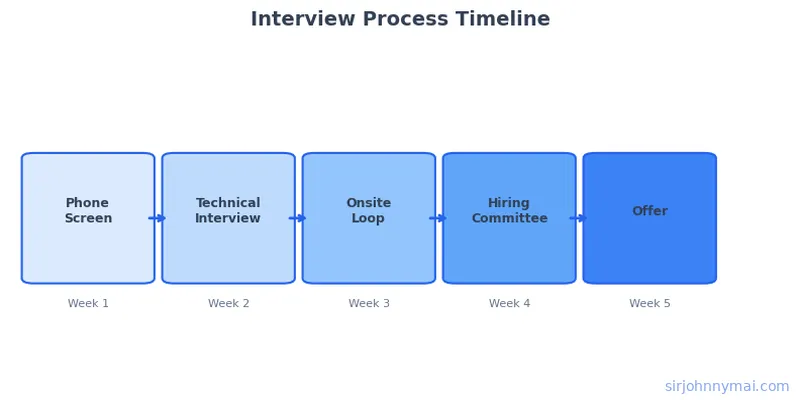
Product Management (PM) interviews at startups are fiercely competency-focused, with 4-6 rounds over 2-3 weeks. Success hinges on demonstrating adaptability, strategic thinking under uncertainty, and a deep understanding of the startup's specific pain points. Prepare to back claims with detailed, data-driven examples from your experience.
How Do Startup PM Interviews Differ from FAANG Companies?
Startup PM interviews prioritize problem-solving under resource constraints and cultural fit for agility over purely theoretical or textbook scenarios. For example, in a Series A startup's debrief, a candidate was rejected for outlining a "perfect" launch plan without considering the company's limited marketing budget, highlighting the need for resource-conscious thinking.
> 📖 Related: HDFC Bank TPM interview questions and answers 2026
What Is the Typical Interview Process for a Startup PM Role?
Expect 4-6 rounds, including:
- Screening Call (30 minutes, salary discussion: $120K-$180K),
- Product Sense Exercise (Take-home, 2 days, e.g., "Grow our user base by 30% in 6 months"),
- Deep Dive Interviews (2, focusing on past experiences and decisions),
- Team Fit Meetings (varies, assessing cultural alignment),
- Final with Founders/CEO (1, strategic vision and leadership qualities).
The entire process usually lasts 2-3 weeks, with 1-2 days between each round for feedback and preparation.
How to Approach the Product Sense Exercise?
Judgment: Treat the exercise as a mini-product launch.
Insight: Start with a clear problem statement, outline key metrics for success, and provide a phased rollout plan highlighting risk mitigation strategies. For instance, a successful candidate for a fintech startup proposed a phased launch of a new feature, prioritizing a small user group to test and iterate before full rollout, demonstrating balanced ambition and caution.
> 📖 Related: How To Prepare For Program Manager Interview At Tiktok
What Questions Should I Prepare to Answer in Deep Dive Interviews?
Prepare to defend your past decisions with data-driven outcomes and lessons learned. Common questions include:
- "How did you handle a failed product launch?"
- "Walk us through your process for prioritizing features with limited resources?"
Contrast: Not just recounting what happened, but why your approach was (or wasn’t) successful, and how it informs your future decisions.
A Practical Prep Framework
- Research Deep Dive:
- Analyze the startup's current challenges through public statements and news.
- Identify potential competitors and market gaps.
- Structure Your Stories:
- Use the STAR method ( Situation, Task, Action, Result) with a twist for lesson learned.
- Practice Under Pressure:
- Simulate the product sense exercise with a time limit (e.g., 48 hours).
- Work through a Structured Preparation System:
- The PM Interview Playbook covers crafting compelling "failure stories" with real startup debrief examples, such as turning a product failure into a strategic pivot.
- Prepare Financial and Operational Questions:
- Understand how to estimate user acquisition costs or calculate LTV in a startup context.
What Trips Up Even Strong Candidates
| BAD | GOOD |
|---|---|
| Overemphasis on Theory <br/> Focusing solely on what you'd do without referencing past experiences. | Balanced Approach <br/> Weave in relevant past experiences to support your theoretical approaches. |
| Lack of Specifics in Exercises <br/> Submitting vague plans without clear metrics or timelines. | Detailed, Data-Driven Plans <br/> Include KPIs, timelines, and resource allocation in your exercise submissions. |
| Ignoring Cultural Fit <br/> Not asking questions about team dynamics and company values. | Active Engagement <br/> Prepare thoughtful questions about the company's culture and your potential role within it. |
FAQ
Q: How Soon Should I Follow Up After the Final Interview?
Judgment: Wait 3-5 business days before sending a polite, brief follow-up email. This allows sufficient time for internal discussions without appearing pushy.
Q: Can I Negotiate Salary Based on the Interview Process Alone?
Judgment: Yes, but only if you've gathered clear market data. Reference your research, not just the process's intensity, to justify your request.
Q: What If I Don’t Have Direct Startup Experience?
Judgment: Highlight transferable skills (agility, resourcefulness, innovative problem-solving from other contexts) and demonstrated interest in the startup ecosystem (e.g., through side projects, volunteering, or relevant coursework).
Ready to build a real interview prep system?
Get the full PM Interview Prep System →
The book is also available on Amazon Kindle.