The Uber product‑sense interview rewards a candidate’s ability to surface a clear north‑star metric, argue trade‑offs, and embed ride‑network dynamics into every hypothesis. The interview lasts 45‑60 minutes, is the second of three rounds, and the hiring committee will reject a strong résumé if the candidate cannot articulate a data‑driven product hypothesis. Not “creativity” but “structured judgment” decides the outcome.
What does the Uber product‑sense interview actually test?
The interview tests a single judgment: can you define a product problem, scope it with a realistic metric, and prescribe a feasible roadmap that respects Uber’s network constraints. In a Q3 debrief, the hiring manager pushed back when a candidate suggested “launch a new loyalty tier” without linking it to driver retention or rider LTV. The committee’s verdict was clear— the candidate’s answer lacked a measurable north‑star, so the interview score dropped from “Strong” to “Average.”
Framework – Uber expects the “Metric‑First, Constraint‑Aware, Impact‑Driven” (MFC‑ID) framework. Candidates who begin with a vague user story (Not “I would improve the UI”, but “I would increase completed rides per active rider by 5 % in 90 days”) signal that they understand the product’s economics.
Counter‑intuitive observation – The problem isn’t the candidate’s idea; it’s the absence of a network‑level trade‑off analysis. Uber’s interviewers treat every feature as a perturbation to supply‑demand equilibrium; ignoring that is a fatal judgment error.
Organizational psychology – Hiring committees operate on a “signal amplification” model: a single strong data point can outweigh several weaker ones, but a single weak judgment (e.g., missing the surge‑elasticity factor) will dominate the final recommendation.
> 📖 Related: Uber PM vs SWE Salary Comparison
How many interview rounds are there and where does product sense fit?
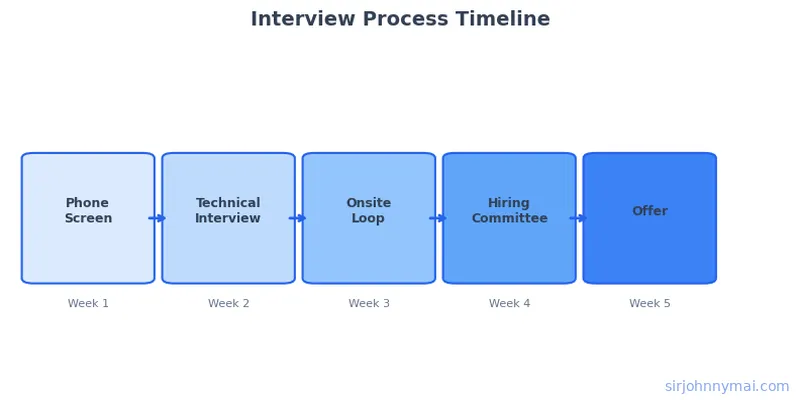
There are three interview rounds: (1) a 30‑minute recruiter screen, (2) the 45‑minute product‑sense interview, and (3) a 60‑minute cross‑functional interview that includes a technical case and a leadership interview. The product‑sense interview is always the second round because Uber wants to filter out candidates who cannot think in network terms before they waste time on deep technical discussions.
In a hiring committee, a candidate cleared the recruiter screen with a polished résumé but flunked the product‑sense round; the committee unanimously voted “no‑go” despite a perfect technical case later. The judgment: product‑sense is the gatekeeper, not a supplementary assessment.
Framework – The “Gate‑Keeper Triangle” (Recruiter → Product Sense → Cross‑Functional) shows that each stage amplifies the previous stage’s judgment.
Not X but Y – Not “a good storyteller wins”; but “a data‑backed hypothesis wins.”
What specific topics do Uber interviewers probe?
Interviewers probe three pillars: (1) market dynamics, (2) metric definition, and (3) operational constraints. In a live debrief, the senior PM asked the candidate to design a feature to reduce “no‑show” rates in Uber Eats. The candidate enumerated UI tweaks, but the PM cut in: “What’s the elasticity of driver earnings to a 2 % reduction in no‑shows?” The candidate stumbled, revealing a lack of network thinking, and the interview score fell.
Metric‑First – Candidates must name a primary metric (e.g., “completed orders per active diner”) before suggesting solutions.
Constraint‑Aware – Uber expects you to mention driver supply limits, city regulations, or latency constraints as part of the solution space.
Impact‑Driven – Quantify the expected lift (e.g., “5 % lift in order completion translates to $2 M incremental GMV over a quarter”).
Not X but Y – Not “list every possible feature”; but “prioritize the one that moves the north‑star the most while staying within supply constraints.”
> 📖 Related: Lyft vs Uber PM Culture and Work-Life Balance
How long does the interview last and what is the format?
The product‑sense interview is a 45‑minute, live, case‑driven discussion conducted over a shared Google Doc. The interviewer presents a one‑sentence prompt (“How would you increase Uber Pool utilization in San Francisco?”) and then watches the candidate structure the answer in real time. The candidate is expected to write a brief outline, iterate on metrics, and answer follow‑up “what‑if” questions.
In a Q2 debrief, the hiring manager noted that candidates who spoke continuously without committing anything to the shared doc were penalized for “lack of visible structure.” The committee’s judgment: visible scaffolding equals higher confidence in the candidate’s thought process.
Framework – The “Live‑Doc Ladder” (Prompt → Metric → Constraints → Solution → Quantified Impact) must be climbed step‑by‑step, each rung visible to the interviewer.
Not X but Y – Not “talk through your thought process”; but “write each decision point as you make it.”
What compensation and timeline should a candidate expect after the interview?
If the candidate receives a “Strong” rating in product sense, Uber typically moves to the cross‑functional round within 5‑7 business days. Successful candidates receive an offer between $165 k and $210 k base, plus $30 k–$50 k equity, and a sign‑on bonus that can reach $30 k for senior hires. The total time from recruiter screen to offer averages 21 days, but a weak product‑sense evaluation can add a 14‑day delay as the committee re‑examines the résumé for alternative roles.
In a recent hiring cycle, a candidate who nailed the product‑sense interview received an offer on day 18; a candidate who faltered received a “keep‑in‑mind” email on day 28, illustrating how the judgment in that 45‑minute slot compresses the timeline dramatically.
Not X but Y – Not “salary is negotiable after the offer”; but “the offer range is locked in before the final interview, and a weak product‑sense rating can shift you out of the higher band.”
Smart Preparation Strategy
- Review Uber’s latest quarterly earnings deck; note any metric changes (e.g., “gross bookings grew 12 % YoY”) and be ready to reference them.
- Memorize the three core network constraints: driver supply elasticity, city regulation latency, and rider price sensitivity.
- Practice the MFC‑ID framework on at least five Uber‑specific prompts (e.g., “reduce rider cancellations in UberX”).
- Conduct a mock live‑doc session with a peer, forcing yourself to write each step before speaking.
- Work through a structured preparation system (the PM Interview Playbook covers the “Live‑Doc Ladder” with real debrief examples, so you see exactly what interviewers note).
- Prepare a one‑page cheat sheet of Uber’s north‑star metrics for each vertical (Mobility, Delivery, Freight).
Failure Modes Worth Knowing About
BAD: “I would add a new button on the home screen.” GOOD: “I would test a ‘quick‑reorder’ button, targeting a 3 % lift in repeat orders per active diner, while monitoring driver idle time to avoid supply strain.”
BAD: “We should launch a loyalty program.” GOOD: “We should pilot a tiered loyalty program, measuring impact on rider LTV and driver earnings elasticity, and run a 4‑week A/B test in Seattle before global rollout.”
BAD: “I don’t have data, so I’ll guess.” GOOD: “I’ll use publicly available city traffic reports and Uber’s published surge‑elasticity curves to model the expected change in completed rides, then validate with a small‑scale experiment.”
FAQ
What is the single most important judgment Uber looks for in product sense?
The ability to anchor every recommendation to a quantifiable north‑star metric and to articulate the supply‑demand trade‑off that the metric implies.
How should I handle “what‑if” follow‑up questions during the live‑doc?
Pause, write the new assumption in the doc, recalculate the impact, and state the revised metric. Visible iteration signals structured thinking.
If I fail the product‑sense interview, can I still get an offer in another Uber team?
Rarely. The hiring committee treats a “Weak” product‑sense rating as a disqualifier across most product orgs; only a strong technical case can rescue you for a data‑science or ops role.
Ready to build a real interview prep system?
Get the full PM Interview Prep System →
The book is also available on Amazon Kindle.