AI ethics PM interviews test your ability to weigh trade‑offs between innovation, safety, and regulation, not your recall of principles. Interviewers listen for a clear judgment signal that shows how you would act when data is incomplete or stakeholders clash. Prepare by rehearsing structured frameworks, referencing real product dilemmas, and asking insightful questions about the company’s governance process.
This guide is for product managers with at least two years of experience who are targeting senior PM roles at large tech firms where AI systems are core to the product, such as Google, Meta, or Amazon. It assumes you have shipped at least one AI‑enabled feature and are familiar with basic concepts like model bias, data privacy, and explainability. If you are transitioning from a non‑technical background, focus first on building a concrete product story before tackling ethics scenarios.
What are the most common AI ethics PM interview questions at FAANG?
Interviewers repeatedly ask three types of questions: a dilemma scenario, a framework question, and a governance question. A typical dilemma might present a facial recognition feature that improves security but raises surveillance concerns. The framework question asks you to name and apply a method for evaluating bias, such as disparate impact analysis. The governance question probes how you would escalate an ethical concern to leadership or design an oversight process. In a Q3 debrief at a major search company, the hiring manager noted that candidates who could cite a specific internal policy—like the company’s AI Principles review board—scored higher than those who spoke only in generalities.
> 📖 Related: Humana SDE interview questions coding and system design 2026
How do I structure my answer to an AI ethics dilemma question?
Start with a brief restatement of the dilemma to show you understood the constraints, then state your judgment clearly in one sentence. Follow with the evidence you would gather, the stakeholders you would consult, and the trade‑off framework you would apply. Conclude with a mitigation plan and a metric for monitoring outcomes. For example, when asked about deploying a generative model for customer support, a strong answer began: “I would pause the rollout until we can measure hallucination rates below 2% and implement a human‑in‑the‑loop review for high‑risk queries.” This structure makes your judgment signal visible and prevents the answer from drifting into a laundry list of principles.
What frameworks should I use to evaluate AI bias in product decisions?
Use a three‑layer framework: data audit, model testing, and impact assessment. First, examine the training data for representation gaps using metrics like demographic parity. Second, run fairness tests such as equal opportunity difference across subgroups. Third, model the downstream impact on user behavior and business metrics, applying a cost‑benefit lens that includes reputational risk. In a debrief for a shopping recommendation team, a candidate who presented a simple spreadsheet showing a 5% lift in conversion for a biased segment and a projected 3% churn increase from fairness interventions was praised for turning abstract ethics into a concrete trade‑off analysis.
> 📖 Related: Pinterest PM Interview Process 2026: Rounds, Timeline, and What to Expect
How do interviewers assess my understanding of regulatory compliance like the EU AI Act?
Interviewers listen for whether you can map a product feature to the Act’s risk categories and articulate the corresponding obligations. They do not expect you to quote article numbers verbatim; they want to see that you know when a system is high‑risk, what documentation is required, and how you would integrate conformity assessments into the development cycle. One hiring manager recounted a candidate who incorrectly labeled a chatbot as low‑risk because it used a pre‑trained model, missing the Act’s provision that any system influencing hiring decisions is high‑risk regardless of model origin. The candidate’s failure to connect the regulation to the product’s actual use case cost them the offer.
What should I ask the interviewer about the company’s AI ethics governance?
Ask about the existence and authority of an AI ethics review board, the typical timeline for a risk assessment, and how ethical concerns are escalated when they conflict with roadmap goals. These questions reveal whether the company treats ethics as a checkpoint or a afterthought and help you gauge cultural fit. In a recent interview loop, a candidate who asked, “What metrics does the board use to decide whether a model needs a redesign before launch?” received a detailed answer about a dual‑track process involving both fairness audits and user‑experience testing, which helped them decide to accept the offer.
Essential Preparation Steps
- Review the company’s published AI principles and recent blog posts on responsible AI
- Practice articulating a judgment statement in under 15 seconds for at least three different dilemma prompts
- Build a one‑page fairness test checklist that includes data parity, model error disparity, and impact monitoring
- Prepare a concise story of a past product decision where you balanced innovation with safety, highlighting the trade‑off framework you used
- Work through a structured preparation system (the PM Interview Playbook covers AI ethics trade‑off frameworks with real debrief examples)
- Draft three thoughtful questions about the company’s governance process, escalation paths, and success metrics for ethical launches
- Conduct a mock interview with a peer focused solely on the signal you are sending, not the content of your answers
What Separates Passes from Near-Misses
BAD: Listing AI ethics principles without applying them to a specific product scenario.
GOOD: Stating, “I would limit the model’s output length to reduce hallucination risk, then measure user satisfaction drop‑off to ensure the trade‑off stays within acceptable bounds.”
BAD: Claiming you are unaware of any regulations because the company operates only in the US.
GOOD: Explaining, “Even though our primary market is the US, I would still assess the EU AI Act because any model that influences hiring decisions could affect our global talent pipeline and trigger extraterritorial compliance.”
BAD: Treating the ethics question as a chance to showcase your knowledge of academic literature.
GOOD: Demonstrating how you would operationalize a principle—for instance, turning “transparency” into a concrete plan to publish model cards and provide a user‑facing explanation layer when confidence scores fall below a threshold.
FAQ
What salary range should I expect for an AI ethics PM role at a major tech firm?
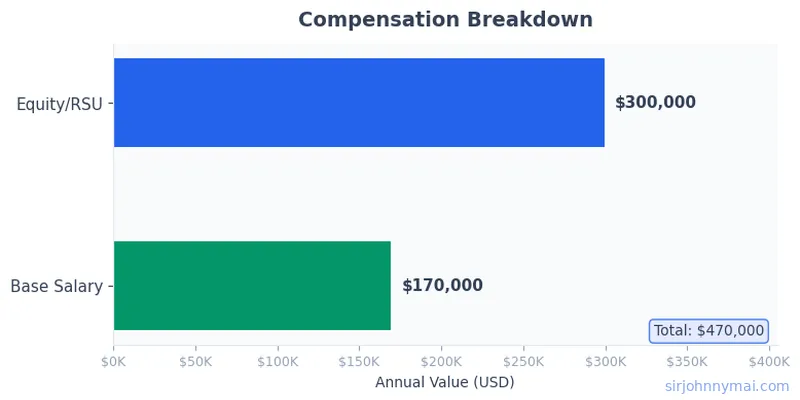
Base compensation for senior PM positions focusing on AI ethics typically falls between $170,000 and $210,000, with total compensation including equity and bonuses ranging from $300,000 to $420,000 depending on level and location. These figures come from recent offer conversations; actual numbers vary by band and negotiation.
How many interview rounds are standard for an AI ethics PM interview?
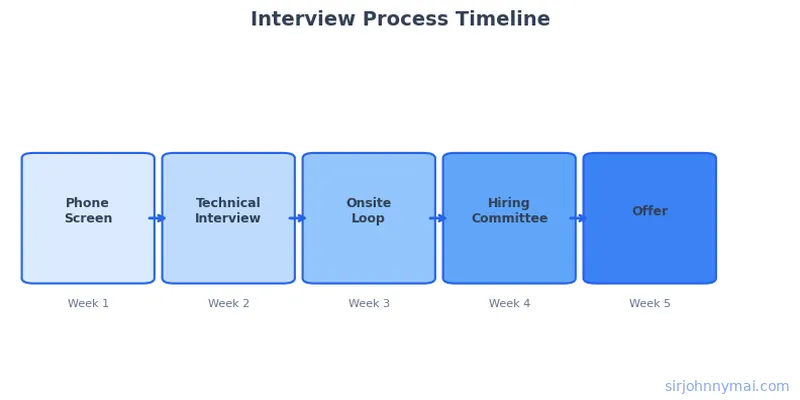
Most companies run four to five rounds: a recruiter screen, a product sense interview, an execution interview, a leadership interview, and a final ethics‑focused interview. In some cases the ethics lens is woven into the product sense round, but you should still prepare a dedicated ethics story for the leadership or bar‑raiser interview.
How long should I spend preparing for the AI ethics portion of the interview?
Allocate at least three full days of focused practice: one day for framing judgment statements, one day for building and testing fairness frameworks, and one day for mock interviews with feedback. Spreading this over a week with short daily review sessions helps retain the signal‑focused mindset better than a single marathon session.
Ready to build a real interview prep system?
Get the full PM Interview Prep System →
The book is also available on Amazon Kindle.