The top tech PM interview process typically consists of a recruiter screen, a product sense assessment, and a full loop of 4 to 6 interviews. Success requires mastering structured frameworks for product design, execution, and leadership while demonstrating a data driven mindset. Preparation should focus on practicing mock interviews and aligning past achievements with the specific company values.
How does the PM interview process work at top tech companies?
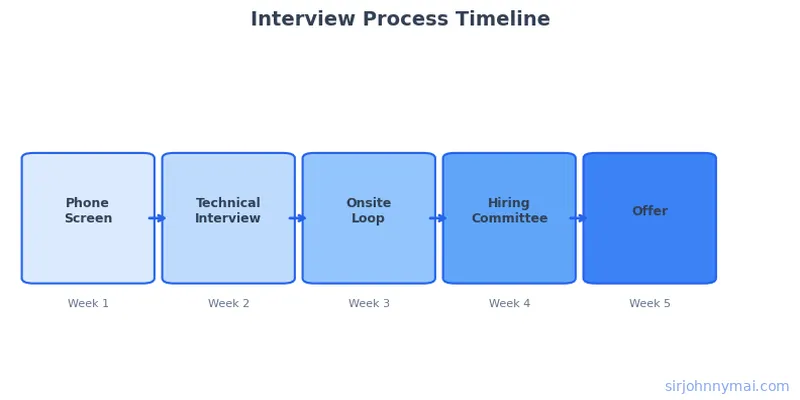
The interview process is generally divided into four distinct stages designed to test different competencies.
The first stage is the Recruiter Screen. This 30 minute call focuses on basic qualifications, salary expectations, and cultural alignment. Recruiters look for a concise professional narrative and a clear reason for wanting to join the specific organization.
The second stage is the Product Sense or Case Screen. This is often a 45 to 60 minute technical interview with a peer PM. The goal is to evaluate the ability to define a problem, identify user personas, and prioritize features based on a specific goal.
The third stage is the Onsite Loop. This consists of 4 to 6 back to back interviews. These usually include a Product Design session, a Product Execution or Metric session, a Technical/System Design session, and a Leadership/Behavioral session.
The final stage is the Hiring Committee review. In many top firms, the interviewers provide feedback to a separate committee that makes the final decision to avoid individual bias. Total compensation for these roles often ranges from 160,000 USD to 450,000 USD depending on the level and equity grants.
How to answer product design questions using a framework?
Product design questions ask candidates to build a new product or improve an existing one. To avoid rambling, a structured framework is essential.
Step 1: Clarify the Goal. Start by asking 2 to 3 clarifying questions. Determine if the goal is user growth, revenue, or market penetration.
Step 2: Identify the User. Define 3 distinct user segments. Select one primary persona to focus on based on the goal established in step one.
Step 3: Identify Pain Points. List 3 specific problems the chosen user faces. Rank these by severity and frequency to select the most impactful pain point.
Step 4: Brainstorm Solutions. Propose 3 distinct solutions. One should be a safe, iterative improvement, one should be a bold leap, and one should be a moonshot idea.
Step 5: Prioritize and Evaluate. Use a matrix to score solutions based on impact versus effort. Define a success metric to track if the solution works.
Step 6: Summarize. Briefly recap the chosen solution and how it solves the primary user pain point.
How to handle product execution and metric questions?
Execution questions test the ability to define success and diagnose problems. These interviews focus on the quantitative side of product management.
When asked to define metrics for a feature, use the North Star framework. Identify the one primary metric that indicates long term value. Then, define 3 supporting metrics: a breadth metric (how many users), a depth metric (how often they use it), and a quality metric (retention or NPS).
When faced with a metric decline question, such as a 10 percent drop in daily active users, use a systematic debugging approach. First, clarify the metric and the timeframe. Second, rule out external factors like seasonality, holidays, or competitor launches. Third, rule out technical issues like bugs, server outages, or tracking errors. Fourth, segment the data by region, device, or user cohort to isolate the root cause.
What are the best ways to prepare for behavioral interviews?
Behavioral interviews evaluate leadership, conflict resolution, and ownership. The most effective method is the STAR method: Situation, Task, Action, and Result.
For the Action section, focus on the specific steps taken. Instead of saying a team collaborated, explain the exact meeting cadence established or the specific document created to align stakeholders.
The Result section must be quantified. A strong answer does not say the project was successful; it says the project increased conversion by 12 percent or reduced churn by 5 percent over one quarter.
Candidates should prepare a library of 6 to 8 versatile stories that can be adapted to different questions. These stories should cover: a time a project failed, a conflict with an engineer or designer, a data driven decision that contradicted a stakeholder, and a time when a tight deadline was met.
How to pass the technical or system design interview for PMs?
PMs are not expected to write code, but they must understand how systems interact. Technical interviews focus on trade offs and feasibility.
When discussing an API, explain the request and response cycle. When discussing a database, explain the difference between relational databases for structured data and non relational databases for scale and flexibility.
The key is to discuss trade offs. For example, if proposing a real time update feature, discuss the trade off between latency and data consistency. Explain how caching can improve speed but might result in users seeing slightly outdated information.
Focus on the flow of data. Draw or describe how data moves from the user interface to the backend server and then to the database. This demonstrates the ability to communicate effectively with engineering leads.
Common Mistakes to Avoid
Mistake 1: Jumping straight to solutions. Candidates often start suggesting features before defining the user or the goal. Example: When asked to design a travel app for seniors, immediately suggesting a larger font size instead of identifying the specific pain points of senior travelers.
Mistake 2: Being too vague with metrics. Using terms like more users or better engagement is a red flag. Example: Saying a feature will make the app more popular instead of saying it will increase the 30 day retention rate by 5 percent.
Mistake 3: Ignoring the trade offs. Proposing a perfect solution without mentioning the cost or risk. Example: Suggesting a complex AI integration for a MVP without discussing the increased latency or the high cost of compute resources.
Mistake 4: Lack of structure in behavioral answers. Telling a story that lasts 5 minutes without reaching a conclusion. Example: Spending 4 minutes describing the company history and only 1 minute on the actual action taken to solve a problem.
What to Focus On Before the Interview
Checklist for Product Sense
- Practice 10 product design prompts using a consistent framework
- Analyze 5 favorite products and identify their North Star metrics
- Create a list of 3 common user personas for 5 different industries
Checklist for Execution
- Memorize the difference between leading and lagging indicators
- Practice 5 metric decline scenarios across different product types
- Review basic SQL concepts and data visualization principles
Checklist for Behavioral
- Write 8 STAR stories with quantified results
- Map each story to 3 different potential questions
- Record and playback answers to eliminate filler words
Checklist for Technical
- Study the basics of REST APIs and JSON
- Understand the difference between Load Balancers and CDNs
- Review the concept of CAP theorem in distributed systems
FAQ
What is the average pass rate for the onsite loop?
The pass rate varies by company but generally falls between 10 percent and 20 percent for external candidates. High failure rates usually stem from a lack of structure in product sense answers or an inability to quantify results in behavioral rounds.
How many mock interviews are necessary for success?
A minimum of 15 to 20 mock interviews is recommended. This should be split between peer mocks for comfort and expert mocks for critical feedback on framework application and signal strength.
Should a PM focus more on technical skills or product sense?
Product sense is the primary filter for most roles. While technical fluency is required to earn respect from engineers, a failure in product design or execution usually results in an immediate rejection regardless of technical ability.
How long does the entire process take from first call to offer?
The typical timeline is 4 to 8 weeks. This includes a 1 week gap between the recruiter screen and the first technical round, and another 2 weeks to coordinate the onsite loop and final committee review.
How do I handle a question where I do not know the product?
Ask for a brief overview of the product's core value proposition. Use the first 2 minutes of the answer to state assumptions about the user base and the business model, then validate those assumptions with the interviewer.
What is the most important thing to demonstrate in a leadership interview?
Ownership is the most critical trait. Demonstrate a willingness to dive into the details to solve a problem and the ability to take full responsibility for a failure without blaming cross functional partners.
<!-- AUTHOR_BLOCK -->
What are the most common interview mistakes?
Three frequent mistakes: diving into answers without a clear framework, neglecting data-driven arguments, and giving generic behavioral responses. Every answer should have clear structure and specific examples.
Any tips for salary negotiation?
Multiple competing offers are your strongest leverage. Research market rates, prepare data to support your expectations, and negotiate on total compensation — base, RSU, sign-on bonus, and level — not just one dimension.
Johnny Mai is a Product Leader at a Fortune 500 tech company with experience shipping AI and robotics products. He has conducted 200+ PM interviews and helped hundreds of candidates land offers at top tech companies.
Ready to land your dream PM role? Get the complete system: The PM Interview Playbook — 300+ pages of frameworks, scripts, and insider strategies.
Download free companion resources: sirjohnnymai.com/resource-library