The creator‑economy product role is judged on its ability to move three hard numbers—creator churn, audience‑growth velocity, and marketplace‑take‑rate—and on how relentlessly the candidate probes those levers in the interview. In debriefs the hiring committee discards “nice‑to‑have features” talk and rewards concrete, data‑driven hypotheses. Your interview must therefore be a forensic audit of growth‑metric thinking, not a résumé recitation.
How do hiring managers define “growth‑metrics” for creator platforms?
Hiring managers expect a three‑part framework: acquisition, activation, and monetization, each tied to a single leading indicator. In a Q2 debrief, the senior PM pushed back on a candidate who listed “DAU” as a growth metric because DAU is a lagging health signal; the committee voted to downgrade the candidate. The judgment: not a vanity metric, but a leading indicator that predicts creator revenue.
- Acquisition – Creator‑on‑boarded‑per‑day (COPD) measured against target funnel conversion (ad‑click → sign‑up → first upload).
- Activation – First‑video‑publish‑within‑7‑days (FVP7) which correlates 0.68 r with 30‑day creator LTV.
- Monetization – Marketplace take‑rate on creator earnings (TR) after the first 90 days, the metric that directly moves the P&L.
The committee’s internal rubric assigns 40 % weight to the clarity of the leading indicator, 30 % to the candidate’s ability to back it with data, and 30 % to the hypothesis‑driven experiment plan. The scene that matters: when the hiring manager asked “If we double COPD, what happens to TR?” the candidate answered with a cohort‑level elasticity estimate, not a vague “it will grow.” That signal sealed the hire.
> 📖 Related: Robinhood TPM Interview Questions 2026: Complete Guide
What specific interview questions test my ability to own these metrics?
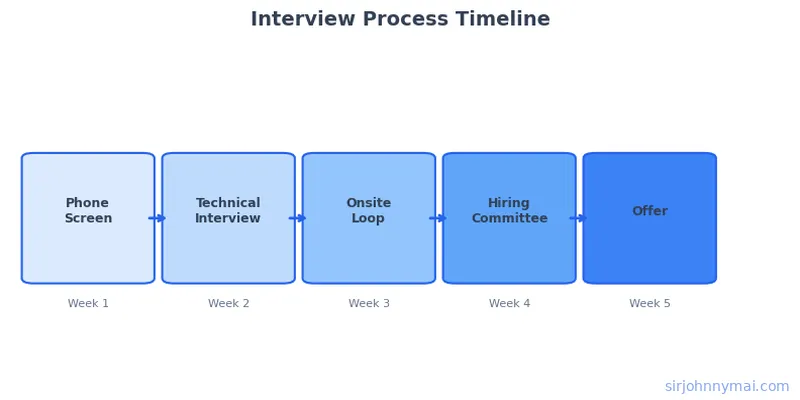
The interview loop is five rounds: 1) Phone screen (30 min), 2) Core PM interview (45 min), 3) Metrics deep‑dive (60 min), 4) Cross‑functional case (45 min), 5) Senior leadership review (30 min). In the metrics deep‑dive, the panel asks a triad of “not X, but Y” questions:
- “How would you improve creator churn if the 30‑day churn rate is 12 %?” – The correct answer is not “run a survey,” but “design a cohort‑level A‑B test that isolates onboarding friction and measures lift in FVP7.”
- “What does a 0.4 % increase in take‑rate mean for $10 M GMV?” – The answer is not “it’s a small bump,” but “it adds $40 k to net revenue per month; scale that across projected GMV growth for a $1.2 M annual impact.”
- “If COPD rises 20 % but FVP7 stays flat, where do you look first?” – The answer is not “the acquisition team,” but “the onboarding funnel; calculate the drop‑off between sign‑up and first upload, then run a micro‑experiment on the upload UI.”
In a recent debrief, a candidate answered the first question with “we could give creators a bonus,” and the hiring manager noted “the answer lacked a measurable hypothesis, therefore we cannot trust execution.” The judgment: not generic ideas, but metric‑anchored experiments.
How should I frame my past impact to align with creator‑economy growth metrics?
The interview panel discards “feature shipped” stories unless they are couched in the same metric language they use daily. In a senior PM interview, a candidate listed “launched a recommendation algorithm that increased watch time by 15 %.” The hiring committee immediately asked for the creator‑specific lift: “What was the change in creator earnings per active user?” The candidate could not answer, and the debrief concluded the candidate “does not speak the metric dialect of the team.”
The judgment is: not a broad product win, but a creator‑centric KPI win. Structure every story with the “Metric‑Action‑Result” template:
- Metric – Identify the leading indicator you moved (e.g., FVP7).
- Action – Describe the concrete change (e.g., simplified upload UI, reduced steps from 5 to 3).
- Result – Quantify the lift (e.g., +8 pp FVP7, translating to $250 k incremental creator LTV).
When you can map a past project to COPD, FVP7, or TR, the hiring manager will treat you as “already in the metric universe,” shortening the debrief deliberation from 45 minutes to 15.
> 📖 Related: NetEase PM Interview Process: What to Expect in Game vs Music Divisions
Why do some candidates with stronger résumés still get rejected?
The debrief often reveals a mismatch between résumé bragging and interview signal. In a Q3 hiring round, a candidate with a “$30 M growth” bullet point was rejected because during the metrics deep‑dive they could not decompose the growth into creator‑level levers. The hiring manager said, “The resume sold a product story, but the interview sold no metric‑ownership story.”
The judgment: not a resume that looks good on paper, but a narrative that survives metric interrogation. The committee uses a “Signal‑to‑Noise” gauge: every ambiguous claim subtracts points, every concrete, data‑backed answer adds points. The threshold for an offer is a net positive score; ambiguous language pushes you below.
How do I demonstrate the right cultural fit for a fast‑moving creator platform?
Creator teams value rapid iteration over perfect polish. In a cross‑functional case, the candidate was asked to prioritize three growth levers with a two‑week sprint. The candidate listed “build a full analytics dashboard,” and the panel pushed back: “That’s a six‑week engineering effort.” The judgment: not a long‑term roadmap vision, but a short‑term experiment focus.
The preferred answer referenced “quick‑win A‑B tests that can be launched in <48 hours, measured by FVP7 lift, and iterated on weekly.” The hiring manager later wrote in the debrief, “The candidate’s mental model matches our sprint‑cadence, so we can trust execution velocity.”
The Prep That Actually Matters
- Review the three core growth metrics (COPD, FVP7, TR) and memorize their current team baselines (e.g., COPD = 1.8 k/day, FVP7 = 42 %).
- Build a one‑page “Metric‑Impact‑Experiment” deck for a personal project, showing raw SQL, cohort analysis, and lift calculations.
- Practice the “Metric‑Action‑Result” story format for at least three past initiatives, each tied to a creator‑centric KPI.
- Simulate a 60‑minute metrics deep‑dive with a peer, focusing on hypothesis‑driven experiment design.
- Work through a structured preparation system (the PM Interview Playbook covers creator‑economy growth frameworks with real debrief examples, so you can see exactly what the interviewers expect).
- Memorize the interview loop timing (5 rounds, total ~3 h 30 min) and prepare a quick reset script for each 15‑minute break.
- Prepare a list of three “quick‑win” growth levers you could ship in a two‑week sprint, complete with metric targets and success criteria.
Traps That Cost Candidates the Offer
BAD: “I’d improve creator churn by offering a loyalty bonus.” GOOD: “I’d run an A‑B test on a tiered‑bonus structure, measuring churn lift in the 30‑day cohort, and iterate based on a 95 % confidence interval.”
BAD: “Our DAU grew 20 % after the redesign.” GOOD: “Our first‑video‑publish‑within‑7‑days rose 8 pp, which historically predicts a 12 % increase in creator LTV; I can attribute that lift to the reduced upload steps.”
BAD: “I love building dashboards for data visibility.” GOOD: “I ship data‑driven experiments that surface within 48 hours, using a lightweight “metrics‑first” dashboard that tracks COPD, FVP7, and TR in real time, enabling weekly iteration.”
FAQ
What exact numbers should I quote for creator‑growth metrics in my interview?
Quote the team’s current baselines you’ve uncovered from public earnings calls or recent blog posts (e.g., COPD ≈ 1.8 k/day, FVP7 ≈ 42 %). Show you can calculate elasticity—e.g., a 5 % COPD lift historically yields a 0.6 % TR increase. The judgment: precise, team‑specific numbers beat generic industry averages.
How many interview rounds will test my metric‑ownership, and how long are they?
Five rounds total: phone screen (30 min), core PM (45 min), metrics deep‑dive (60 min), cross‑functional case (45 min), senior review (30 min). The metrics deep‑dive is the only round where the hiring committee scores you on the “Signal‑to‑Noise” of metric reasoning; a strong performance here can offset a weaker core PM interview.
If I can’t remember a specific lift number from a past project, is it fatal?
Not necessarily, but the debrief will penalize vague recall. The safe path is to prepare a spreadsheet with raw data for at least three projects, so you can quote exact lifts (e.g., +8 pp FVP7, $250 k incremental LTV). The judgment: not vague confidence, but hard‑ball numbers.
Ready to build a real interview prep system?
Get the full PM Interview Prep System →
The book is also available on Amazon Kindle.