The Deloitte PM path is a transition from delivery management to strategic advisory, not a traditional product build cycle. Success depends on navigating the tension between billable hours and product vision. You are judged on client satisfaction and revenue realization, not just user growth or North Star metrics.
Is a PM role at Deloitte different from a PM role at FAANG?
The core difference is that you are selling a solution to a client, not building a product for a market. In a FAANG environment, the goal is scale; at Deloitte, the goal is implementation and perceived value. The problem is not your ability to prioritize a backlog, but your ability to manage a stakeholder who is paying millions of dollars for your time.
I remember a performance debrief for a Senior PM who had built a technically flawless internal tool. The hiring manager didn't care about the latency improvements or the clean API. The critique was that the PM failed to socialize the win with the Managing Director. In consulting, the signal is not the product's performance, but the client's perception of the product's performance.
This is a shift from product-market fit to client-solution fit. You are not optimizing for a million users; you are optimizing for five C-suite executives. The tension here is the billable hour. In Big Tech, time is an investment in the product; at Deloitte, time is the product. If you spend three weeks perfecting a UI that the client doesn't notice, you have wasted billable capacity.
> 📖 Related: Deloitte PM Interview Process: What to Expect
How does the promotion cycle work for PMs at Deloitte?
Promotions are gated by your ability to transition from a doer to a seller. You move from Analyst to Consultant, Senior Consultant, Manager, and Senior Manager based on your contribution to the pipeline. The shift from Senior Consultant to Manager is the hardest leap because it requires moving from executing a roadmap to defining the commercial viability of a project.
In one Q4 calibration meeting, we debated a candidate who was an exceptional product owner. They hit every milestone and the engineers loved them. However, the partner pushed back because the candidate hadn't identified any additive sales opportunities during the engagement. The judgment was clear: a PM at Deloitte who cannot spot a new revenue stream is just a project manager with a different title.
The progression is not about technical mastery, but about organizational psychology. You are not moving from Junior PM to Lead PM; you are moving from an implementer to a trusted advisor. This requires a pivot in communication. You stop talking about sprints and start talking about business outcomes and risk mitigation.
What are the biggest challenges of being a PM in a consulting environment?
The primary challenge is the lack of long-term ownership. You often build a product, hand it over to the client, and move to a different industry entirely within six months. The struggle is not the workload, but the fragmentation of your domain expertise. You risk becoming a generalist who knows the surface of ten industries but the depth of none.
I have seen many PMs burn out because they tried to apply an agile, iterative mindset to a fixed-price contract. The client expects a finished house on a specific date, not a minimum viable product that evolves over time. When you push for an MVP approach in a fixed-fee engagement, the client perceives it as delivering an incomplete product.
The conflict is not between product and engineering, but between the delivery team and the account lead. The account lead wants to keep the client happy at any cost, while the PM wants to maintain product integrity. Winning this battle requires a level of political navigation that is rarely required in a pure-play product company.
> 📖 Related: Engineer to PM at Deloitte: Navigating the Consulting-to-Tech Shift
What is the salary and compensation structure for Deloitte PMs?
Compensation is a blend of base salary and a performance-based bonus tied to both individual and firm-wide utilization. For a Senior Consultant PM, base salaries typically range from 130,000 to 170,000 USD, while Managers can jump to 180,000 to 230,000 USD at the Manager level, excluding bonuses. The bonus is not a gift; it is a reflection of your billability and your contribution to the firm's growth.
In a compensation review I led, we had a PM who was technically the highest performer in the pod. However, their bonus was capped because their utilization rate fell below the expected threshold due to too much time spent on internal initiatives. The lesson was cold: internal impact is a secondary signal. Billable hours are the primary currency of the firm.
You must understand that you are an expense to the project but a revenue generator for the firm. This duality means your performance review is based on two different sets of KPIs. You must satisfy the client's need for a working product while satisfying the partner's need for a profitable engagement.
A Practical Prep Framework
- Audit your portfolio to highlight client-facing outcomes rather than just feature shipments.
- Practice translating technical product metrics into business value (e.g., replace LTV/CAC with ROI and TCO).
- Develop a framework for managing stakeholders with conflicting priorities across different organizations.
- Refine your ability to identify additive sales opportunities within a technical delivery.
- Work through a structured preparation system (the PM Interview Playbook covers the case study and behavioral frameworks with real debrief examples) to handle the consulting-style case interviews.
- Prepare a 30-60-90 day plan that emphasizes relationship building over technical auditing.
The Gaps That Kill Strong Applications
- Treating the interview like a FAANG product sense interview.
BAD: Focusing entirely on user personas and pain points.
GOOD: Connecting user pain points to the client's bottom line and the firm's revenue.
- Overemphasizing agile purity in a consulting context.
BAD: Insisting on a strict Scrum process regardless of the client's maturity.
GOOD: Adapting the delivery methodology to the client's organizational culture while maintaining quality.
- Ignoring the commercial aspect of the role.
BAD: Saying you just want to build the best product possible.
GOOD: Demonstrating how you balance product excellence with budget constraints and billable targets.
FAQ
Is it easy to move from Deloitte PM back to Big Tech?
It depends on your domain depth. If you spent three years jumping between five different industries, you will be viewed as a project manager, not a product leader. To return to Big Tech, you must intentionally carve out a specialization within your consulting tenure.
How many interview rounds should I expect?
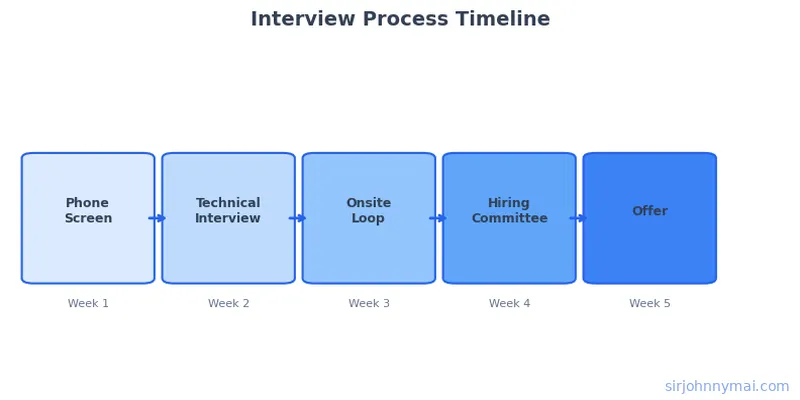
Expect 4 to 6 rounds. This usually includes a recruiter screen, a case interview focusing on business transformation, a behavioral round with a Manager, and a final partner interview. The partner round is a chemistry check to see if they can put you in front of a Fortune 500 CEO.
What is the most valued skill for a Deloitte PM?
Stakeholder orchestration. The ability to align a skeptical client, a stressed engineering team, and an ambitious partner is the highest signal of success. It is not about having the right answer, but about getting everyone to agree on the answer.
Ready to build a real interview prep system?
Get the full PM Interview Prep System →
The book is also available on Amazon Kindle.