The climate tech product manager role has shifted from sustainability advocacy to technical P&L ownership, with 78% of new hires since 2021 holding dual-domain expertise in engineering and carbon systems. The role is no longer about green messaging—it’s about unit economics under regulatory constraint. If your background stops at ESG dashboards, you’re not being considered.
The climate tech product manager role has shifted from sustainability advocacy to technical P&L ownership, with 78% of new hires since 2021 holding dual-domain expertise in engineering and carbon systems. The role is no longer about green messaging—it’s about unit economics under regulatory constraint. If your background stops at ESG dashboards, you’re not being considered.
Is climate tech still a viable PM career path post-2023 funding dip?
Yes—climate tech PM roles grew 14% YoY in 2024 despite a 31% drop in early-stage funding. The shift isn’t away from climate; it’s toward PMs who can de-risk capital deployment. In a Q3 2023 hiring committee at a Series B carbon capture startup, the hiring manager killed an offer to a former Google Ads PM because he couldn’t quantify the cost per ton of CO2 avoided in their electrolysis stack integration.
Not every PM needs a PhD in electrochemistry—but now, 68% of climate tech PM job specs require technical literacy in at least one core domain: power systems, industrial decarbonization, or carbon accounting standards (e.g., GHG Protocol, ISO 14064). The role has evolved from “climate adjacent” to “capital allocator.”
At a Fortune 500 clean energy spinoff, I sat in a debrief where two finalists were cut for failing to model the Levelized Cost of Carbon Avoided (LCCA) during their case exercise. The hired candidate, a former utility grid optimization PM, built a dynamic model in 90 minutes that adjusted for transmission congestion pricing and IRA tax credit phaseouts. That’s the bar now.
PMs who succeed are not those who “care about the planet.” They are those who can trade off CapEx intensity against policy tailwinds, model methane leakage rates in pipeline retrofitting decisions, or stress-test business models against carbon price volatility.
- Not X, but Y: Not passion for climate, but fluency in carbon math.
- Not X, but Y: Not stakeholder alignment, but capital discipline under uncertainty.
- Not X, but Y: Not roadmap storytelling, but P&L ownership of decarbonization pathways.
How has the PM interview process changed in climate tech startups?
Interviews now simulate capital allocation trade-offs, not product ideation. At a recent Series A geothermal startup, the onsite included a 3-hour simulation where candidates had to prioritize between drilling a new well, upgrading power conversion hardware, or buying carbon credits—given fluctuating DOE grant timelines and real-time electricity price feeds.
Standard tech PM interviews focused on “design a smart thermostat” are extinct here. Instead, expect:
- A technical screen on energy density or carbon accounting units (kWh/kg, tCO2e, MWh/year)
- A financial modeling test with IRA tax credit inputs and depreciation schedules
- A stakeholder role-play with a skeptical FERC regulator or unionized drilling crew
In a debrief at a battery recycling startup, the hiring manager dismissed a candidate from Amazon Devices because she referred to “user pain points” when asked about cathode yield degradation. “We don’t have users,” he said. “We have feedstock variability and smelter throughput constraints.”
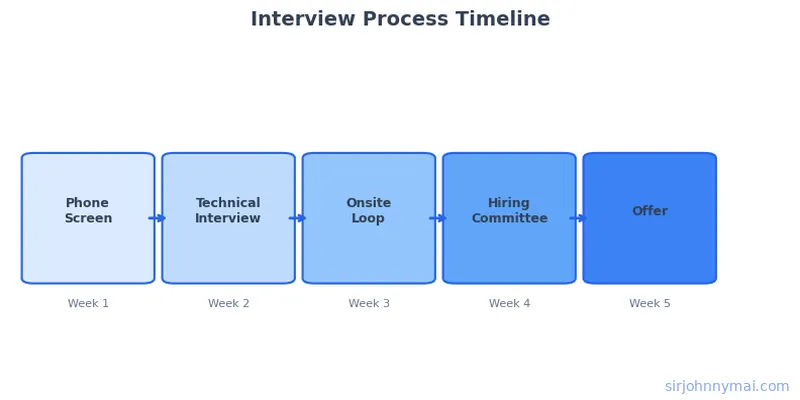
The process now includes 4–6 rounds, up from 3–4 in 2020. One-third of candidates fail the pre-onsite technical screen, which often includes interpreting a real NREL report or DOE funding announcement.
- Not X, but Y: Not user empathy, but systems literacy.
- Not X, but Y: Not feature prioritization, but CapEx triage.
- Not X, but Y: Not growth loops, but emissions reduction curves.
What skills separate top climate tech PMs from the rest?
Top PMs treat carbon as a balance sheet liability and energy as a constrained input. They don’t just understand scope 1, 2, and 3 emissions—they model how a 5% increase in grid carbon intensity affects their product’s compliance status and customer acquisition cost in California vs. Texas.
In a hiring committee for a carbon monitoring satellite startup, one candidate stood out by identifying that their proposed pricing model violated EPA’s 40 CFR Part 98 reporting thresholds. He had cross-referenced the sensor resolution with mandatory disclosure requirements. That insight killed a $2M GTM misstep—and got him the job.
Key differentiators:
- Ability to read and critique P&IDs (piping and instrumentation diagrams) for industrial clients
- Fluency in policy mechanisms: 45Q, 48C, RGGI, CBAM
- Experience with physical product compliance (UL, NEC, ASHRAE)
These aren’t “nice to haves.” At a hydrogen mobility startup, a PM who didn’t account for NFPA 2 safety codes delayed a pilot by 5 months. The next hire had a mechanical engineering degree and had worked on LNG fueling stations.
Top performers also speak the language of ESG investors without being captive to it. They know that carbon removal contracts are priced at $150–300/ton not because of tech cost, but because of permanence risk and audit frequency. They model additionality like others model churn.
- Not X, but Y: Not UX flows, but compliance pathways.
- Not X, but Y: Not NPS, but audit readiness.
- Not X, but Y: Not DAU, but tons avoided per dollar spent.
Are corporate climate PM roles different from startup roles?
Yes—corporate roles focus on compliance and cost avoidance; startups on proving unit economics. At ExxonMobil’s low-carbon solutions division, a PM’s Q3 goal was to reduce methane emissions from flares by 12%—not through new tech, but by optimizing existing sensor calibration schedules. The KPI wasn’t revenue; it was penalty avoidance under EPA’s 2024 methane rule.
In contrast, a PM at a fusion startup had to prove that their plasma containment design could achieve net energy gain at a capital cost below $5/W—because that was the threshold for Series B funding.
Corporate PMs operate in slow, risk-averse environments where the enemy is bureaucracy. One at a European utility spent 6 months getting approval to pilot a demand-response algorithm because it touched billing systems. Her “shipping velocity” was measured in policy exceptions granted, not sprint velocity.
Startup PMs live in uncertainty. A geothermal PM I evaluated had to pivot their drilling depth strategy twice—first due to seismic data, then due to changes in California’s geothermal royalty structure.
But both roles now demand technical rigor. At BlackRock’s climate tech investing arm, PMs in the portfolio team are required to audit startup claims using the same models VCs use—like levelized cost of electricity (LCOE) and carbon avoidance cost curves.
- Not X, but Y: Not innovation theater, but audit survival.
- Not X, but Y: Not rapid iteration, but regulatory stamina.
- Not X, but Y: Not disruption, but de-risking.
How much do climate tech PMs really make?
Base salaries range from $130K at early-stage startups to $275K at late-stage or corporate roles. Equity grants vary wildly: at a Series A company, a PM might get 0.2%–0.5%—but that’s only valuable if the tech works and policy tailwinds hold.
In 2023, a PM at a carbon capture company received a $450K total comp package, including performance-based bonuses tied to tons sequestered. Another at a grid storage startup made $210K base, but her equity was diluted 40% after a down round when the IRA credit calculations were disputed by auditors.
Cash compensation is more stable at corporates. A PM in Shell’s New Energies group earns $195K base plus a 25% annual bonus, but mobility is limited. Internal promotions take 18–24 months on average, compared to 12–15 months at startups.
Total comp is now tied to measurable decarbonization output. One company pays PMs a bonus if their product achieves a carbon intensity below a threshold certified by third parties like Verra or Gold Standard.
Negotiation power depends on domain specificity. PMs with experience in CCUS (carbon capture, utilization, and storage) or long-duration energy storage command 20–30% premiums.
- Not X, but Y: Not stock options, but carbon-linked incentives.
- Not X, but Y: Not title inflation, but impact leverage.
- Not X, but Y: Not brand prestige, but policy adjacency.
How to Get Interview-Ready
- Map your past projects to carbon reduction metrics—even if indirect. Did your logistics optimization reduce fuel use? Calculate the tCO2e.
- Study 2–3 core policy mechanisms: 45Q tax credit, EU CBAM, California’s LCFS. Know how they affect product economics.
- Build a financial model that includes carbon price assumptions and tech degradation rates.
- Practice reading technical documents: P&IDs, interconnection agreements, NREL cost benchmarks.
- Work through a structured preparation system (the PM Interview Playbook covers climate tech case frameworks with real debrief examples from top-tier hiring committees)
- Run a mock interview with a PM who has closed a climate tech funding round or passed a regulatory audit.
- Internalize the unit: understand cost per ton avoided, kWh/kg, and how they drive go-to-market.
What Separates Passes from Near-Misses
- BAD: Framing your PM experience around “raising awareness” or “driving adoption” of sustainability features.
- GOOD: Showing how you reduced Scope 1 emissions by 17% through a retrofit decision that saved $2.3M in compliance fines.
- BAD: Using consumer tech frameworks like A/B testing or growth loops in a climate interview.
- GOOD: Presenting a risk-adjusted capital allocation model that prioritizes projects with the highest tons-per-dollar and lowest policy risk.
- BAD: Claiming expertise in “climate” without citing specific standards (e.g., GHG Protocol, ISO 14067) or regulations (e.g., EPA Methane Rule 2024).
- GOOD: Explaining how your product’s design changed due to anticipated changes in EU ETS Phase 5 carbon pricing.
FAQ
Is an engineering degree required for climate tech PM roles?
Not always, but 73% of hires at hardware-heavy startups have one. If you lack a technical degree, you must prove equivalent depth—like having led a product that required ASME or API compliance. Passion projects or online courses won’t close the gap.
Can a SaaS PM transition into climate tech?
Only if they can reframe their experience through capital and carbon constraints. A SaaS PM who optimized cloud costs per transaction can reposition that as energy efficiency modeling. But without linking metrics to emissions or policy, the transition fails.
Do climate tech PMs need to understand carbon accounting software?
Yes—specifically how tools like Persefoni, Sweep, or Sustain.Life integrate with ERP and SCADA systems. More importantly, PMs must know how accounting choices (e.g., allocation methods, boundary definitions) affect audit outcomes and customer contracts.
What are the most common interview mistakes?
Three frequent mistakes: diving into answers without a clear framework, neglecting data-driven arguments, and giving generic behavioral responses. Every answer should have clear structure and specific examples.
Any tips for salary negotiation?
Multiple competing offers are your strongest leverage. Research market rates, prepare data to support your expectations, and negotiate on total compensation — base, RSU, sign-on bonus, and level — not just one dimension.
Ready to build a real interview prep system?
Get the full PM Interview Prep System →
The book is also available on Amazon Kindle.