Zoho PM Interview Guide: Questions and Tips: Here is a direct, actionable answer based on real interview data and hiring patterns from top tech companies.
Zoho does not hire for pedigree or polished frameworks; they hire for raw product intuition and the ability to build without a massive support system. The interview process is a filter for pragmatism over theory. If you sound like a textbook, you will be rejected.
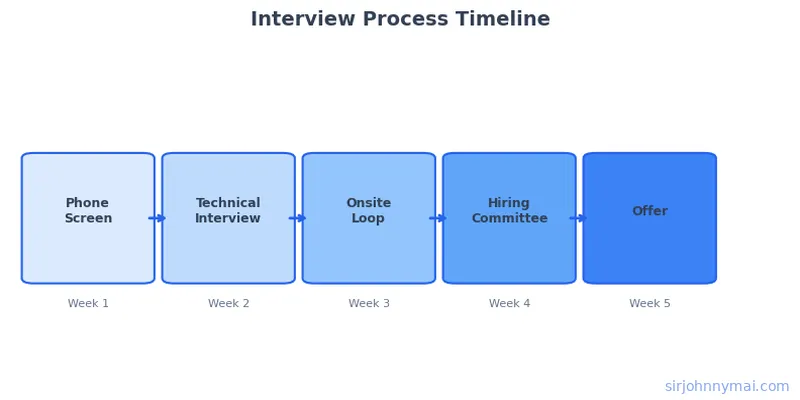
What is the Zoho PM interview process like?
Zoho utilizes a lean, multi-stage filter consisting of 3 to 5 rounds that prioritize execution over strategy. The process typically spans 14 to 21 days and moves faster than FAANG because they avoid the bureaucratic committee delays of larger firms.
In a recent debrief for a Senior PM role, the hiring manager dismissed a candidate who had a perfect track record at a top-tier firm because they couldn't explain the basic logic of a feature they had managed. The judgment was clear: the candidate was a coordinator, not a product owner. At Zoho, the distinction is binary.
The problem isn't your ability to manage a roadmap—it's your ability to derive the roadmap from first principles. Zoho operates on a vertical integration model where the PM must understand the full stack. You will face a mix of aptitude tests, product design cases, and grueling technical discussions.
The interview is not a test of your communication skills, but a test of your mental models. While Google looks for GCA (General Cognitive Ability), Zoho looks for Product Instinct. This means they care less about how you structure your answer and more about whether your solution actually solves the user's pain point without adding unnecessary complexity.
What are the most common Zoho PM interview questions?
Zoho asks questions that force you to strip away the jargon and prove you understand the mechanics of a product. You will encounter a heavy dose of product teardowns, Guesstimates, and scenario-based questions focused on B2B SaaS efficiency.
I recall a Hiring Committee meeting where we debated a candidate who gave a textbook answer to a product improvement question. They used the standard User Persona -> Pain Point -> Solution framework. The HM rejected them immediately. The reason? The candidate identified a pain point that was a known limitation of the legacy architecture and proposed a solution that would have required a complete rewrite of the core engine.
The failure was not a lack of framework, but a lack of technical empathy. Zoho values the intersection of product and engineering. You will be asked questions like: How would you improve Zoho CRM for a small business owner with zero technical skills? Or, design a simplified invoicing system for a freelancer.
The key to these questions is not the breadth of your ideas, but the depth of your constraints. Do not suggest adding an AI chatbot to every problem. Instead, suggest a better keyboard shortcut or a more intuitive data validation rule. Zoho prefers the elegant, simple fix over the expensive, trendy feature.
How does Zoho evaluate product design and strategy?
Zoho evaluates strategy through the lens of sustainability and self-reliance, rejecting the growth-at-all-costs mentality common in VC-backed startups. They want to see that you can build a product that survives without a million-dollar marketing budget.
In one specific case, a candidate proposed a strategy based on aggressive user acquisition through paid channels. The interviewer stopped them mid-sentence. At Zoho, the strategy isn't about how to buy users, but how to build a product so indispensable that users find it through utility.
The judgment here is based on your understanding of the B2B lifecycle. You must demonstrate that you understand churn not as a percentage on a slide, but as a failure of the product to deliver core value. When asked about strategy, do not talk about market penetration; talk about feature cohesion across the Zoho ecosystem.
The tension in the room during these interviews usually centers on whether the candidate is too high-level. If you start your answer with a SWOT analysis, you have already lost. Start with the user's frustration, move to the technical constraint, and end with the simplest possible version of the solution.
Will I be tested on technical skills during a PM interview at Zoho?
Yes, Zoho expects PMs to be technically literate enough to challenge engineers on implementation details without being the ones writing the code. You will not be asked to LeetCode, but you will be asked how a feature works under the hood.
I once sat in a debrief where a candidate described a feature as magic. When the lead engineer asked how the data would sync across devices in real-time, the candidate stumbled. The verdict was an immediate No. In the Zoho ecosystem, a PM who doesn't understand API limitations is a liability to the engineering team.
The requirement is not coding proficiency, but system fluency. You need to understand the difference between a relational database and a NoSQL approach, not to implement them, but to know why one makes a feature slower for the user.
The mistake most candidates make is trying to hide their technical gaps with product management terminology. Do not say you will collaborate with the engineering team to find the best solution; tell the interviewer exactly what the trade-offs are between latency and data consistency for the feature you are designing.
Smart Preparation Strategy
- Audit the entire Zoho ecosystem to understand how the apps integrate (the PM Interview Playbook covers the Product Design and Execution frameworks used in B2B SaaS cases with real debrief examples).
- Deconstruct three B2B products you use daily, identifying the exact technical constraint that limits their current UX.
- Practice Guesstimates that focus on B2B markets (e.g., the number of SMEs in India needing CRM software) rather than consumer markets.
- Prepare three stories of product failures where the cause was a technical oversight, not a market shift.
- Map out the user journey for a non-technical user onboarding into a complex software suite.
- Draft a 30-60-90 day plan that prioritizes stability and core utility over aggressive feature expansion.
How Strong Candidates Still Fail
Mistake 1: Using FAANG-style frameworks (CIRCLES, HEART) as a crutch.
Bad: I will start by identifying the personas, then move to the goal, then brainstorm five ideas.
Good: The core problem here is that the user has to click four times to reach the invoice screen; we need to move that action to the primary dashboard.
Mistake 2: Prioritizing AI and trendy tech over basic utility.
Bad: I would integrate a generative AI agent to automate the customer's email responses.
Good: I would create a set of pre-defined templates based on the most common 20% of customer queries to reduce manual typing.
Mistake 3: Overestimating the importance of a polished presentation.
Bad: Spending 10 minutes on a beautifully structured slide deck for a case study.
Good: Using a whiteboard to sketch the data flow and focusing the conversation on the edge cases of the logic.
FAQ
Do I need an MBA for a PM role at Zoho?
No. Zoho values evidence of building over credentials. An MBA is a signal of business literacy, but a portfolio of shipped products or a deep understanding of a specific domain is the actual currency in their hiring process.
Is the Zoho PM interview more technical than other companies?
Yes, in terms of product mechanics. While they don't require coding, they demand a higher level of understanding regarding how software is actually constructed compared to the high-level strategic focus of companies like Meta or Google.
How long does the offer process take after the final round?
Usually 3 to 7 days. Because Zoho avoids the multi-layered committee approvals typical of larger organizations, the decision is usually made by the hiring manager and the department head immediately following the final debrief.
Ready to build a real interview prep system?
Get the full PM Interview Prep System →
The book is also available on Amazon Kindle.