Web3 PM interviews test your ability to bridge technical constraints with user‑centric product thinking, not just your knowledge of blockchain jargon. Interviewers look for clear judgment on tokenomics, smart‑contract trade‑offs, and metrics that reflect decentralized incentives. Prepare by framing every answer around a specific product decision you would make, not a textbook definition.
This guide is for product managers with at least two years of experience in tech or finance who are targeting Web3 roles at startups, crypto exchanges, or established tech firms launching blockchain initiatives. You understand basic product sense but need to translate it into decentralized contexts where users control assets, governance is programmable, and revenue models diverge from traditional SaaS. If you have shipped a consumer-facing feature and can discuss trade‑offs, you belong in this audience.
What are the core Web3 concepts interviewers expect PMs to know?
Interviewers expect you to grasp the trade‑offs between decentralization, security, and scalability, not to recite the Ethereum whitepaper verbatim. In a Q3 debrief at a Layer‑2 startup, the hiring manager rejected a candidate who could list every consensus mechanism but could not explain why a product might choose optimistic rollups over zk‑rollups for a gaming marketplace.
The problem isn’t your ability to define a term — it’s your judgment about when a technical choice serves a user outcome. You should be ready to discuss how gas fees affect user acquisition, why custody models influence trust, and how token vesting aligns long‑term incentives. A strong answer ties a concept to a concrete product decision: “If we launch an NFT marketplace, we would choose a sidechain with sub‑cent gas fees to lower the barrier for casual creators, accepting a modest reduction in validator count because our threat model prioritizes usability over maximal decentralization.” This shows you can weigh trade‑offs rather than recite definitions.
> 📖 Related: Amazon SDE interview questions coding and system design 2026
How should I structure my answer to tokenomics design questions?
Structure your answer around three pillars: utility, distribution, and governance, then conclude with a metric you would watch to validate the model. During a hiring round for a DeFi protocol, a candidate presented a token supply chart without explaining how each allocation served a specific user segment; the panel noted the answer lacked a product lens and moved on. The problem isn’t the presence of numbers — it’s the absence of a causal link between token mechanics and user behavior.
Begin by stating the core user action the token should incentivize (e.g., providing liquidity, voting on proposals, paying for compute). Next, map distribution categories — community grants, team vesting, reserve — to how they support that action over time. Finally, propose a leading indicator such as weekly active wallets or proportion of tokens staked, and explain why a shift in that metric would signal a design flaw. This framework forces you to think like a product owner who must balance short‑term growth with long‑term network health.
What behavioral questions reveal product sense in a blockchain context?
Behavioral questions focus on how you navigated ambiguity, aligned cross‑functional stakeholders, and measured outcomes when traditional funnels do not apply. In a debrief for a Web3 social platform, a hiring manager recalled a candidate who described launching a feature by copying a Web2 roadmap, ignoring the fact that on‑chain actions are irreversible and costly.
The manager said the candidate’s story revealed a reliance on familiar processes rather than adapting to the constraints of immutability and transparent governance. A strong response highlights a moment you defined success metrics that reflect on‑chain activity — such as the ratio of successful contract interactions to failed transactions — and how you used that data to pivot. Contrast this with a vague claim of “I worked well with engineers”; instead, say, “I ran a two‑week experiment where we reduced contract call depth from three to one, cutting average gas cost by 40% and increasing daily active wallets from 2,000 to 3,500.” This shows you can translate product intuition into measurable on‑chain impact.
> 📖 Related: Hugging Face PM mock interview questions with sample answers 2026
How do I demonstrate familiarity with smart contract development lifecycle?
Demonstrate familiarity by describing how you collaborate with auditors, interpret testnet feedback, and translate technical limitations into product requirements, not by claiming you can write Solidity. In a recent interview loop at a Web3 gaming studio, a PM explained they had reviewed audit reports and used the findings to adjust the game’s asset‑transfer flow, which prevented a potential re‑entrancy exploit.
The hiring manager noted this showed the candidate could bridge the trust gap between engineering and product without overstepping into coding. A good answer outlines a concrete workflow: you draft a feature spec, hold a technical workshop with developers to identify gas‑heavy operations, revise the spec to move costly logic off‑chain or batch transactions, then define acceptance criteria that include both functional tests and gas‑limit benchmarks. If you mention a specific tool — such as Hardhat for local testing or Slither for static analysis — frame it as a way you ensured the product met security and performance goals, not as a badge of coding ability.
What metrics matter most when evaluating a Web3 product's success?
Metrics must capture network health, user ownership, and protocol sustainability, not just vanity counts like total users or transaction volume. In a hiring discussion for an infrastructure provider, a VP of product rejected a candidate who celebrated a million transactions without mentioning that 80% were failed due to gas price spikes, indicating a broken user experience. The problem isn’t tracking activity — it’s ignoring whether that activity delivers value to participants.
Prioritize metrics such as: proportion of successful transactions, average cost per user action, distribution of token holdings (Gini coefficient), governance participation rate, and retention of active addresses over 30‑day windows. Explain how each metric informs a product lever — for example, a rising Gini coefficient signals centralization risk, prompting you to design new incentive programs for smaller holders. This approach shows you understand that success in Web3 is measured by the robustness of the underlying economy, not just surface‑level adoption.
What to Focus On Before the Interview
- Review the fundamentals of blockchain architecture: consensus, cryptographic hashing, and Merkle proofs, focusing on how each affects product latency and trust.
- Map common Web3 user journeys (wallet onboarding, token swap, NFT mint, governance vote) and identify points where friction typically arises.
- Practice explaining tokenomics using the utility‑distribution‑governance framework with a real or hypothetical product you could build.
- Study recent audit reports of popular protocols to learn how technical findings translate into product constraints (the PM Interview Playbook covers interpreting audit findings with real debrief examples).
- Prepare two behavioral stories that highlight your ability to define success metrics in ambiguous, high‑stakes environments and to iterate based on on‑chain data.
- Mock interviews with a friend who plays the role of a smart‑contract engineer; focus on translating their concerns about gas or security into product trade‑offs.
- Draft a one‑page product spec for a simple Web3 feature (e.g., a token‑gated community forum) and be ready to defend each choice against questions about decentralization, cost, and regulatory risk.
Where Candidates Lose Points
BAD: Listing every blockchain term you know without linking it to a decision.
GOOD: Pick one concept — such as “finality” — and explain how its timing influences your choice of user confirmation UI for a cross‑bridge transfer.
BAD: Describing a past project as if it were a Web2 product, ignoring on‑chain constraints like immutability or transparent governance.
GOOD: Detail a specific moment when you changed a feature scope after learning that a smart‑contract call could not be paused, showing you adapted to blockchain realities.
GOOD: When asked about metrics, name a concrete on‑chain indicator (e.g., percentage of tokens staked) and explain how a shift would trigger a product experiment, rather than citing generic KPIs like DAU without context.
FAQ
What salary range should I expect for a Web3 PM role at a mid‑size startup?
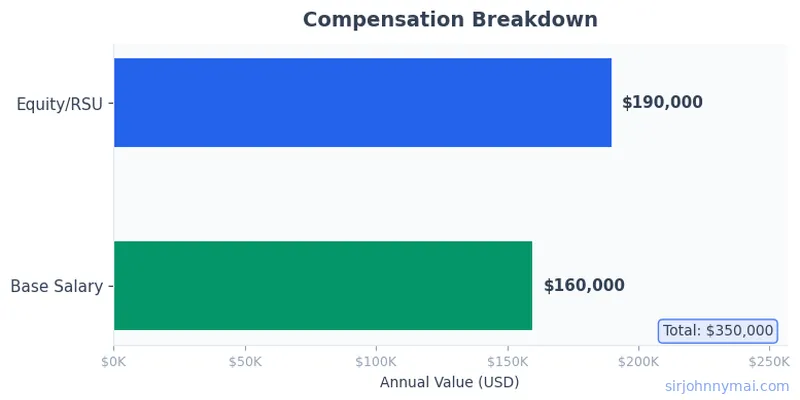
In a recent hiring round for a Web3 PM at a Series B infrastructure firm, the offer included a base salary between $160,000 and $190,000 per year, plus an annual token grant valued at roughly 0.3‑0.5% of the fully diluted supply, vesting over four years with a one‑year cliff.
The range reflected the candidate’s experience in launching consumer‑facing crypto products and their ability to discuss trade‑offs between decentralization and user experience. Companies earlier in their lifecycle may offer lower base but higher token upside, while later‑stage firms often invert that ratio.
How many interview rounds are typical for a Web3 PM position?
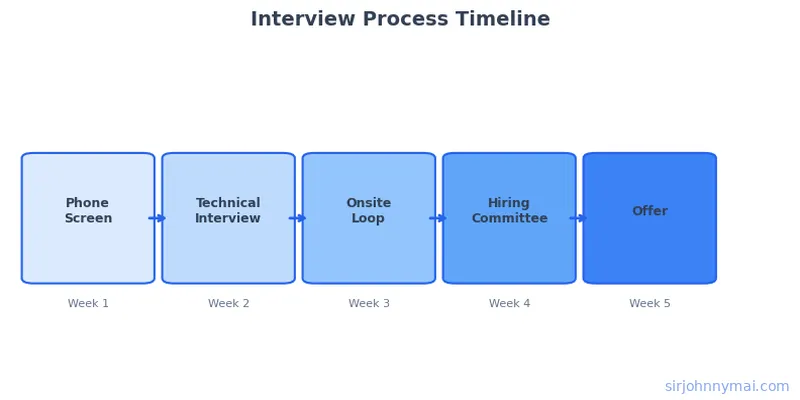
A standard loop consists of four rounds: a recruiter screen, a product sense interview focused on tokenomics or user journey mapping, a technical interview with an engineer that tests your ability to discuss smart‑contract limitations and audit findings, and a leadership interview exploring your experience with cross‑functional alignment in ambiguous environments.
The entire process usually spans 10‑15 business days from initial contact to offer, though some firms compress it into a single week for urgent hires. Expect each round to last 45‑60 minutes, with the technical round often including a white‑board style discussion of gas optimization or upgradeability patterns.
How important is prior blockchain experience compared to product fundamentals?
Product fundamentals outweigh specific blockchain experience; hiring managers prioritize your ability to make sound judgments under uncertainty and to translate technical constraints into product decisions.
In one debrief, a candidate with two years of Web3 experience was passed over because they repeatedly defaulted to “the community will decide” without proposing a concrete product lever, whereas a candidate with five years of SaaS PM experience but only six months of self‑studied blockchain concepts earned an offer by framing every answer around a clear hypothesis, a metric to test it, and a contingency plan if the hypothesis failed. Demonstrated product sense, structured thinking, and comfort with ambiguity are the decisive factors; blockchain knowledge can be acquired on the job, but judgment cannot be taught quickly.
Ready to build a real interview prep system?
Get the full PM Interview Prep System →
The book is also available on Amazon Kindle.