The Staff PM role demands a shift from product execution to strategic leadership and organizational influence, focusing on ambiguity, systems thinking, and cross-functional alignment. Success at this level is determined by one's ability to drive impact through others and shape the product vision for significant parts of the business, often involving complex technical and political challenges. Candidates are judged on their demonstrated capacity to operate at a multi-team or multi-product scale, not merely on their individual contributions.
The Staff PM role is not an incremental promotion; it is a fundamental shift in impact, demanding leadership that shapes entire product domains, not just individual features. This level signifies a move from direct product ownership to organizational leverage, requiring a demonstrated ability to navigate complex technical and political landscapes to drive strategic outcomes. Hiring committees evaluate candidates not on their ability to manage projects, but on their capacity to define and solve ambiguous, high-impact problems across multiple teams or even product lines.
This article is for Senior Product Managers who consistently operate at the upper bound of their current scope, feel constrained by existing organizational structures, and are ready to tackle problems whose solutions are not immediately obvious or contained within a single team.
It is for those who seek to transition from managing discrete products or features to defining the strategic direction and architectural integrity for larger product areas, driving influence through organizational design and technical understanding, rather than direct reports. This insight is also for hiring managers and directors who need to calibrate their expectations and evaluate candidates for this critical leadership tier.
What is the fundamental difference in scope for a Staff PM?
The Staff PM role is fundamentally defined by the scale and ambiguity of problems addressed, shifting from optimizing existing products to architecting future product capabilities and organizational structures.
It is not about managing more products, but managing ambiguity at scale, identifying and solving problems that lack clear ownership or established solutions across multiple teams. In a Q3 debrief for a Staff PM candidate at a major enterprise software company, the primary feedback wasn't about their roadmap management, but their demonstrated ability to articulate the strategic implications of a technical debt issue across three distinct product lines, proposing a federated solution that required buy-in from multiple VPs.
The Senior PM operates within a defined product area, optimizing for specific metrics and executing on an established vision. Their scope is typically limited to a single product or feature set, with clear boundaries and a well-understood user base. They are expected to deliver features, manage stakeholders, and demonstrate ownership over their domain.
The Staff PM, however, transcends these boundaries. Their impact radius extends to multiple product lines, often encompassing foundational platform components, cross-cutting user experiences, or strategic initiatives that redefine market positioning. The problem isn't improving an existing feature; it's discerning which foundational capabilities are missing across an entire ecosystem and then orchestrating their development.
This shift necessitates a different form of leadership. A Senior PM leads their immediate team through direct influence and detailed knowledge of their product. A Staff PM leads through strategic framing, architectural foresight, and the ability to build consensus among peers and senior leadership who do not report to them.
They are often asked to "go deep" into a problem space that has no clear owner, diagnose systemic issues, and propose solutions that require significant organizational change or investment. This requires a profound understanding of not just the product, but the underlying technical architecture, the organizational dynamics, and the long-term business strategy. In a hiring committee discussion for a Staff PM, a key point of contention was whether the candidate's impact was "horizontal" enough; their achievements were impressive within a single product, but the committee sought evidence of influence across organizational silos, demonstrating the capacity to identify and unblock dependencies for multiple teams.
What leadership qualities are non-negotiable for a Staff PM?
Non-negotiable leadership qualities for a Staff PM center on influence without authority, strategic foresight, and the ability to articulate complex problems and solutions to diverse audiences. It's not about being the loudest voice, but the most trusted voice, one that commands respect through demonstrated judgment and the ability to connect disparate initiatives into a coherent strategic narrative.
I recall a Staff PM candidate who presented an impressive portfolio of completed projects, but failed to demonstrate how they personally elevated the strategic thinking of their peers or drove alignment on ambiguous, multi-year initiatives. The hiring manager noted, "They can build the house, but can they design the city?"
This level requires a mastery of organizational psychology and political navigation. Staff PMs are frequently tasked with aligning conflicting priorities across different business units, each with their own P&L and incentives.
They must identify the shared strategic imperative, build a compelling case, and secure buy-in through persuasion, not directive authority. This involves understanding the motivations of various stakeholders, anticipating objections, and crafting a narrative that resonates with each group while serving the broader company objective. The problem isn't getting a feature built; it's convincing three separate engineering teams and two business units that a shared platform investment is critical for their individual success, despite short-term costs.
Another critical quality is the ability to mentor and elevate other product managers, not just directly, but through their example and the frameworks they introduce. A Staff PM is expected to raise the bar for product craft across the organization, sharing best practices, challenging assumptions, and fostering a culture of strategic thinking. This isn't formal mentorship; it's a constant, informal elevation of the talent around them.
They should be the person others seek out for advice on thorny strategic problems or difficult stakeholder situations. This capacity for organizational uplift is a key differentiator from Senior PMs, who are primarily focused on their own team's deliverables. In a debrief for a Staff PM role focused on developer platforms, the candidate received high marks for their ability to articulate a vision for improving developer experience across the entire company, specifically outlining how they would empower individual product teams to contribute to and benefit from a shared tooling ecosystem. This demonstrated a critical "force multiplier" mindset.
How do Staff PMs influence product strategy across organizations?
Staff PMs influence product strategy across organizations not by dictating roadmaps, but by shaping the underlying strategic assumptions, defining the architectural principles, and building consensus around shared organizational goals. It's not about making decisions, but shaping the decision-making environment to naturally lead to optimal strategic outcomes.
They operate as architects of information flow and strategic alignment, ensuring that disparate efforts contribute to a cohesive whole. During a particularly contentious annual planning cycle, a Staff PM was instrumental in resolving a fundamental disagreement between the consumer and enterprise product groups regarding shared infrastructure investment. They did this not by forcing a compromise, but by presenting a robust financial model and an articulated long-term platform strategy that demonstrated how the shared investment would unlock disproportionate value for both groups, reframing the debate from a zero-sum game to a synergistic opportunity.
This level demands the ability to identify leverage points in the organization and apply influence strategically. Staff PMs often own foundational components, cross-cutting user experiences, or the strategic narrative itself.
Their work might involve defining the API standards that govern how different products integrate, establishing the core user journey that spans multiple services, or authoring the internal white papers that articulate the company's long-term technology bets. These artifacts become "sources of truth" that guide decision-making across the organization, ensuring consistency and strategic alignment even when teams operate autonomously. The problem isn't just about building a product; it's about building the system that builds products.
Their influence extends to the very structure of the product organization. Staff PMs are often involved in discussions about team charters, organizational design, and the allocation of resources for critical strategic initiatives.
They identify gaps in coverage, propose new team formations, or advocate for re-prioritization based on a holistic understanding of the product portfolio and market dynamics. This requires a deep understanding of the capabilities and limitations of various engineering teams, the strategic priorities of different business units, and the overall company vision. In a hiring committee discussion, a strong candidate articulated how they had successfully lobbied for the creation of a dedicated "platform enablement" team, demonstrating a clear understanding of the organizational structure needed to support their strategic vision for a unified developer experience.
What interview patterns signal Staff PM readiness?
Staff PM interview patterns primarily signal readiness through a candidate's ability to frame and solve highly ambiguous, complex, and politically charged problems at scale, rather than just executing on well-defined tasks.
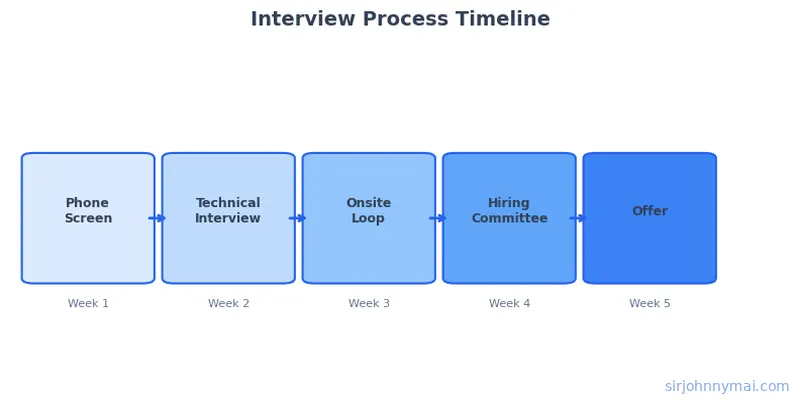
It's not about perfect answers, but the depth of your problem framing, your ability to navigate conflicting constraints, and your demonstrated command of organizational leverage. The typical interview loop for a Staff PM will usually involve 6-8 rounds over 2-3 weeks, with a focus on System Design (often involving multiple complex integrations), Leadership & Influence (how you drive alignment without direct authority), Strategic Product Thinking (defining new market opportunities or pivoting existing product lines), and Executive Presence/Communication.
In a system design round, a Senior PM might be asked to design a new feature for an existing product.
A Staff PM will be asked to design the platform that enables a dozen future features across multiple product lines, considering not just technical architecture, but also organizational implications, API governance, and long-term extensibility for partners. The problem isn't just "how would you build this?"; it's "how would you build this so it scales for 10x traffic, integrates with three legacy systems, and empowers five independent product teams to build on top of it, while also accounting for data privacy regulations in 50 countries?" The expectation is not a perfect diagram, but a robust thought process that covers multiple layers of complexity.
Behavioral interviews at this level dive deep into scenarios where candidates had to influence without authority, resolve significant cross-functional conflicts, or lead a strategic pivot. Interviewers look for specific examples of navigating organizational politics, building consensus among senior leaders, and driving impact through others. They want to hear about failures and what was learned, demonstrating resilience and self-awareness. A candidate who merely describes their individual contributions to a project, even a successful one, will likely fall short.
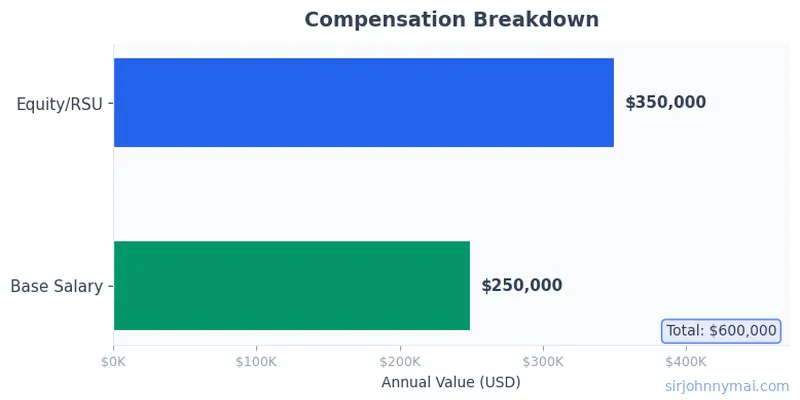
The focus is on how they led the organization through complexity, not just what they built. A strong signal is when a candidate can articulate a strategic problem they identified, which no one else owned, and then detail the multi-quarter, multi-team effort they initiated and championed to solve it. Compensation for this role at FAANG-level companies can range from $350,000 to $600,000+ total compensation, heavily weighted towards stock (RSUs) which vest over four years, with base salaries typically between $180,000 - $250,000. These figures reflect the significant impact and strategic responsibility associated with the level.
What does career progression look like beyond Staff PM?
Career progression beyond Staff PM is not a terminal level, but a pivot point for broader organizational impact, leading either towards Principal PM roles focused on deep technical or domain expertise, or into Product Director/VP roles with increasing people management responsibilities.
It is not about simply doing more of the same, but about fundamentally changing the type of leadership provided, either through unparalleled thought leadership or direct organizational oversight. A Staff PM who consistently demonstrates the ability to define entirely new product categories or solve problems that redefine the company's long-term trajectory might pursue a Principal PM track, becoming a singular authority whose insights shape C-level strategy.
The Principal PM path emphasizes individual contribution at an extremely high leverage point. These individuals are often responsible for incubating nascent product areas, advising on critical technical architecture decisions, or establishing new intellectual property that forms the basis of future product lines.
Their impact is often measured in patents filed, industry standards influenced, or the creation of entirely new product categories. They are the "chief architects" of product strategy, often working with a small team or independently, leveraging deep expertise to solve problems that no one else can. This is a path for those who want to remain deeply immersed in product and technology, driving impact through intellectual leadership rather than direct team management.
Alternatively, a Staff PM might transition into a Product Director or Group Product Manager role, taking on direct people management responsibilities for a team of PMs. This path focuses on building and leading high-performing product organizations, developing talent, and managing a portfolio of products.
Here, the Staff PM's experience in cross-functional influence and strategic alignment becomes invaluable, as they are now responsible for coaching their team to achieve similar levels of impact. The choice between these two paths often depends on an individual's preference for direct management versus deep individual contribution and thought leadership, but both require the foundational strategic and organizational leadership skills honed at the Staff PM level.
Where to Spend Your Prep Time
Deeply analyze your career history for instances where you influenced significant outcomes without direct authority, specifically identifying multi-team or multi-product impact.
Practice articulating complex technical and organizational problems, demonstrating how you broke them down, identified key stakeholders, and drove consensus for a solution that crossed organizational boundaries.
Develop a robust framework for system design that incorporates not just technical components, but also organizational interfaces, API governance, data privacy, and long-term scalability.
Refine your strategic thinking by analyzing industry trends, competitive landscapes, and potential disruptive technologies, forming clear opinions on how they impact your company's long-term product strategy.
Prepare specific stories illustrating how you mentored or uplifted the capabilities of other product managers or cross-functional partners, demonstrating a "force multiplier" mindset.
Work through a structured preparation system (the PM Interview Playbook covers advanced system design and executive communication strategies with real debrief examples) to develop a consistent approach to Staff-level scenarios.
Simulate mock interviews with peers or mentors who have experience interviewing for Staff+ roles, focusing on the depth of your strategic framing and the clarity of your influence narratives.
What Interviewers Flag as Red Signals
Mistake 1: Focusing solely on individual contributions or team-level execution.
BAD: "I successfully launched Feature X, increasing engagement by 15%." (This describes a Senior PM's achievement.)
GOOD: "I identified a systemic gap in our platform's data ingestion capabilities that impacted five separate product teams. I then architected a new centralized service, secured buy-in from three engineering directors, and championed its development, which unblocked five critical initiatives and reduced data latency by 30% across the entire product suite." (This demonstrates multi-team impact, strategic framing, and influence without authority.)
Mistake 2: Presenting solutions without first dissecting the underlying ambiguity and constraints.
BAD: "I would build a new messaging platform with real-time chat and video conferencing." (This is a generic solution without context.)
GOOD: "The challenge of 'better communication' isn't about features, but about aligning disparate user needs across our enterprise and consumer segments, each with unique security and compliance requirements. First, I'd define the core communication primitives needed for both segments, then identify existing technical assets to leverage, and only then propose a phased architectural approach for a unified, extensible platform that addresses cross-segment dependencies and political hurdles." (This highlights problem framing, constraint analysis, and strategic phasing.)
Mistake 3: Lacking a clear narrative of how you influenced peers or senior leadership to achieve a strategic outcome.
BAD: "The team decided to pivot to a new market segment, and I helped build the roadmap for it." (Implies passive participation.)
GOOD: "When market signals suggested a pivot was necessary, I proactively gathered competitive intelligence and customer insights, then synthesized a compelling strategic narrative for senior leadership, demonstrating the long-term revenue potential and the required organizational shift. This led to a contentious but ultimately successful re-prioritization of resources, which I then helped lead by defining the initial product strategy and securing cross-functional commitment." (This demonstrates proactive leadership, strategic influence, and ownership of organizational change.)
FAQ
How long does it typically take to become a Staff PM?
Progression to Staff PM is not time-bound, but impact-bound. It typically requires 8-12 years of demonstrable product management experience, including several years operating at a high-performing Senior PM level, consistently delivering multi-team or multi-product impact that clearly exceeds expectations.
Is a Staff PM role more technical than a Senior PM role?
Yes, a Staff PM role demands a significantly deeper technical understanding than a Senior PM role, often requiring the ability to engage with engineering at an architectural level and influence complex system design decisions that impact multiple product lines. It's less about writing code and more about understanding system constraints and trade-offs.
What's the biggest challenge for new Staff PMs?
The biggest challenge for new Staff PMs is scaling their influence from direct product ownership to organizational leverage, navigating complex political landscapes, and learning to lead through strategic framing and consensus-building rather than direct authority or roadmap management. It's a shift from "doing" to "enabling" and "orchestrating."
What are the most common interview mistakes?
Three frequent mistakes: diving into answers without a clear framework, neglecting data-driven arguments, and giving generic behavioral responses. Every answer should have clear structure and specific examples.
Any tips for salary negotiation?
Multiple competing offers are your strongest leverage. Research market rates, prepare data to support your expectations, and negotiate on total compensation — base, RSU, sign-on bonus, and level — not just one dimension.
Ready to build a real interview prep system?
Get the full PM Interview Prep System →
The book is also available on Amazon Kindle.