The SAP Product Manager path is not a conventional consumer product journey; it demands deep enterprise domain knowledge and a strategic vision for complex system integration, moving beyond feature-level thinking. Growth opportunities are significant for those who master the intricate balance of technical, business, and political landscapes inherent in large-scale B2B software, commanding premium compensation and influence over critical business operations globally. This role is less about rapid iteration and more about long-term, impactful solution architecture within a deeply entrenched ecosystem.
SAP PM Career Path: Opportunities and Challenges
What is the typical SAP Product Manager career path progression?
The SAP Product Manager career progression is less about a linear climb and more about a deepening command of specific modules, industry verticals, or strategic solution areas, culminating in roles that shape critical business functions.
Initial steps typically involve specializing in a particular SAP module or product area, moving from Associate PM to Senior PM by demonstrating ownership and impact over product lifecycles and market adoption. I have observed many candidates attempting to articulate a traditional "consumer tech" progression, emphasizing rapid user growth, but in SAP, the emphasis shifts to depth of functional expertise and the ability to drive enterprise-level transformation for large, entrenched customers.
At the Senior Product Manager level, individuals are expected to own a significant product area, defining roadmaps and engaging directly with key enterprise customers to validate requirements and adoption strategies. This is not merely about gathering feedback; it involves negotiating priorities with large, often global, internal and external stakeholders, where a product decision can impact billions in revenue or thousands of users across multiple geographies.
In one Q3 debrief for a Senior PM role, the hiring manager rejected a candidate because their proposed roadmap initiatives, while innovative, lacked a clear understanding of the existing SAP integration points and compliance requirements that define a solution's viability. The problem wasn't a lack of ideas, but a lack of foundational architectural judgment.
Progression to Principal Product Manager or Group Product Manager signifies mastery, where individuals are responsible for a portfolio of products, defining strategic direction for broader solution areas, or leading teams of other product managers. These roles demand a blend of technical acumen, deep market insight, and significant leadership capabilities, often interacting directly with C-suite executives at client organizations.
The focus shifts from executing product features to shaping strategic platforms. A Principal PM in the SAP space might oversee the evolution of an entire industry cloud solution, requiring them to harmonize disparate module capabilities and anticipate future regulatory or technological shifts across an entire sector. This is not about managing a backlog; it is about steering a battleship.
The apex of the SAP product career often involves roles such as Director of Product Management, VP of Product, or even Chief Product Officer, where individuals are accountable for the overall product strategy, market positioning, and commercial success of major SAP product lines or entire business units. These positions require a comprehensive understanding of the SAP ecosystem, competitive landscape, and the ability to drive global product strategy that aligns with both SAP's broader corporate objectives and the evolving needs of its largest enterprise customers.
The journey from Associate PM to VP can take 10-15 years, marked by consistent delivery of high-impact solutions and a demonstrated capacity to navigate complex organizational and technical challenges. This path values deep, sustained impact over superficial breadth.
What are the core responsibilities of an SAP Product Manager?
The core responsibilities of an SAP Product Manager extend beyond typical product lifecycle management, demanding a unique focus on complex enterprise solution architecture, customer co-innovation, and rigorous adherence to industry standards. Unlike consumer PMs who prioritize user delight and rapid iteration, SAP PMs must balance the needs of diverse enterprise stakeholders, legacy system compatibility, and global regulatory compliance. The problem isn't simply building a feature; it's building a feature that integrates seamlessly into a multi-billion dollar enterprise's existing infrastructure, often without disruption.
A primary responsibility involves deep domain expertise in specific SAP modules (e.g., S/4HANA Finance, Supply Chain, CRM) or industry solutions (e.g., Retail, Utilities, Healthcare). This requires understanding not just the software's functionality, but the underlying business processes it supports, the data models, and integration patterns.
I recall a debrief where a candidate, despite a strong technical background, failed to articulate how their proposed product enhancement would handle multi-currency accounting standards across different legal entities within an S/4HANA environment. Their vision was sound, but their grasp of the "how" within the SAP reality was absent. This is not about understanding a user story; it's about understanding the financial ledger implications of that user story.
Another critical duty is managing the product roadmap through a lens of enterprise value, not just feature desirability. This involves extensive interaction with large customers, often through co-innovation programs, where product managers work alongside client teams to define requirements, pilot new functionalities, and gather feedback on complex deployments. The typical SAP product release cycle is longer, more rigorous, and often involves extensive testing and validation by highly specialized customer teams. The problem isn't your MVP failing; it's your full release creating a critical outage for a Fortune 500 company.
SAP PMs are also responsible for competitive analysis within a highly specialized enterprise software market, understanding the nuances of how competitors address complex business problems, and articulating SAP's unique value proposition. This includes working closely with sales, presales, and consulting teams to ensure product readiness and market fit.
Furthermore, they act as internal champions for their product, influencing engineering, architecture, and marketing teams, often navigating a large, matrixed organization to secure resources and alignment. This is not about winning mindshare with consumers; it's about winning multi-year contracts with global corporations, where the product choice represents a multi-million dollar investment.
> 📖 Related: Fanatics product manager career path and levels 2026
What are the key opportunities for an SAP Product Manager?
The SAP Product Manager role presents distinct opportunities for significant professional impact, high market value, and unparalleled exposure to the inner workings of global enterprises, differentiating it sharply from generalist PM roles. Unlike consumer product managers who often seek scale in terms of user count, SAP PMs scale in terms of enterprise-wide transformation and depth of business process impact. The opportunity isn't just to ship a product; it's to ship a product that becomes the backbone of a major corporation's operations.
One significant opportunity lies in driving large-scale digital transformation initiatives for some of the world's largest companies. An SAP PM's work directly influences critical business processes such as financial reporting, supply chain optimization, or human capital management for organizations with billions in revenue.
This provides a tangible sense of impact that few other product roles can match. For instance, developing a new feature in SAP's supply chain planning suite might directly improve inventory efficiency for dozens of multinational manufacturers, leading to hundreds of millions in cost savings. This is not about optimizing a button; it's about optimizing a global logistics network.
Another key opportunity is the development of deep, specialized domain expertise, which translates into high market value and career stability. The SAP ecosystem is vast and complex, and product managers who master specific modules or industry solutions become indispensable assets.
This specialization is a moat. During a recent compensation negotiation for a Principal PM role focused on SAP S/4HANA Public Cloud, the candidate's deep understanding of specific financial accounting standards and integration patterns with external tax engines commanded a premium beyond our initial offer. Their value was not generalist PM skill, but irreplaceable SAP-specific expertise.
Finally, SAP PMs gain exposure to a global network of enterprise customers, partners, and internal experts, fostering a unique professional network and continuous learning environment. The scale of SAP's customer base means that product managers are constantly interacting with diverse business models, regulatory environments, and technological challenges.
This provides a continuous learning curve that few other product roles can offer, ensuring that their skills remain relevant and in demand. The career opportunities are not just within SAP itself, but across the entire ecosystem of consulting firms, system integrators, and large enterprises that run on SAP.
What are the significant challenges facing an SAP Product Manager?
The SAP Product Manager role is fraught with specific challenges that demand a high tolerance for complexity, a strategic approach to legacy systems, and exceptional stakeholder management skills, distinguishing it sharply from more agile, consumer-focused product environments. The problem isn't just technical debt; it's organizational and architectural inertia on a global scale.
One primary challenge is navigating the inherent complexity of enterprise software, particularly the vast and interconnected SAP ecosystem. Product decisions rarely exist in isolation; a change in one module can have cascading effects across multiple integrated systems, customer customizations, and industry-specific solutions.
I've witnessed debriefs where candidates proposed elegant solutions that, while technically sound, failed to account for the intricate web of dependencies within a typical SAP landscape, leading to concerns about implementation risk and customer disruption. This is not about simple A/B testing; it's about managing a potential enterprise-wide change management program.
Another significant hurdle is balancing innovation with the demands of a deeply entrenched customer base that relies on stability and predictable evolution, not disruptive pivots. SAP's customers, often large enterprises, have invested billions in their existing implementations and are resistant to changes that could introduce risk or require extensive re-training.
This necessitates a strategic approach to product development that often involves slower, more deliberate release cycles and meticulous backwards compatibility. The challenge isn't your users demanding new features; it's your customers demanding stability and carefully managed evolution. This is not about moving fast and breaking things; it's about moving deliberately and preserving stability for mission-critical systems.
Finally, managing a diverse and often conflicting set of internal and external stakeholders presents a constant challenge. SAP PMs must negotiate priorities with sales, consulting, engineering, and partner ecosystems, alongside the unique demands of individual large customers, each with significant influence.
Political maneuvering and consensus-building are as critical as technical acumen. During a particularly contentious Q4 roadmap planning session, a Principal PM had to meticulously articulate the trade-offs between a new cloud-native feature requested by a strategic customer and the necessary enhancements for an on-premise offering vital to a broader segment. The problem wasn't a lack of data; it was a surplus of legitimate, but conflicting, business imperatives.
What compensation can an SAP Product Manager expect?
Compensation for an SAP Product Manager is generally competitive and often premium, reflecting the specialized domain expertise, complexity of responsibilities, and significant enterprise impact required for the role, typically ranging from $120,000 to over $300,000 annually depending on seniority and location. The salary reflects the critical nature of managing products that are the operational backbone of global corporations, not just a niche application.
At the entry to mid-level, an Associate or Product Manager (1-5 years experience) can expect salaries ranging from $120,000 to $180,000 base, with additional bonuses and stock options pushing total compensation higher.
This tier emphasizes foundational SAP knowledge and the ability to execute on defined product initiatives. In a recent offer negotiation for a Product Manager specializing in SAP SuccessFactors, the candidate’s previous experience with HR compliance in large enterprises allowed us to justify an offer at the higher end of this range, recognizing their immediate value in a complex domain.
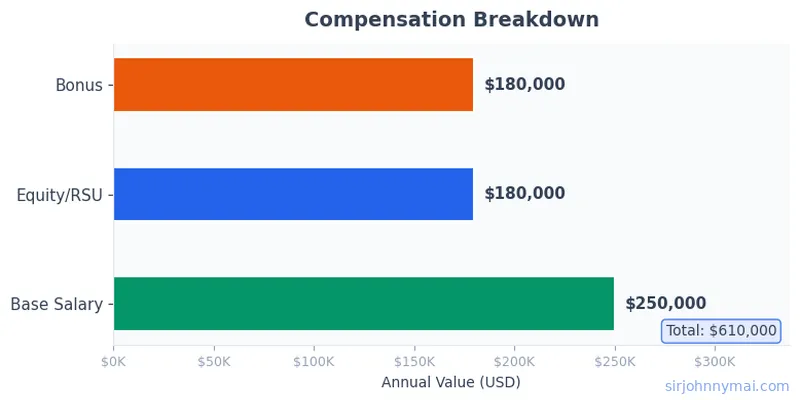
For Senior Product Managers (5-10 years experience), who own significant product areas and demonstrate a track record of successful launches and market adoption, total compensation typically falls within the $180,000 to $250,000 range. At this level, the ability to independently drive product strategy, manage complex customer engagements, and influence engineering roadmaps is directly correlated with earning potential. Their value is in their ability to translate deep domain understanding into tangible product outcomes.
Principal Product Managers and Group Product Managers (10+ years experience), who oversee portfolios of products, lead other PMs, and shape strategic solution areas, command total compensation ranging from $250,000 to $350,000+. These roles are heavily weighted towards strategic leadership, deep architectural understanding, and the ability to drive significant business outcomes for SAP and its customers.
Their impact is measured not by features shipped, but by market share gained and customer value delivered. VP-level roles and above can exceed $400,000, often including substantial equity packages, reflecting accountability for entire product lines or business units. The compensation structure recognizes that not all product management is created equal; the complexity of enterprise software commands a higher premium.
How does the interview process for an SAP Product Manager differ from other PM roles?
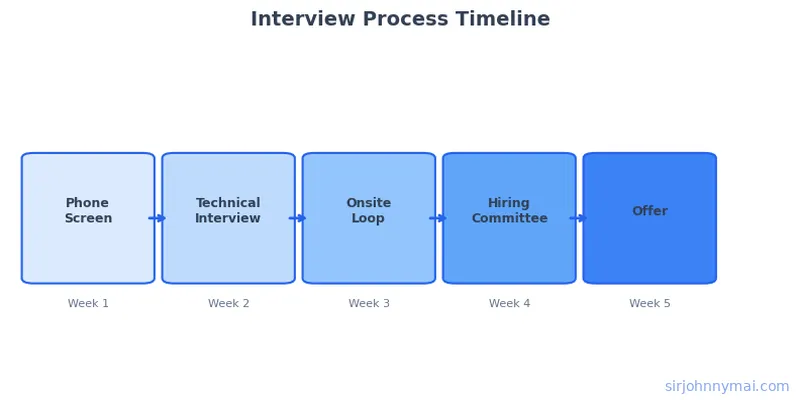
The interview process for an SAP Product Manager fundamentally differs from generalist PM roles by heavily prioritizing deep domain expertise, a nuanced understanding of enterprise architecture, and a demonstrable capacity for navigating highly complex stakeholder landscapes, often involving more technical and solution-oriented rounds. It is not enough to articulate a user problem; one must articulate a business process problem within a specific enterprise context.
While standard product sense, strategy, and execution rounds are present, an SAP PM interview typically includes additional specialized assessments. Expect a dedicated "domain deep dive" where you will be grilled on specific SAP modules (e.g., S/4HANA Finance, Ariba, Concur) or industry solutions relevant to the role.
In a recent interview for an SAP PM role in the supply chain space, a candidate was asked to design a solution for a specific inventory reconciliation problem, not in a generic sense, but by leveraging specific SAP SCM functionalities and data models. Their lack of familiarity with standard SAP transaction codes and reporting structures was a significant red flag. The problem wasn't their lack of product thinking; it was their lack of SAP thinking.
Furthermore, "technical deep dive" rounds are often more rigorous than those in consumer tech. These assess your understanding of enterprise integration patterns, data models, APIs (e.g., SAP BTP, OData), and cloud architecture (e.g., public vs.
private cloud implications for SAP deployments). Interviewers are not just looking for an understanding of technology, but an understanding of how technology interacts within a large, often hybrid, enterprise landscape. A candidate who can only speak to microservices in a greenfield environment, but not to RFC calls or IDocs in a brownfield SAP environment, will struggle.
Finally, "stakeholder and ecosystem management" is scrutinized with particular intensity. SAP PMs operate within a complex web of internal teams, external partners, and high-value enterprise customers. Interview questions will focus on your ability to influence without direct authority, manage conflicting priorities from powerful clients, and drive consensus in environments where a single product decision can impact hundreds of thousands of users and billions in revenue. This is not about managing a small scrum team; it is about steering a large ship through turbulent waters with many captains.
How to Prepare Effectively
- Master specific SAP modules or industry solutions relevant to target roles; surface-level knowledge is insufficient.
- Deepen understanding of enterprise architecture principles, integration patterns, and cloud deployment models (e.g., SAP BTP).
- Prepare detailed case studies that demonstrate success in complex stakeholder management and negotiation within large organizations.
- Familiarize yourself with SAP's product strategy, recent innovations (e.g., S/4HANA, Industry Cloud), and competitive landscape.
- Practice articulating how product decisions impact enterprise-level business processes and financial outcomes, not just user experience.
- Work through a structured preparation system (the PM Interview Playbook covers navigating complex enterprise product scenarios with real debrief examples).
- Develop a strong narrative around your ability to drive adoption and value in environments with long sales cycles and significant customer change management requirements.
What Trips Up Even Strong Candidates
- Treating it like a consumer PM role:
BAD: Focusing interview answers on rapid iteration, A/B testing, and viral growth loops without addressing enterprise-specific constraints. "My solution would involve continuous deployment and iterating based on immediate user feedback."
GOOD: Emphasizing long-term value, integration stability, compliance, and structured release management, recognizing the unique needs of enterprise customers. "My solution prioritizes secure, compliant integration with existing S/4HANA modules, with a phased rollout plan that minimizes disruption for mission-critical operations."
- Lacking deep domain expertise:
BAD: Providing generic answers about product vision or market trends without demonstrating a specific understanding of SAP functionalities, data models, or industry pain points. "Users want better reporting; we should build a dashboard."
GOOD: Demonstrating specific knowledge of how SAP addresses a problem, referencing modules, specific features, or integration points. "For enhanced reporting, we can leverage Fiori apps integrated with BW/4HANA, providing real-time financial insights directly from the universal journal, reducing manual data consolidation."
- Underestimating stakeholder complexity:
BAD: Describing stakeholder management as simply gathering requirements from users and prioritizing with engineering. "I'd collect feedback from customers and then work with the dev team."
GOOD: Articulating a strategy for managing conflicting priorities from major enterprise clients, sales leadership, and internal engineering teams, emphasizing negotiation and strategic alignment. "I would conduct co-innovation workshops with our strategic anchor customers, then synthesize those requirements against SAP's core product strategy, negotiating trade-offs with engineering and sales to ensure market adoption and technical feasibility."
FAQ
What is the most critical skill for an SAP Product Manager?
The most critical skill is the ability to translate complex enterprise business requirements into feasible, integrated SAP product solutions, requiring deep domain expertise, architectural understanding, and a high tolerance for system complexity. This is not about simple feature definition; it is about solution architecture that impacts global operations.
How is an SAP PM different from a typical Enterprise PM?
An SAP PM's role is distinct due to the immense scale and interconnectedness of the SAP ecosystem itself; it requires not just enterprise software acumen but specific mastery of SAP's proprietary technologies, modules, and the unique challenges of integrating within a deeply entrenched global platform. The problem is not just enterprise; it is SAP enterprise.
Is prior SAP experience mandatory for this role?
Prior SAP experience is often mandatory for senior roles, or at minimum, deep experience in a highly relevant enterprise domain with a demonstrable capacity to quickly acquire SAP-specific knowledge; general product management skills are insufficient without this specialized context. Hiring committees prioritize domain depth over generic PM frameworks.
Ready to build a real interview prep system?
Get the full PM Interview Prep System →
The book is also available on Amazon Kindle.