ByteDance PM Culture: Insights and Takeaways: Here is a direct, actionable answer based on real interview data and hiring patterns from top tech companies.
ByteDance seeks product managers who prioritize raw data velocity over polished consensus-building. The culture rewards rapid iteration and individual ownership rather than cross-functional alignment committees. Success requires demonstrating how you ship features in days, not quarters, while tolerating high ambiguity.
This analysis targets experienced product managers aiming to transition into high-velocity, data-driven environments where context is minimal. It is specifically for candidates who have hit a ceiling in consensus-heavy organizations and need to prove they can operate with extreme autonomy. If your resume highlights stakeholder management more than shipped metrics, you are likely a poor fit for this specific ecosystem.
What does the ByteDance PM culture really feel like day-to-day?
The daily reality at ByteDance is defined by an obsession with real-time data feedback loops rather than long-term strategic roadmaps. In a Q3 debrief I attended, a hiring manager rejected a candidate from a top-tier FAANG company because they spent forty-five minutes discussing how they aligned stakeholders, yet could not articulate the specific latency metric they improved in their last launch. The problem isn't your ability to build consensus; it is your inability to make high-stakes decisions with incomplete information. ByteDance operates on a "context, not control" principle where the expectation is that you will identify a problem, hypothesize a solution, and deploy an A/B test within a week.
This is not a culture of extensive documentation or multi-week requirement gathering phases. The organizational psychology at play here is "high autonomy, high accountability," where the lack of process is the process. You are not hired to manage a backlog; you are hired to find growth levers that others have missed. The candidate who thrives here is not the one with the most beautiful slide deck, but the one who can parse raw SQL logs to find a 0.5% conversion uplift opportunity.
How does ByteDance evaluate product sense during interviews?
ByteDance evaluates product sense by testing your ability to deconstruct complex user behaviors into actionable data hypotheses, not by asking you to design a product for a specific demographic. During a hiring committee review for a TikTok PM role, the room went silent when a candidate suggested running user interviews to validate a feature idea for a video editing tool. The senior leader interrupted to ask why the candidate didn't just look at the drop-off rates in the current editing flow or analyze the telemetry from the top 1% of creators. The judgment here is clear: at ByteDance, user intuition is secondary to user data.
The interviewers are looking for a specific cognitive pattern where you immediately gravitate toward quantitative validation before forming a qualitative opinion. This is not about ignoring the user; it is about trusting the aggregate signal over the individual anecdote. A strong candidate will frame their product sense around "if-then" scenarios based on metric movements. For example, "If we reduce the click-to-record time by 200ms, we should see a corresponding increase in video creation volume among new users." The interviewer wants to see that you understand the causal link between interface friction and behavioral output.
What is the actual interview loop structure and timeline?
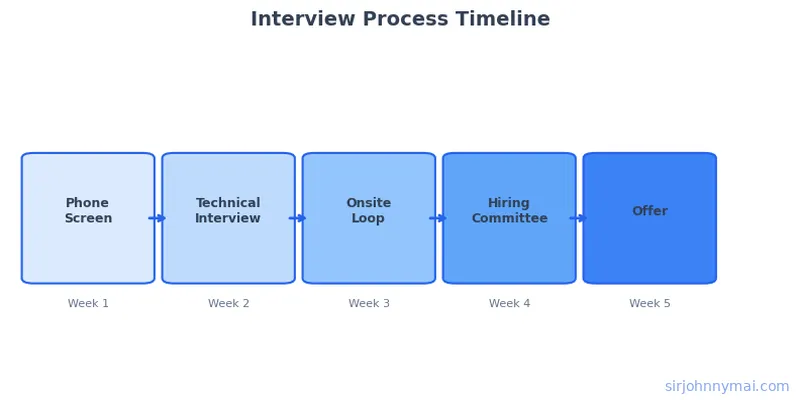
The interview loop typically consists of four to six rounds conducted over a compressed two-to-three-week timeline, focusing heavily on technical fluency and case studies. I recall a specific instance where a candidate's offer was rescinded not because of a bad answer, but because they took five days to return a follow-up email requesting clarification on a case study prompt. Speed is a proxy for competence in this environment. The process usually begins with a recruiter screen, followed by two rounds of product case studies, one technical or data deep-dive session, and a final culture fit round with a senior leader.
Unlike other tech giants that may spread interviews over a month to accommodate various schedules, ByteDance expects rapid turnaround and high mental stamina. The case study rounds are distinct because they often provide raw datasets or access to internal dashboards during the interview, requiring you to analyze live data rather than discuss hypotheticals. The technical round is not about writing code from scratch but about understanding system architecture, API limits, and how data flows through the recommendation engine. You must demonstrate that you can speak the language of engineers without needing a translator. The entire process is designed to filter for candidates who can maintain high cognitive load under time pressure.
How important is technical and data literacy for non-engineering PMs?
Technical and data literacy are non-negotiable prerequisites for any PM role at ByteDance, regardless of whether the position is labeled as "technical." In a debrief session for a growth PM role, the hiring team dismissed a candidate with a strong marketing background because they relied on a data scientist to pull basic retention cohorts. The expectation is that a ByteDance PM can write their own SQL queries, understand the nuances of the recommendation algorithm, and debug data discrepancies without external help. This is not about becoming a software engineer; it is about removing the friction between question and answer.
The organizational principle here is "latency reduction." Every time you have to wait for someone else to get you a number, you lose velocity. During the interview, you will be expected to discuss database schemas, latency implications of certain features, and the statistical significance of A/B test results with precision. If you hesitate when asked about false positives in your experiments or cannot explain how a change in the indexing layer might affect your query speed, you will be marked down. The bar is set high because the product itself is an engine of complex algorithms, and you cannot product-manage what you do not fundamentally understand.
What are the salary expectations and negotiation dynamics?
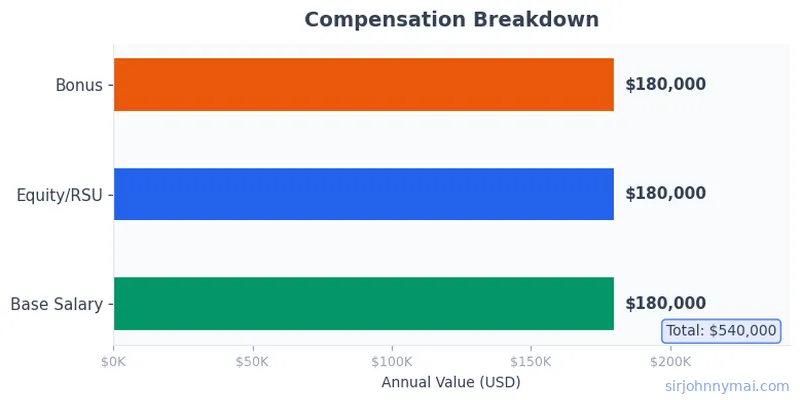
Compensation packages at ByteDance are highly competitive, often matching or exceeding FAANG base salaries, but they come with significant performance-based variability. The base salary for a mid-level PM often ranges between $180,000 and $240,000 depending on the hub, with total compensation packages reaching into the high $300s or low $400s when including bonuses and equity. However, the negotiation dynamic is different from the standardized bands you might see at Microsoft or Google. In one negotiation I facilitated, a candidate tried to leverage a competing offer from a legacy tech firm, only to be told that ByteDance pays for potential velocity, not past tenure.
The equity component is often substantial but comes with a four-year vesting schedule and a strike price that reflects the company's late-stage private or public market valuation. It is crucial to understand that the bonus structure is heavily tied to product performance and company metrics, meaning your take-home pay can fluctuate based on the success of the features you ship. There is little room for negotiating the structure of the deal; the focus is on the total value and the speed at which you can impact the bottom line. If you are looking for a guaranteed, stable paycheck with predictable annual bumps, the variable nature of this compensation model may not align with your risk profile.
Smart Preparation Strategy
- Master SQL and data visualization tools to the point where you can extract and analyze cohorts without assistance during a live interview.
- Prepare three specific examples where you used data to overturn a prevailing hypothesis or pivot a product strategy, focusing on the metric impact.
- Study the mechanics of recommendation algorithms and be ready to discuss how content distribution affects user retention and engagement metrics.
- Simulate a high-pressure case study where you must make a go/no-go decision with only 15 minutes of data analysis.
- Work through a structured preparation system (the PM Interview Playbook covers data-driven case frameworks with real debrief examples) to refine your ability to articulate technical trade-offs.
- Review recent product launches from TikTok or Douyin and reverse-engineer the likely A/B tests and success metrics behind them.
- Prepare to discuss a time you failed to move a metric and exactly how you diagnosed the root cause using system logs or data traces.
Where Candidates Lose Points
Mistake 1: Relying on User Interviews over Data Signals
- BAD: "I would start by interviewing 20 users to understand their pain points with the current video upload flow."
- GOOD: "I would first analyze the drop-off rates at each step of the upload pipeline and correlate them with network conditions and device types to identify the biggest friction point."
Judgment: At ByteDance, anecdotal evidence is noise; only aggregate behavioral data drives decisions.
Mistake 2: Emphasizing Consensus Building
- BAD: "My greatest strength is bringing engineering and design together to agree on a unified vision before moving forward."
- GOOD: "I define the success metric, run a small-scale experiment to validate the hypothesis, and use the results to align the team on the next step."
Judgment: Consensus is a byproduct of results, not a prerequisite for action in this culture.
Mistake 3: Vague Impact Statements
- BAD: "I improved the user experience and increased engagement on the platform."
- GOOD: "I reduced the latency of the feed refresh by 150ms, which resulted in a 1.2% increase in daily active users within the test group."
Judgment: Specificity in metrics is the only language that signals competence to the hiring committee.
FAQ
Is prior experience in social media or content platforms required to get hired?
No, but you must demonstrate an intuitive understanding of algorithmic content distribution and high-velocity iteration. The hiring committee cares more about your ability to interpret data and drive growth than your specific domain history. If you can prove you can move metrics in any context, the domain knowledge can be learned on the job.
How does the performance review cycle impact job security?
Performance reviews are frequent and directly tied to measurable output, creating a high-pressure environment where underperformance is addressed quickly. Unlike companies with long improvement plans, ByteDance expects immediate course correction. If you cannot demonstrate tangible impact on key metrics within your first few quarters, your tenure may be at risk.
Can a PM succeed at ByteDance without a technical background?
It is exceptionally difficult to succeed without strong technical literacy, even if you are not writing production code. You must understand system constraints, data structures, and algorithmic logic to make viable product decisions. A lack of technical fluency will be exposed immediately during the interview loop and will hinder your ability to execute post-hire.
What are the most common interview mistakes?
Three frequent mistakes: diving into answers without a clear framework, neglecting data-driven arguments, and giving generic behavioral responses. Every answer should have clear structure and specific examples.
Any tips for salary negotiation?
Multiple competing offers are your strongest leverage. Research market rates, prepare data to support your expectations, and negotiate on total compensation — base, RSU, sign-on bonus, and level — not just one dimension.
Ready to build a real interview prep system?
Get the full PM Interview Prep System →
The book is also available on Amazon Kindle.