The Future of AI PMs: Industry Outlook and Trends: Here is a direct, actionable answer based on real interview data and hiring patterns from top tech companies.
The AI PM is not a new role, but a shift in the required technical baseline where intuition is replaced by probabilistic reasoning over latent space. Survival depends on moving from managing features to managing probabilistic outcomes. The market is purging generalists in favor of PMs who can architect the data flywheel.
Will AI replace the traditional Product Manager role?
AI will not replace the PM, but it will eliminate the coordinator PM who primarily manages Jira tickets and meeting notes. In a recent headcount review for a GenAI squad, I saw a Director strip three PM roles because the engineers were now using AI to handle the documentation and basic requirement drafting. The value has shifted from the act of coordination to the act of judgment.
The problem isn't that AI can write a PRD; it is that AI cannot decide which problem is worth solving. Most PMs mistake the ability to write a prompt for AI proficiency. True AI product management is not about prompting, but about understanding the cost-latency-quality trade-off of different model architectures.
The industry is moving toward a model where the PM is a system architect. You are no longer designing a deterministic user flow where if the user clicks A, they see B. You are designing a probabilistic system where the user provides input X, and the system provides a distribution of possible outcomes. The skill gap is not in the tool, but in the mental model.
What skills are actually required for an AI PM in 2025?
The essential skill is the ability to define a quantitative evaluation framework (Eval) for non-deterministic outputs. I once sat in a debrief where a candidate described their AI feature as feeling more natural after tuning the prompt. I killed the candidacy immediately. Natural is a vibe; a 12% increase in precision on a golden dataset is a metric.
You must understand the data flywheel: how user interactions feed back into fine-tuning to create a competitive moat. The moat is not the model—since models are becoming commodities—but the proprietary data used to steer that model. If you cannot explain how your product captures data to improve the model over time, you are building a wrapper, not a product.
Technical literacy now means understanding token economics and context window management. It is not about writing Python, but about knowing when to use RAG (Retrieval-Augmented Generation) versus fine-tuning. The distinction is not technical, but economic: RAG is for factual accuracy and timeliness; fine-tuning is for style, format, and domain-specific nuance.
How has the AI PM interview process changed at FAANG?
Interviews have shifted from behavioral frameworks to live system design sessions focused on AI constraints. In a Q3 loop for a Google-level role, we stopped asking how the candidate handled conflict and started asking how they would handle a model that hallucinates 5% of the time in a high-stakes financial environment.
The evaluation is no longer about your ability to prioritize a roadmap, but your ability to manage risk in a probabilistic environment. We look for the ability to decompose a vague AI goal into a series of measurable benchmarks. The signal we seek is not creativity, but rigor.
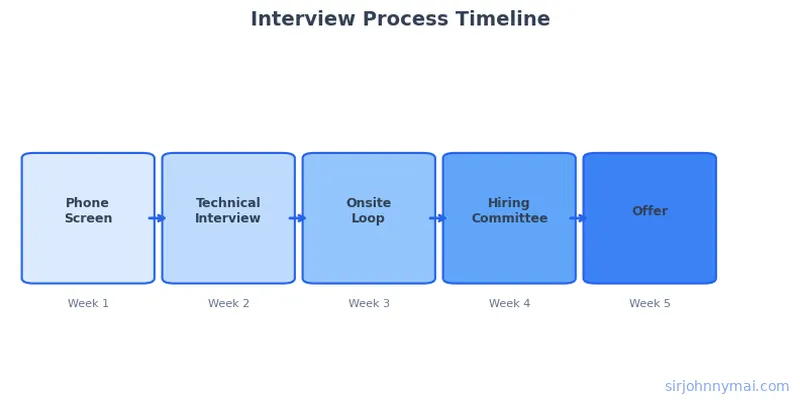
The loop typically consists of 5 to 6 rounds: one product sense, two technical system design (AI-specific), one execution/metrics, and one leadership. Salary bands for specialized AI PMs have expanded, with L6/L7 equivalents seeing total compensation packages ranging from 450k to 800k depending on the scarcity of their domain expertise in LLM orchestration.
Which industries will have the highest demand for AI PMs?
Vertical AI in highly regulated industries—Healthcare, Law, and Finance—will command the highest premiums because the cost of failure is high. In these sectors, the PM is not a growth hacker, but a risk manager. The challenge is not getting the AI to work, but getting the AI to stop failing in specific, dangerous ways.
Consumer AI is currently in a bubble of feature-creep, where every app is adding a chatbot. The winners here will not be the ones with the best AI, but the ones who hide the AI behind a seamless UX. The goal is not to make the user interact with an AI, but to solve the user's problem using AI without them knowing it.
B2B SaaS is undergoing a fundamental collapse of the seat-based pricing model. When an AI can do the work of ten people, charging per seat is suicide. The next generation of AI PMs must redesign the entire monetization layer of their companies, moving from per-seat pricing to value-based or outcome-based pricing.
A Practical Prep Framework
- Master the construction of a Golden Dataset for model evaluation (the PM Interview Playbook covers LLM Eval frameworks with real debrief examples).
- Map the cost-per-token of three different model tiers to determine the unit economics of your proposed feature.
- Define a specific failure mode for your product and create a mitigation strategy that does not involve just telling the user it is an AI.
- Build a data fly-wheel diagram showing exactly how user input transforms into model improvement.
- Practice decomposing a product goal into a precision-recall trade-off analysis.
- Draft a PRD where the success metric is a reduction in hallucination rate rather than a lift in DAU.
Failure Modes Worth Knowing About
Pitfall 1: The Prompt Engineer Fallacy.
- BAD: Listing prompt engineering as a core skill on a resume.
- GOOD: Describing how you built an automated evaluation pipeline to test 1,000 prompt variations against a benchmark.
Judgment: Prompting is a tactic; evaluation is a strategy.
Pitfall 2: The Magic Box Approach.
- BAD: Saying the AI will handle the personalization for the user.
- GOOD: Explaining the specific RAG architecture and vector database strategy used to surface personalized context to the LLM.
Judgment: Treating AI as a black box signals a lack of technical depth.
Pitfall 3: Metric Obsession with Vanity.
- BAD: Reporting that 40% of users tried the AI chatbot.
- GOOD: Reporting that the AI reduced the time-to-resolution for support tickets by 30% while maintaining a CSAT of 4.2.
Judgment: Adoption is not value; efficiency is value.
FAQ
Do I need a CS degree to be an AI PM?
No, but you need the equivalent of a junior engineer's understanding of latent space and embeddings. The requirement is not the ability to code, but the ability to reason through technical constraints. If you cannot discuss the trade-offs between a vector database and a keyword search, you will fail the technical screen.
Is GenAI the only type of AI PM role?
No, but it is the current entry point. Predictive AI (ML for forecasting, churn, and recommendation) remains the backbone of most FAANG revenue. The distinction is that GenAI is about synthesis, while Predictive AI is about classification. A complete AI PM must be fluent in both.
Should I focus on a specific model like GPT-4 or be model-agnostic?
Be model-agnostic. The models are shifting every six months. If your product strategy is tied to a specific version of a specific model, you have built a feature, not a company. Focus on the orchestration layer and the data moat, as those are the only things that persist across model migrations.
What are the most common interview mistakes?
Three frequent mistakes: diving into answers without a clear framework, neglecting data-driven arguments, and giving generic behavioral responses. Every answer should have clear structure and specific examples.
Any tips for salary negotiation?
Multiple competing offers are your strongest leverage. Research market rates, prepare data to support your expectations, and negotiate on total compensation — base, RSU, sign-on bonus, and level — not just one dimension.
Ready to build a real interview prep system?
Get the full PM Interview Prep System →
The book is also available on Amazon Kindle.