Alibaba’s PM culture prioritizes scale, velocity, and ecosystem-wide ownership, while AliHealth’s is constrained by regulatory complexity, slower decision cycles, and clinical accountability. The difference isn’t in product rigor — both demand it — but in where judgment is tested: market creation at Alibaba, risk mitigation at AliHealth. If you thrive on ambiguity and speed, Alibaba dominates. If you prefer mission-driven impact with tighter operational guardrails, AliHealth wins.
How does product ownership differ between Alibaba and AliHealth?
At Alibaba, product managers own outcomes across hundreds of millions of users with minimal oversight; at AliHealth, ownership is shared heavily with medical, compliance, and government affairs teams. The difference isn’t autonomy — it’s where autonomy ends.
In a Q3 2023 HC meeting for the Taobao Growth team, a PM proposed a self-serve merchant onboarding flow that bypassed manual review. No legal stakeholder was in the room. The committee approved it in 18 minutes. Two days later, the feature launched to 5% of users. That autonomy is standard.
At AliHealth, in a parallel case, a PM proposed algorithmic triage routing for telemedicine consultations. The request sat for 19 days waiting for clinical validation from partner hospitals. It eventually launched — but only after three external physician advisors signed off.
Not ownership, but liability defines scope. Not innovation, but auditability determines rollout speed.
Alibaba tests PMs on how fast you can break ground. AliHealth tests how precisely you can document every assumption. At Alibaba, your resume needs examples of scaling features from 0 to 10M DAU. At AliHealth, it better show cross-functional traceability — how one feature update tied to a change in medical protocol, KOL feedback, or NMPA guideline.
One team measures success in weekly GMV delta. The other in quarterly compliance audit scores.
What are the key cultural differences in decision-making?
Alibaba’s decisions are top-down aggressive and data-permissive; AliHealth’s are consensus-driven and risk-averse by necessity. The difference isn’t philosophy — it’s consequence structure.
At Alibaba, a failed A/B test on homepage layout isn’t a career incident. In 2022, a PM on Tmall UX killed a $2M/month recommendation module because it hurt scroll depth. The leadership email thread ended with: “Good kill. Next bet?”
At AliHealth, a misclassified chronic disease tag in the AI diagnostic feed triggered a formal RCA (Root Cause Analysis) involving the CMO, legal, and two hospital partners. That PM was reassigned to non-clinical projects for six months.
Not speed, but blame sensitivity governs action. Not ambition, but defensibility shapes proposals.
In Alibaba’s monthly BizTech reviews, PMs present “bold bets” — initiatives with <30% chance of success but 10x upside. Those are celebrated even when they fail. At AliHealth’s QBRs, “bold” is a red flag. Roadmaps require pre-approval from regulatory counsel. A single unchecked box can delay a launch by 6–8 weeks.
One culture runs on permissionless experimentation. The other operates under preemptive justification.
How do promotion criteria compare for PMs?
At Alibaba, promotions hinge on demonstrated impact at scale; at AliHealth, they depend on cross-functional credibility and risk stewardship. It’s not about output — it’s about whose endorsement carries weight.
In Alibaba’s P7 promotion cycle last year, 14 PMs were reviewed. Nine were promoted. The decisive factor? Three quantifiable wins where the PM drove GMV or efficiency gains across multiple quarters — even if the projects were eventually sunsetted. One PM got promoted after leading a failed livestream commerce integration — because it accelerated partner API adoption by 40%.
At AliHealth, of eight PMs reviewed for P7, two advanced. The bar wasn’t impact — it was audit readiness. One candidate was rejected despite increasing teleconsultation conversion by 22% because her documentation didn’t map feature changes to physician feedback logs.
Not innovation, but process fidelity determines elevation. Not scale, but sustainability gets rewarded.
The Alibaba debrief summary said: “She moves fast and breaks things. But she breaks the right things.” At AliHealth, the feedback was: “Solid execution, but insufficient stakeholder paper trail.”
At Alibaba, you’re promoted when you can independently run a $100M business line. At AliHealth, you’re promoted when no regulator would question your decision log.
What should I expect in the interview process at each?
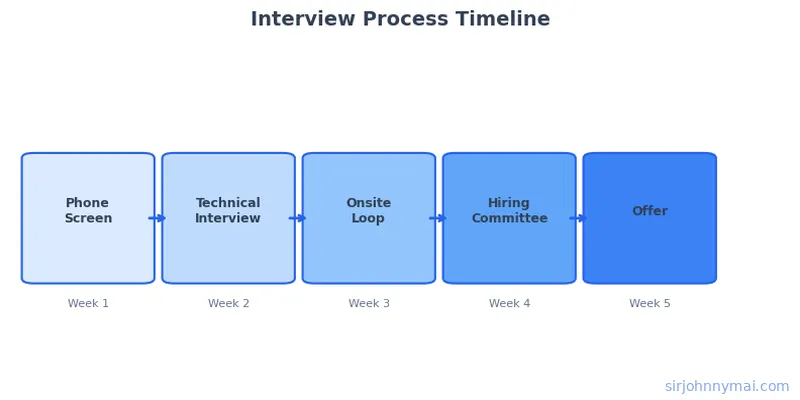
Alibaba runs 4–5 interviews in 6–8 weeks, mixing case studies, behavioral deep dives, and live product critiques; AliHealth adds a compliance scenario round and requires a written product spec reviewed by medical ops. The real difference isn’t format — it’s what silence means.
In an Alibaba interview last year, a candidate proposed a gamified rewards loop for rural merchants. The interviewer didn’t respond for 12 seconds. The candidate iterated: added tiered rewards, fraud detection, partner incentives. The pause was a test — for comfort with ambiguity.
At AliHealth, the same silence during a prescription delivery workflow question was interpreted as concern. The candidate backtracked, asked clarifying questions about pharmacy licensing tiers, and cited the 2023 E-Pharmacy Supervision Measures. That got praise.
Not creativity, but regulatory reflexes are evaluated. Not vision, but compliance awareness is probed.
Alibaba’s bar raiser often asks: “How would you 10x this?” AliHealth’s equivalent asks: “What could go wrong here — and who would be liable?”
At Alibaba, you fail if you can’t scale the vision. At AliHealth, you fail if you can’t list three government touchpoints affected by your feature.
One PM who aced Alibaba’s process — nailing the ecosystem expansion case — bombed at AliHealth when asked to diagram data flow under the Personal Information Protection Law (PIPL). He drew user touchpoints but missed data localization nodes.
Interviews reflect culture. Alibaba interviews for what you’ll build. AliHealth interviews for what you’ll prevent.
How do compensation and career paths differ?
Alibaba offers higher cash bonuses, stock grants, and faster promotions — P6 to P7 averages 2.3 years; AliHealth pays less upfront, grants fewer equity units, and promotes slower — P6 to P7 takes 3.5+ years on average. But the gap isn’t financial — it’s optionality.
An Alibaba PM promoted to P8 typically gets offered a new business incubation lead — like AI styling for Tmall or cross-border logistics orchestration. The role may fail, but the resume value is immense.
An AliHealth P8 is more likely to lead a provincial rollout of the chronic disease management platform — constrained by regional policy variance and hospital onboarding timelines. The scope grows, but visibility doesn’t.
Not pay, but career volatility defines trajectory. Not title, but risk profile shapes mobility.
One PM left AliHealth after three years at P7 because his next role required “proven success in tier-1 city hospital integrations” — a bottleneck outside his control. At Alibaba, a peer with similar tenure declined a P8 offer to start a health tech venture, using his ecosystem access as leverage.
At Alibaba, your career is a volatility engine. At AliHealth, it’s a stability filter.
Equity at Alibaba for a P6 starts at 80,000–120,000 RSUs vesting over four years, with bonuses at 3–6 months salary. At AliHealth, P6 equity is 30,000–50,000, bonuses at 2–3 months, and vesting includes performance gates tied to compliance KPIs.
One rewards breakout potential. The other insures against breakdown.
How to Get Interview-Ready
- Map your resume to either ecosystem scale (Alibaba) or cross-functional governance (AliHealth) — one story must demonstrate ownership under ambiguity, another under constraint.
- Practice live case responses that end with tradeoff matrices — Alibaba wants cost of delay, AliHealth wants risk exposure scores.
- Prepare a 5-minute story where you overruled a stakeholder — frame it as escalation readiness at Alibaba, alignment building at AliHealth.
- Research recent regulatory actions: NMPA’s 2023 telemedicine rules, PIPL enforcement cases, and provincial e-prescription pilots — expect scenario questions.
- Work through a structured preparation system (the PM Interview Playbook covers Alibaba ecosystem thinking and AliHealth compliance-layer design with real debrief examples).
- Simulate a 10x growth pitch for Alibaba and a 0.1% error containment plan for AliHealth — answer the unasked cultural question.
- Benchmark your equity expectations: Alibaba’s offer will front-load incentives, AliHealth’s will emphasize job security and mission alignment.
What Separates Passes from Near-Misses
- BAD: Framing a past failure as a “learning experience” without linking it to systemic change.
At Alibaba, a PM said, “We lost 15% GMV in the A/B test, but learned user intent was misaligned.” The interviewer replied: “So what did you kill?” No action = no accountability.
- GOOD: “We paused the flow, rebuilt the funnel logic, and recovered 120% of lost GMV in three weeks.” Action ties learning to ownership.
- BAD: Proposing a feature at AliHealth without naming the approving body.
One candidate suggested AI-driven diagnosis suggestions but didn’t specify whether it required NMPA Class II certification. The panel shut it down immediately.
- GOOD: “This would be categorized as a辅助诊断工具 under Annex 3, requiring hospital validation and annual audit — we’d start in a non-diagnostic UI layer.” Precision signals competence.
- BAD: Using Alibaba-style “10x” language in an AliHealth interview.
Saying “Let’s disrupt primary care” got a cold response. One hiring manager said: “We enable care. We don’t disrupt it.”
- GOOD: “How might we reduce diagnostic delay in tier-3 cities within existing referral frameworks?” Framing matters — mission is sacred, not market share.
FAQ
Is AliHealth less innovative than Alibaba?
No — innovation is differently constrained. AliHealth’s breakthroughs require regulatory co-creation, like its 2022 integration with Zhejiang’s public health database. The bottleneck isn’t creativity — it’s permission architecture. Alibaba innovates in market mechanics; AliHealth in policy adjacency.
Can I move from AliHealth to Alibaba as a PM?
Yes, but you’ll need to reframe your experience. Your compliance rigor is valuable — but Alibaba will question your velocity. One successful transitioner repositioned her hospital integration project as a “B2B ecosystem play” with 27 partners. Translation, not transfer, is key.
Which has better work-life balance?
Neither guarantees it — but the pressure differs. Alibaba’s intensity comes from growth sprints and peak events (Singles’ Day). AliHealth’s comes from audit cycles and incident response. One is velocity stress; the other is vigilance stress. Both demand sacrifice — just not the same kind.
What are the most common interview mistakes?
Three frequent mistakes: diving into answers without a clear framework, neglecting data-driven arguments, and giving generic behavioral responses. Every answer should have clear structure and specific examples.
Any tips for salary negotiation?
Multiple competing offers are your strongest leverage. Research market rates, prepare data to support your expectations, and negotiate on total compensation — base, RSU, sign-on bonus, and level — not just one dimension.
Ready to build a real interview prep system?
Get the full PM Interview Prep System →
The book is also available on 获取完整手册.