The only way to become an Uber product manager leader is to prove you can ship at scale and own a cross‑functional vision, not merely to ace the interview puzzles. Uber promotes from within on a roughly 24‑month cycle for high‑performers, but the gate‑keeping debrief is ruthless: senior PMs and the senior director must unanimously see a “leadership impact” signal, otherwise the candidate is rejected regardless of product metrics.
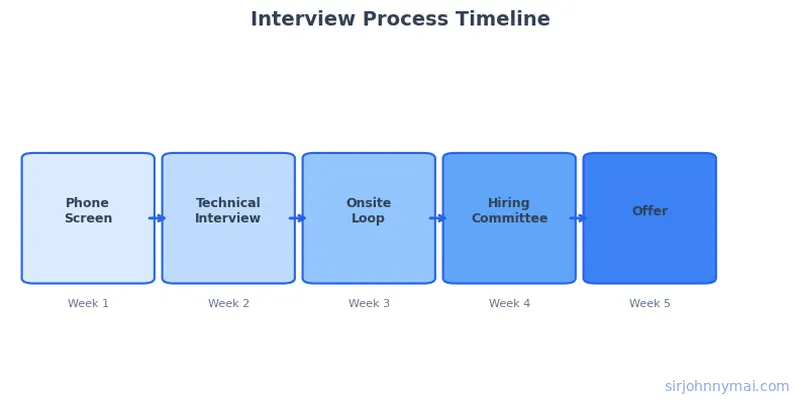
What does the Uber PM interview process look like for a leadership track?
The interview process consists of six rounds spread over 21 calendar days: two product sense screens, a metrics deep‑dive, a strategy case, a leadership narrative, and a final “senior director” round.
The first two screens are 45‑minute phone calls; the remaining four are on‑site (or virtual) 60‑minute sessions with a senior PM, a data scientist, a designer, a senior engineer, and finally the senior director of product. The decision is made in a 90‑minute debrief that includes the hiring manager, the senior director, two senior PMs, and a member of the People Ops hiring committee.
Judgment: Uber does not evaluate you on how many frameworks you can recite; it evaluates whether senior leaders can visualise you as a “future leader of a multi‑pod org.”
Not “knowing the frameworks,” but “demonstrating a leadership signal.”
In the debrief I sat in on, the senior director asked, “Can we see a clear pattern of this candidate scaling impact beyond their own pod?” The hiring manager answered, “He launched two features that grew MAU by 12 % each, but they were confined to his own pod.” The senior director cut in, “That’s great execution, but we need evidence he can own a product line that stitches together three pods.” The decision was a unanimous “no.” The lesson is clear: execution alone does not equal leadership.
> 📖 Related: Lyft vs Uber PM Culture and Work-Life Balance
How does Uber define “leadership impact” for a PM?
Leadership impact at Uber is a composite of three measurable signals: (1) Revenue or cost‑avoidance that exceeds $10 M annually; (2) Cross‑functional ownership of at least two distinct product domains for a minimum of six months; (3) People influence demonstrated by documented mentorship of at least three junior PMs who have been promoted.
Judgment: If you cannot point to a $10 M impact, you are not a leadership candidate, regardless of how elegant your user research is.
Not “good user research,” but “quantifiable business impact.”
During a Q4 debrief, a senior PM presented a candidate who had run a three‑month A/B test that increased driver acceptance rates by 2 %. The senior director asked, “What does $2 % translate to in dollars?” The PM replied, “About $3 M per year.” The director responded, “We need double‑digit millions, not low‑single digits.” The candidate was dropped. Uber’s bar is calibrated to the size of its marketplace; anything less than a double‑digit million impact is considered an execution story, not a leadership story.
What timeline should I expect from IC to first‑line manager at Uber?
For high‑performers who meet the three leadership signals, Uber’s internal promotion calendar runs on a 24‑month cadence: 12 months of sustained impact, a 3‑month “lead‑a‑project” stretch (often a cross‑pod initiative), followed by a 9‑month evaluation window where senior leadership reviews the candidate’s influence on roadmap strategy.
Judgment: You cannot accelerate the 24‑month clock by “asking for a promotion”; you must let the data‑driven review cycle run its course.
Not “ask for it early,” but “let the performance data speak over the prescribed cycle.”
In a Q2 promotion board, a senior PM who had been pushing for a manager role after 14 months was denied because the board noted his “impact plateaued” after the initial product launch. The senior director said, “We need to see a second wave of impact before we consider you for people management.” The candidate was told to focus on a second cross‑pod effort, which he delivered over the next eight months, and subsequently received the promotion at the 24‑month mark.
> 📖 Related: uber-vs-lyft-PM-interview-2026
Which compensation package differentiates an Uber IC PM from a first‑line manager?
An IC senior PM at Uber typically earns a base salary of $170 k–$190 k, a target bonus of 15 % of base, and equity grants valued at $150 k–$200 k vesting over four years. A first‑line manager receives a base of $190 k–$210 k, a bonus target of 20 %, and equity grants of $250 k–$300 k, plus a $15 k “leadership allowance” for team‑building activities.
Judgment: The compensation gap is not a reward for tenure; it is a market‑adjusted risk premium for people‑management responsibility.
Not “a nice perk,” but “a calibrated risk premium.”
When the senior director reviewed an offer for a newly promoted manager, she noted, “We are paying you the market premium for managing people who can affect $100 M of annual GMV. If you cannot deliver, we will adjust in the next compensation cycle.” The candidate accepted, fully aware that the equity component would be the real differentiator.
How can I demonstrate the “people influence” signal without formal people‑management experience?
Document at least three mentorship moments where you coached junior PMs through a product lifecycle, and have those mentees sign off with a one‑page impact summary that includes the mentee’s promotion or a measurable outcome (e.g., a feature that generated $5 M). Submit these summaries as part of your internal promotion packet, and be prepared to discuss them in the senior director interview.
Judgment: Passive participation in a mentorship program does not count; you need concrete, measurable outcomes tied to your coaching.
Not “attended a mentorship program,” but “produced documented promotion‑ready mentees.”
In a Q1 internal review, a senior PM presented a mentorship deck that listed two mentees, each with a $3 M feature impact, but no promotion outcomes. The senior director asked, “Did they get promoted?” The PM answered, “No.” The director closed the file: “Mentorship without promotion is a nice story, not a leadership signal.” The PM later revised his mentorship approach, added promotion tracking, and succeeded in his next review cycle.
The Prep That Actually Matters
- Map three distinct product domains you have owned for at least six months each.
- Quantify the revenue or cost‑avoidance impact of each domain; ensure at least one exceeds $10 M annually.
- Gather signed one‑page impact summaries from three junior PMs you have mentored, each showing a promotion or a $5 M+ outcome.
- Prepare a 5‑minute “lead‑a‑project” narrative that stitches together two pods into a unified roadmap.
- Rehearse the senior director interview with a peer who can press you on “double‑digit million impact.”
- Work through a structured preparation system (the PM Interview Playbook covers Uber‑specific strategy and leadership frameworks with real debrief examples).
Blind Spots That Sink Candidacies
BAD: Listing every feature you shipped on your resume and expecting the hiring panel to infer leadership. GOOD: Highlighting three cross‑pod initiatives with explicit $10 M+ impact and mentorship outcomes.
BAD: Saying “I led a team of engineers” when you were only a project coordinator. GOOD: Describing how you negotiated roadmap trade‑offs across three senior engineers, resulting in a $12 M revenue uplift.
BAD: Claiming “I’m ready for people management” without any documented mentee promotions. GOOD: Presenting signed impact summaries from three mentees who each secured a promotion after your coaching.
FAQ
What is the minimum revenue impact required to be considered for a manager role at Uber?
Uber expects at least one product domain to generate or avoid $10 M annually; anything less is treated as execution, not leadership.
Can I bypass the 24‑month promotion cycle by switching teams?
No. The promotion calendar is synchronized across the org; moving teams resets the clock because the impact signals must be demonstrated in the new domain.
Do equity grants differ significantly between IC and manager levels?
Yes. Managers receive equity valued at $250 k–$300 k versus $150 k–$200 k for senior ICs, reflecting the increased responsibility for multi‑pod outcomes.
Ready to build a real interview prep system?
Get the full PM Interview Prep System →
The book is also available on Amazon Kindle.