The transition from Staff Product Manager to Manager is not a natural progression but a fundamental shift in value creation, often misunderstood by those who seek it. Success hinges on demonstrating a distinct leadership mindset, moving beyond individual contribution to amplify team impact and organizational strategy. Companies evaluate this shift through specific behavioral signals, not just a longer list of accomplishments.
What is the fundamental difference between Staff PM and Manager PM?
The fundamental difference between a Staff PM and a Manager PM lies in their primary output: Staff PMs deliver strategic product impact through individual technical and product expertise, while Manager PMs deliver impact by enabling, developing, and directing a team. A Staff PM is a force multiplier through their unique individual contributions, often spanning multiple product areas; a Manager PM is a force multiplier through the people they lead. The problem isn't your ability to execute—it's your judgment on where value truly originates.
In a Q3 hiring committee debrief for a Principal PM role, a candidate, internally recognized as a top Staff PM, was rejected for a Manager position. The feedback was stark: "They presented a compelling vision for their product, but every solution involved their direct intervention or expertise.
There was no articulation of how they would empower a team to build that vision." This candidate, exceptional at architecting complex systems, failed to demonstrate the organizational psychology required to delegate effectively and trust their team's capabilities. Their mental model remained that of the ultimate problem-solver, not the ultimate enabler.
This distinction is critical. Staff PMs are expected to own and drive complex initiatives, navigate ambiguity, and mentor junior ICs by example or through ad-hoc coaching. They are often responsible for defining technical strategies or product roadmaps across multiple teams.
Manager PMs, however, are accountable for the output, health, and career growth of their direct reports. Their impact is measured not by the features they personally defined, but by the collective success and development of their team, and their ability to attract and retain talent. It is not about what you build, but who builds it and how they are enabled.
Your compensation structure reflects this: a Staff PM's market value, often in the $300k-$600k total compensation range, is tied to their rare individual expertise and ability to navigate highly ambiguous technical or product domains. A Manager PM, typically in a similar or slightly higher range ($350k-$700k+), commands that value by building high-performing teams, mitigating personnel risks, and translating organizational strategy into actionable plans for their reports. The problem isn't just a difference in scope—it's a difference in accountability and the very definition of "contribution."
How do you signal readiness for a PM leadership role?
Signaling readiness for a PM leadership role requires proactive, demonstrable shifts in behavior and focus, moving beyond simply excelling at Staff-level duties. It is not enough to be a great IC who occasionally mentors; you must consistently operate with a manager's mindset before you have the title. The problem isn't accumulating more achievements—it's changing the type of achievements you prioritize and articulate.
One common mistake I've observed in debriefs is when an internal Staff PM, seeking promotion, recites a laundry list of impressive product launches they spearheaded. While valuable for an IC review, this often falls flat for a management role.
What the hiring committee is looking for are narratives centered around team building, conflict resolution, performance management, and strategic alignment of others' work. In a recent debrief for a Director of Product role, the hiring manager specifically discounted a candidate's impressive product portfolio, stating, "He can build great products, but I saw no evidence he can build a great team to build those products." This signals a failure to understand the core value proposition of a leader.
To effectively signal readiness, you must actively seek out opportunities that demonstrate manager-level competencies. This means taking ownership of initiatives that develop others, not just product features. Volunteer to onboard new hires comprehensively, not just show them the ropes.
Lead cross-functional retrospectives where you facilitate team growth and process improvement, rather than just contributing your own insights. Mentor multiple junior PMs formally, guiding their career plans and providing structured feedback, not just ad-hoc advice. This is not about adding more tasks to your plate; it is about reframing your existing work to highlight your impact on people and processes.
Furthermore, articulate your strategic vision not just for a product, but for how a team would execute that vision. Discuss talent gaps, succession planning, and how you would foster a culture of ownership and psychological safety.
When presenting product strategies, always include a section on the organizational implications: "To achieve X, we will need to build out a team with Y skills, requiring Z hiring plan and Q internal development initiatives." This preempts the question of whether you understand the full scope of a leader's responsibility. Your focus shifts from "I built this" to "I enabled them to build this, and here's how I will build more of them."
What does the interview process look like for a PM manager?
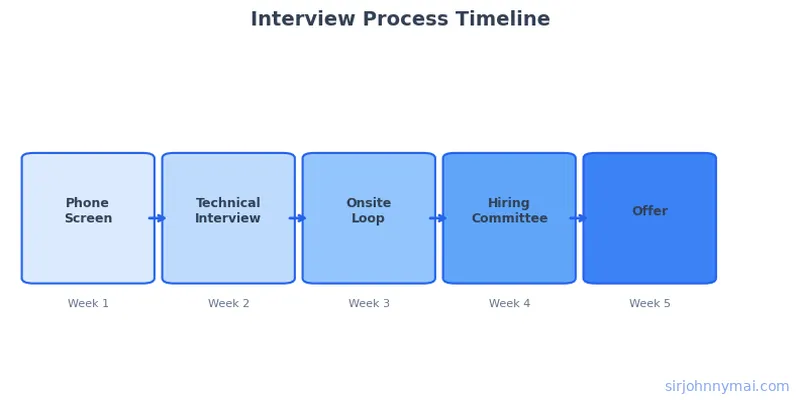
The interview process for a PM Manager role rigorously assesses leadership capabilities, strategic thinking, and people management skills through structured behavioral and situational questions, diverging significantly from an IC's product sense or execution rounds. You are not being evaluated on your ability to define a great product, but on your ability to build and lead a great team to define and build great products. The problem isn't knowing the answers to typical PM questions—it's failing to pivot your responses to a leadership context.
A typical PM manager interview loop at a FAANG company will include 5-7 rounds, often spanning 4-6 hours, sometimes broken into multiple days. While there may be one or two rounds touching on product strategy or execution, these will be framed through a leadership lens: "How would you guide your team to define the product strategy for X?" or "Describe a time you coached a PM through a difficult launch." Crucially, there will be dedicated rounds for:
- Leadership & People Management: These are deep dives into your experience managing conflicts, providing difficult feedback, coaching performance, developing career paths, and hiring/firing decisions. Expect questions like, "Tell me about a time you had to manage a struggling PM. What was your approach, and what was the outcome?" or "Describe your philosophy on team motivation."
- Cross-functional Collaboration & Influence: This explores your ability to lead without direct authority, manage stakeholders, and resolve inter-team dependencies. "How would you align disparate teams on a shared vision when you don't manage all of them?"
- Hiring & Talent Strategy: Expect questions on building a diverse team, interviewing techniques, and retaining top talent. "What's your strategy for identifying and hiring top-tier product talent?"
- Strategic Acumen & Vision: While product-focused, these questions demand a higher-level, organizational perspective. "How would you build a 3-year vision for a product area, and how would you empower your leads to execute it?"
In one debrief, a candidate for a Group PM role spent 40 minutes describing a technically complex product launch they personally oversaw.
The feedback was brutal: "Excellent individual contributor, but demonstrated no understanding of how to manage a team through such a launch, or how to develop the PMs on that team." The candidate failed to pivot their narrative from "I did X" to "I enabled my team to do X, and here's how I developed them along the way." This highlights the critical shift: your narratives must center on "we" and "they," not solely "I."
How should I prepare for PM leadership interviews?
Preparation for PM leadership interviews demands a structured approach focused on articulating your people-centric experiences and strategic impact, not merely refining your product case study skills. The goal is to demonstrate a track record of enabling others and shaping organizational outcomes, rather than just individual product success. The problem isn't a lack of experience, but a failure to package that experience into a leadership narrative.
Begin by auditing your career for specific instances where you led, coached, mentored, resolved conflicts, or drove significant organizational change. Categorize these stories using frameworks like STAR (Situation, Task, Action, Result) but always with a leadership lens. For example, instead of "I launched X feature," frame it as "I guided my team of 3 PMs through the launch of X feature, developing Y PM's strategic thinking by delegating Z component, resulting in A."
Prioritize developing robust answers for common behavioral questions that directly address people management. Practice articulating your philosophy on feedback, career development, conflict resolution, and team building. For instance, if asked about a time you failed, do not just describe a product flop; describe a time you failed to adequately support a team member, and what leadership lessons you learned. This demonstrates self-awareness and a growth mindset critical for management.
Work through a structured preparation system (the PM Interview Playbook covers leadership principles and team-building frameworks with real debrief examples). This helps you internalize the leadership-specific competencies and translate your IC achievements into management narratives.
Focus on how you would delegate, empower, and escalate, rather than how you would personally solve a problem. Practice mock interviews with current PM Managers or Directors who have sat on hiring committees for leadership roles. Their feedback will be invaluable in identifying where your responses still lean too heavily on IC contributions versus management impact.
Finally, prepare to discuss your vision for building and scaling high-performing product teams. This includes your approach to hiring, onboarding, performance management, and fostering a collaborative culture. Be ready to articulate how you would handle team dynamics, resource allocation, and cross-functional dependencies from a leadership perspective. The objective is to convince the committee that you are not just capable of managing, but eager to build a thriving product organization.
The Prep That Actually Matters
Compile 10-15 detailed STAR stories focused on leadership, mentorship, conflict resolution, and team development.
Practice articulating your personal philosophy on feedback, coaching, and career growth for direct reports.
Develop a clear narrative of how you identify, hire, and retain top product talent.
Outline your strategy for translating high-level company goals into actionable plans for a team.
Conduct at least three mock leadership interviews with experienced PM leaders, specifically asking for feedback on your management signaling.
Work through a structured preparation system (the PM Interview Playbook covers leadership archetypes and organizational design principles with real debrief examples) to refine your strategic leadership narratives.
Research the hiring manager and skip-level manager to understand their leadership styles and organizational priorities.
Traps That Cost Candidates the Offer
The most common mistakes when transitioning from Staff PM to Manager involve failing to shift perspective from individual excellence to team empowerment and strategic organizational impact.
- Focusing solely on individual product achievements.
BAD Example: "I led the development and launch of Project X, increasing engagement by 20% and revenue by $5M." (This is a strong IC statement, but lacks leadership context.)
GOOD Example: "I guided a team of three PMs and five engineers through the launch of Project X. My focus was on empowering my lead PM to own the feature definition, coaching them through stakeholder alignment, and resolving cross-functional roadblocks to ensure the team delivered the 20% engagement increase and $5M revenue." (This demonstrates delegation, coaching, and removing impediments—core management functions.)
- Failing to articulate a clear philosophy on people management.
BAD Example: "I just try to be helpful and give feedback when needed." (This is vague and doesn't demonstrate a structured approach to leadership.)
GOOD Example: "My management philosophy centers on empowering ownership and fostering continuous growth. I establish clear expectations, provide regular, actionable feedback through structured 1:1s, and work with each PM on a personalized career development plan, ensuring they have stretch assignments and opportunities to lead." (This shows intentionality and a systematic approach.)
- Presenting solutions that require your direct intervention rather than team enablement.
BAD Example: "If my team was struggling with a complex technical dependency, I would dive into the details, architect a solution, and guide the engineers directly." (This reverts to an IC mindset, failing to empower the team.)
- GOOD Example: "If my team faced a complex technical dependency, I would first ensure the PM leading that area had clear context and resources. I'd then facilitate a brainstorming session with the relevant tech leads, guiding them to define the problem and evaluate potential solutions, stepping in only to unblock political or resource constraints, not to solve the technical problem myself." (This demonstrates facilitation, empowerment, and strategic unblocking.)
FAQ
1. Is it easier to get promoted internally or hired externally for a PM Manager role?
It is not inherently "easier" to get promoted internally; it is merely a different set of hurdles. Internal candidates face scrutiny on their pre-existing individual contributor habits and must actively demonstrate a clear transition to a leadership mindset. External candidates must quickly build trust and prove their leadership acumen without prior context. Both paths demand a deliberate shift in how you present your value.
2. How long does it typically take to transition from Staff PM to Manager?
The transition timeline varies, but it's rarely immediate. Expect to spend 6-12 months actively signaling your readiness through leadership-focused initiatives before a formal promotion discussion. External hiring processes can take 2-4 months from initial contact to offer, depending on company speed and interview availability. The critical factor is sustained demonstration of leadership capabilities, not just time in role.
3. Should I prioritize technical depth or people skills for a PM Manager role?
You should prioritize people skills and strategic leadership. While technical understanding is valuable for credibility and informed decision-making, a PM Manager's primary leverage is through their team's output and development, not their own individual technical contributions. Strong people skills are non-negotiable for motivating, coaching, and retaining a high-performing product team.
What are the most common interview mistakes?
Three frequent mistakes: diving into answers without a clear framework, neglecting data-driven arguments, and giving generic behavioral responses. Every answer should have clear structure and specific examples.
Any tips for salary negotiation?
Multiple competing offers are your strongest leverage. Research market rates, prepare data to support your expectations, and negotiate on total compensation — base, RSU, sign-on bonus, and level — not just one dimension.
Ready to build a real interview prep system?
Get the full PM Interview Prep System →
The book is also available on Amazon Kindle.