Google Cloud PM interviews prioritize strategic judgment over raw technical trivia, demanding you balance enterprise complexity with clear product vision. Candidates fail when they act as solution architects instead of product leaders who can navigate ambiguous enterprise constraints. Success requires demonstrating how you de-risk adoption for large-scale customers while leveraging Google's specific AI and data differentiators.
The candidates who obsess over cloud architecture diagrams often fail because they cannot articulate the business value of moving a legacy workload to Google Cloud. In a Q3 debrief for a Cloud PM role, the hiring committee rejected a candidate with deep Kubernetes knowledge because they treated the interview as a technical certification exam rather than a strategic business discussion. The problem is not your technical depth; it is your inability to signal judgment under ambiguity. This guide isolates the specific failure modes I have seen eliminate strong engineers from the PM track at Google Cloud.
This guide is for senior product managers and engineers targeting L6 or L7 roles within Google Cloud's infrastructure, data, or AI divisions who possess technical fluency but lack enterprise product strategy. It is not for entry-level candidates or those seeking consumer-facing product roles where velocity trumps reliability. If your background is purely in B2C growth hacking or simple SaaS tools, you will struggle to map your experience to the multi-year sales cycles and complex stakeholder maps inherent to Cloud. You need to prove you can manage products where a single mistake can cost an enterprise customer millions, not just lose a few clicks.
What specific technical depth does Google Cloud expect from a PM candidate?
Google Cloud expects PM candidates to demonstrate functional literacy in distributed systems, containerization, and data pipelines without needing to write code during the interview. The bar is not to out-engineer your interviewer but to understand the trade-offs between consistency, availability, and partition tolerance in the context of customer needs. In a hiring committee debate I chaired last year, we debated a candidate who could explain the internals of Spanner but could not explain why a bank would choose it over a cheaper, less consistent alternative. The problem is not knowing how the technology works; it is knowing when the technology matters to the buyer. You must speak the language of the architect while thinking like the CEO of your product slice.
The interviewers are often senior engineers or principal PMs who will probe your understanding of latency, throughput, and regional redundancy. They are looking for "not X, but Y" reasoning: not just listing features, but explaining why a feature is withheld to preserve system stability. A common failure mode is diving too deep into implementation details of open-source projects while ignoring how Google manages these at scale. Your technical depth must serve the narrative of risk mitigation and scalability for enterprise clients. If you cannot explain how a network partition affects data integrity in a way a CTO would care about, you will not pass.
> 📖 Related: google-vs-meta-sde-compare-2026
How do I demonstrate enterprise solution thinking for B2B cloud products?
Enterprise solution thinking requires shifting your focus from individual user delight to organizational risk reduction, compliance adherence, and total cost of ownership. In a debrief for a data analytics PM role, the hiring manager rejected a candidate who focused entirely on dashboard visualization speed because they ignored the customer's requirement for SOC2 compliance and data residency controls. The problem is not your product sense; it is your failure to recognize that enterprise buyers purchase trust, not just features. You must demonstrate an understanding of long sales cycles, proof-of-concept (POC) structures, and the complex web of stakeholders involved in a cloud migration.
You need to articulate how your product integrates with legacy on-premise systems, identity management providers like Active Directory, and existing governance frameworks. A strong candidate discusses how they would structure a rollout plan that minimizes downtime for a Fortune 500 client, not just how they would launch a beta to early adopters. The insight here is that enterprise value is often negative: it is the absence of downtime, the absence of security breaches, and the absence of vendor lock-in fears. Your answers must reflect a maturity that acknowledges the inertia of large organizations. Do not treat enterprise constraints as annoyances; treat them as the primary design parameters of your product strategy.
What is the role of AI integration in current Google Cloud PM interviews?
AI integration is no longer a niche topic but a foundational lens through which all Cloud product strategies are evaluated, requiring you to distinguish between hype and actionable utility. During a recent hiring loop for an AI platform role, the committee unanimously passed on a candidate who could only discuss model accuracy metrics without addressing inference costs, latency implications, or ethical guardrails. The problem is not your enthusiasm for AI; it is your inability to ground AI capabilities in economic and operational reality for the customer. You must show you can productize AI in a way that solves actual enterprise problems rather than just deploying models for the sake of innovation.
You should be prepared to discuss how to embed AI into existing workflows without disrupting user trust or violating data privacy norms. The expectation is that you understand the difference between training costs and inference costs, and how those impact the pricing model for a cloud service. A critical insight is that for Google Cloud, AI is a lever to sell more compute and storage, not just a standalone feature. Your strategy must align with this economic reality. If your answer sounds like a press release rather than a product roadmap with hard trade-offs, you will be flagged as lacking strategic depth.
> 📖 Related: Google PM vs PMM: Which Role is Right for You?
How does the Google Cloud interview process differ from consumer product interviews?
The Google Cloud interview process differs by placing significantly higher weight on technical feasibility, security postures, and ecosystem compatibility than consumer product interviews do. In a calibration session, a hiring manager noted that a candidate's consumer-focused answer about "rapid iteration" was a red flag because cloud infrastructure requires rigorous change management and backward compatibility guarantees. The problem is not your agility; it is your application of consumer-speed heuristics to enterprise-grade problems where stability is the primary currency. You must demonstrate a mindset that values robustness and clear communication over rapid experimentation.
Consumer interviews often reward bold, disruptive ideas that might break things, whereas Cloud interviews reward measured, scalable solutions that integrate seamlessly. You will face more rigorous questioning on how your product handles multi-tenancy, data isolation, and service level agreements (SLAs). The "not X, but Y" distinction is crucial here: not how fast you can ship, but how safely you can scale. The interviewers want to see that you understand the gravity of managing infrastructure that powers other businesses. If you treat cloud components like disposable consumer app features, you will fail to convince the committee of your judgment.
What salary range and level expectations should I have for Google Cloud PM roles?
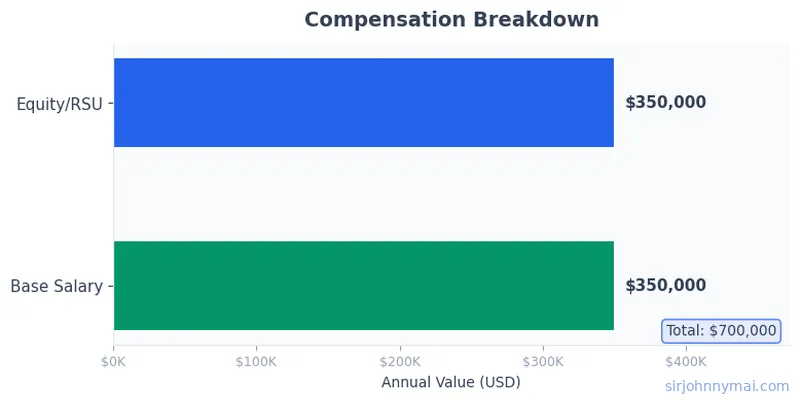
Salary ranges for Google Cloud PM roles vary significantly by level and location, but L6 roles in major tech hubs often command total compensation packages exceeding $350,000, while L7 roles can surpass $500,000. However, focusing solely on the base number misses the critical insight that Cloud roles often come with different equity vesting dynamics and bonus structures tied to enterprise revenue targets. In a negotiation I observed, a candidate lost leverage by fixating on base salary while ignoring the substantial upside potential in performance bonuses linked to cloud consumption growth. The problem is not the offer number; it is your failure to evaluate the comp package as a reflection of business impact potential.
Expect the leveling bar to be higher for Cloud than for consumer teams due to the specialized knowledge required. An L6 in Cloud often requires the equivalent experience of an L7 in a less technical domain. The interview loop will be more rigorous on technical system design, and the compensation reflects this scarcity of talent. You must be prepared to justify your level not just by years of experience, but by the complexity of the systems you have managed. Do not assume your consumer product title translates directly; the mapping is often conservative.
A Practical Prep Framework
- Review Google Cloud's core infrastructure pillars (Compute, Storage, Network) and identify one recent product launch for each to analyze its strategic intent.
- Prepare three distinct stories where you navigated a complex enterprise constraint, focusing on the trade-off between speed and stability.
- Practice explaining a technical concept like load balancing or database sharding to a non-technical executive in under two minutes.
- Work through a structured preparation system (the PM Interview Playbook covers cloud-specific system design frameworks with real debrief examples) to ensure your technical answers are structured logically.
- Develop a point of view on how Generative AI changes the cost structure of the specific cloud domain you are targeting.
- Simulate a stakeholder conflict scenario where a security requirement blocks a major feature launch and articulate your resolution path.
- Memorize the difference between Google Cloud's approach and AWS/Azure for at least two key services to demonstrate market awareness.
Blind Spots That Sink Candidacies
One critical mistake is treating the system design question as a pure engineering exercise without tying it back to business requirements.
BAD: Spending 20 minutes drawing detailed network topology diagrams without asking about the customer's budget or latency SLAs.
GOOD: Asking clarifying questions about the enterprise customer's compliance needs and cost constraints before proposing a high-level architecture.
Another fatal error is ignoring the ecosystem and integration context of enterprise software.
BAD: Proposing a standalone solution that requires customers to rip out their existing identity management or ERP systems.
GOOD: Designing a product strategy that includes robust APIs and connectors for standard enterprise tools like Salesforce or ServiceNow.
The third common pitfall is failing to address the "undifferentiated heavy lifting" of cloud operations.
BAD: Focusing your answer entirely on the flashy AI features while ignoring monitoring, logging, and disaster recovery plans.
GOOD: Explicitly detailing how your product handles observability and failover to ensure enterprise-grade reliability.
FAQ
Is coding required for Google Cloud PM interviews?
No, you will not be asked to write code, but you must demonstrate strong technical fluency in system design and architecture. The expectation is that you can discuss APIs, databases, and microservices comfortably with engineers. If you cannot understand the technical constraints your team faces, you cannot prioritize effectively.
How many rounds are in the Google Cloud PM interview loop?
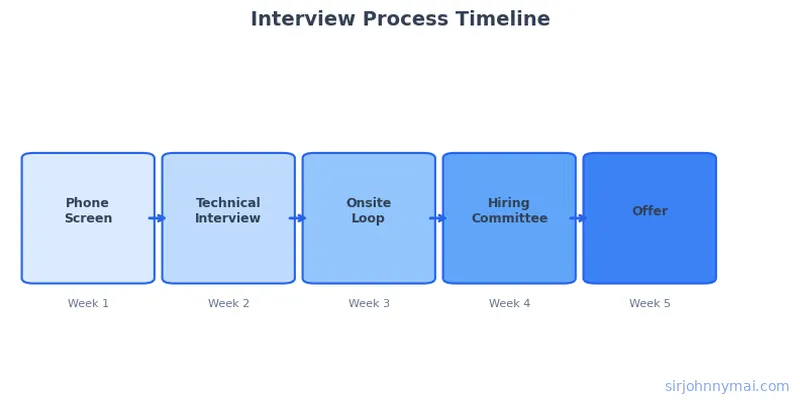
The standard loop consists of five to six interviews, including product sense, execution, leadership, and two technical system design sessions. Expect one of these to be a "Googlyness" or cultural fit assessment that heavily weighs collaboration and ambiguity tolerance. The process is rigorous and often spans three to four weeks from initial screen to offer.
Does prior cloud experience mandatory for these roles?
While not strictly mandatory, lacking direct cloud or enterprise infrastructure experience puts you at a severe disadvantage compared to other candidates. You must compensate by demonstrating rapid learning of cloud concepts and transferring relevant complexity from other domains. Without this, you will struggle to pass the technical depth and enterprise strategy bars.
Ready to build a real interview prep system?
Get the full PM Interview Prep System →
The book is also available on Amazon Kindle.