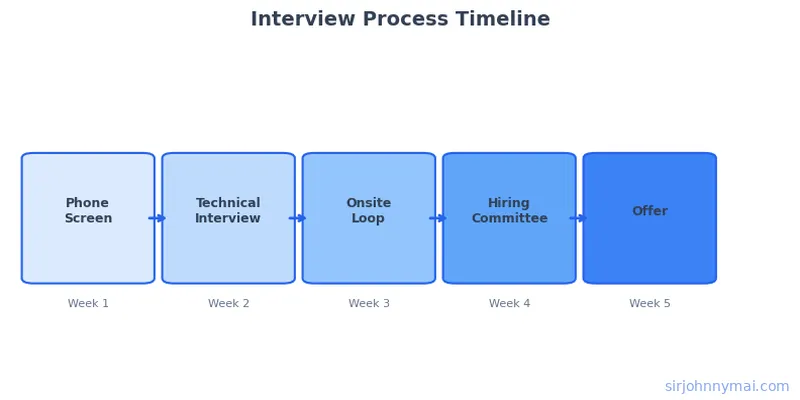
Healthcare PM interviews test domain depth, not just frameworks. The difference between passing and failing is whether you anchor answers in real clinical workflows, not generic user stories. Expect 4-6 rounds, with at least one case study tied to HIPAA or EHR integration.
What questions do healthcare PM interviews focus on?
They focus on three areas: clinical workflows, regulatory constraints, and stakeholder misalignment. In a recent debrief at a Series C digital therapeutics company, the hiring manager rejected a candidate who nailed prioritization but couldn’t explain how a diabetes app would sync with an EHR without violating HIPAA.
The problem isn’t your ability to write PRDs—it’s your failure to treat compliance as a feature, not a footnote. The best answers don’t just acknowledge regulations; they use them to derive product requirements.
> 📖 Related: Salesforce TPM interview questions and answers 2026
How do you answer healthcare PM case questions?
Lead with the constraint, not the solution. When asked to design a telemedicine feature for rural clinics, the weak answer starts with user flows. The strong answer starts with: “Medicare reimbursement for telehealth requires real-time audio/video, so we need to validate bandwidth in target clinics before designing anything.”
In a Google Health debrief, a candidate was dinged for proposing a patient portal without addressing how it would handle proxy access for caregivers—an oversight that would have required a full re-architecture later. The signal isn’t creativity; it’s risk anticipation.
What’s the most common healthcare PM interview mistake?
Assuming healthcare is just another regulated industry. The mistake isn’t ignoring regulation—it’s treating it as a binary checkbox. Strong candidates explain how they’d work with legal to interpret HIPAA’s “minimum necessary” rule for a new analytics dashboard, weighing clinical utility against privacy risk.
In a Flatiron Health interview, a candidate failed when they suggested using de-identified data for a new oncology insights tool without addressing re-identification risk in small patient populations. The issue wasn’t technical ignorance; it was naive threat modeling.
> 📖 Related: Stripe PM Interview: What the Hiring Committee Actually Debates
How do you handle healthcare PM behavioral questions?
Tie every story to a constraint. When asked about a difficult stakeholder, don’t just describe the conflict—explain how you aligned a hospital’s CIO on a go-live date by mapping the EHR’s upgrade cycle to your product’s dependencies.
At a UnitedHealth Group hiring committee, a candidate’s answer about resolving a disagreement with engineering stood out because they framed it as a tradeoff between FDA 510(k) submission timelines and technical debt. The judgment signal wasn’t conflict resolution; it was regulatory fluency.
What’s the difference between healthcare and other PM interviews?
The bar for evidence is higher. In consumer PM interviews, you can justify decisions with user testing or market data. In healthcare, you need clinical evidence—peer-reviewed studies, RCT results, or at minimum, guidance from professional societies like the AMA or ADA.
In a Teladoc interview, a candidate was asked how they’d prioritize features for a chronic care management app. The weak answer cited user requests. The strong answer referenced CMS’s Chronic Care Management CPT codes and how each feature mapped to billable activities.
How do you prepare for healthcare PM system design questions?
Start with the data model. Healthcare systems aren’t designed for user convenience; they’re designed for billing, compliance, and liability. A candidate at Epic Systems impressed the panel by beginning their design for a new interoperability standard with a discussion of how HL7 FHIR resources would map to existing EHR data structures.
The problem isn’t your ability to draw boxes and arrows—it’s your failure to account for the fact that a “user” in healthcare is often a system, not a person. The best answers treat APIs as products, not plumbing.
How to Prepare Effectively
- Map the top 5 regulatory constraints for your target subdomain (e.g., HIPAA for data, FDA for SaMD, CMS for reimbursement)
- Reverse-engineer 3 clinical workflows relevant to the company’s product (e.g., prior authorization for a payer, order sets for a hospital)
- Prepare 2 case studies where you influenced a decision by citing clinical evidence or regulatory requirements
- Develop a framework for evaluating third-party vendors in healthcare (compliance, interoperability, liability)
- Practice answering “How would you measure success?” with metrics tied to clinical outcomes, not just engagement
- Work through a structured preparation system (the PM Interview Playbook covers healthcare-specific frameworks with real debrief examples from Google Health and Flatiron)
- Build a cheat sheet of healthcare acronyms (EHR, HIEs, ONC, NPI, etc.) and their implications for product decisions
Traps That Cost Candidates the Offer
- Treating providers as users
BAD: “We’ll design a dashboard that shows doctors their patient panel.”
GOOD: “We’ll design a dashboard that aligns with a cardiologist’s workflow during a 15-minute follow-up, surfacing the 3 data points they need to adjust a hypertension med—while ensuring the view doesn’t expose PHI to unauthorized staff.”
- Ignoring the payer’s role
BAD: “Our app will improve patient adherence, so payers will love it.”
GOOD: “We’ll target MA plans first because they have the most flexibility to cover non-traditional benefits, and we’ll structure our pricing as a per-member-per-month fee tied to Star Ratings improvements.”
- Underestimating change management
BAD: “We’ll train the nurses on the new system during go-live.”
GOOD: “We’ll pilot with a single ward, identify super-users among the charge nurses, and build a feedback loop with the hospital’s CMIO to address workflow disruptions before scaling.”
FAQ
What’s the average healthcare PM salary?
FAANG healthcare PMs (L5-L7) earn $180K–$280K total comp in the Bay Area. Series B/C startups offer $140K–$220K with higher equity upside. The delta isn’t experience—it’s whether you can own a P&L tied to value-based care contracts.
How many interview rounds should I expect?
4–6 rounds: 1–2 recruiters, 1–2 PMs, 1 case study, 1 cross-functional (eng/design), and 1 hiring manager. Healthcare adds a clinical or compliance deep dive—often with a physician or former regulator. The extra round isn’t a sign of interest; it’s a risk filter.
What’s the fastest way to fail a healthcare PM interview?
Cite a consumer product analogy. Comparing a patient engagement tool to “Uber for healthcare” signals you don’t grasp the asymmetry of information, power, and risk in provider-patient relationships. The fix isn’t better analogies; it’s better domain knowledge.
Ready to build a real interview prep system?
Get the full PM Interview Prep System →
The book is also available on Amazon Kindle.