Healthcare PM behavioral interviews are designed to assess judgment and resilience, not merely recall of past events. The core challenge is demonstrating a nuanced understanding of healthcare's unique constraints—regulatory, ethical, and clinical—while maintaining a product mindset. Candidates often fail by offering generic responses, missing opportunities to showcase their ability to navigate real-world, high-stakes trade-offs specific to health tech.
How do you demonstrate resilience after a significant product failure in healthcare?
Demonstrating resilience after a healthcare product failure requires articulating the specific, often severe, consequences of that failure and detailing a structured recovery. In a Q3 debrief for a Google Health PM role, a candidate described a diagnostic tool's initial misstep due to inadequate validation for edge cases, leading to incorrect patient classifications. The hiring committee wasn't interested in the mistake itself, but in the candidate's precise steps to isolate the issue, collaborate with clinical leads, and implement a rapid, data-driven correction plan, including a post-mortem process that redesigned the validation framework. The problem isn't admitting failure; it’s failing to show a robust, analytical recovery and a clear understanding of the downstream impact on patient care or provider trust. Your narrative must move beyond a simple fix to illustrate systemic learning and preventive measures.
The insight here is that resilience in healthcare product management is not merely about bouncing back, but about meticulous root cause analysis and implementing safeguards that mitigate future patient risk. I've seen candidates attempt to downplay the impact of their failures, which invariably leads to a "No Hire" recommendation. A strong candidate, conversely, will explicitly state the potential for patient harm or regulatory non-compliance, then outline the organizational changes, not just product fixes, they championed. For instance, a candidate might detail how they instituted a mandatory "clinical review gate" in the product development lifecycle after a prior oversight. This isn't just about personal growth; it's about embedding learning into the team's operational DNA.
> 📖 Related: Duolingo PM Behavioral Interview: STAR Examples and Top Questions
How do you handle disagreement with medical stakeholders or engineering on a healthcare product?
Navigating disagreements in healthcare product development demands a sophisticated approach that prioritizes patient safety and regulatory compliance above individual preferences or technical convenience. I recall a debrief where a candidate was asked about a conflict with a lead physician over data privacy controls in a new patient portal. The physician wanted maximum data sharing for research, while the engineering lead argued for simpler, less restrictive architecture to accelerate launch. The candidate's "Hire" signal came from their ability to frame the conflict not as a binary choice, but as a multi-dimensional problem involving legal counsel, a clear risk assessment matrix, and a phased rollout strategy that balanced competing needs without compromising core compliance. The critical factor wasn't finding a compromise, but establishing a principled decision-making framework.
The organizational psychology at play here is understanding that healthcare stakeholders—clinicians, legal, compliance—operate under a distinct set of priorities and risk tolerances compared to typical tech product teams. Their primary concern is often patient well-being and regulatory adherence (e.g., HIPAA, GDPR, FDA), not just market speed or user delight. A candidate who simply suggests "having a meeting to find common ground" misses the point entirely. The effective approach involves leveraging objective data, regulatory guidelines, and ethical principles as the anchor points for discussion. It's not about winning an argument; it's about leading the team to the most responsible, compliant, and ultimately, effective solution for the patient. A strong answer will detail how the candidate synthesized complex input from legal, clinical, and technical teams to present options, each with clearly articulated risks and benefits, to executive leadership for a final, informed decision.
Describe a complex regulatory challenge you navigated for a healthcare product.
Successfully navigating complex regulatory challenges in healthcare product management demonstrates an essential capability: translating ambiguous legal requirements into actionable product specifications while maintaining a clear strategic vision. During a hiring committee review for a key infrastructure PM role, a candidate recounted managing the transition of a diagnostic device's software from a Class I to a Class II medical device, which triggered stringent FDA 510(k) premarket notification requirements. Their judgment signal was exceptionally strong because they didn't just describe the problem; they detailed the creation of a dedicated cross-functional task force, the engagement of external regulatory consultants for interpretation, and the iterative process of documenting design controls and risk management files. The problem isn't merely knowing the regulations; it's operationalizing them into a predictable development pipeline.
This scenario reveals whether a PM can operate effectively under severe external constraints, where non-compliance carries legal and reputational ruin, not just product failure. Many candidates offer superficial answers, stating they "worked with legal," which provides no insight into their leadership or execution. A superior candidate will articulate specific frameworks they employed: perhaps a traceability matrix linking product features to regulatory requirements, or a structured risk assessment protocol that identifies potential non-compliance early. They understand that regulatory adherence is not a one-time gate but an ongoing, integrated process. Their narrative will highlight how they championed a culture of proactive compliance, embedding regulatory checks into every sprint and release cycle, rather than treating it as a final hurdle before launch.
> 📖 Related: 21 Slug Zh Cloudflare Pm Interview Prep Tips
Why are you interested in Healthcare PM, specifically?
The question of "Why Healthcare PM?" is designed to unearth genuine motivation and a clear understanding of the sector's unique demands, distinguishing authentic interest from generic career ambition. In a debrief for a Senior PM role at a large health data platform, a candidate’s response about "making an impact" was dismissed as vague. Conversely, a candidate who articulated how their personal experience with a chronic illness shaped their desire to improve care coordination, combined with a detailed analysis of the platform’s specific challenges (e.g., data interoperability, payer-provider friction), received a strong positive signal. The hiring committee looks for specific, compelling reasons tied to healthcare's distinct challenges, not just a desire for "meaningful work."
The core insight here is that healthcare product management is not merely a subset of general product management; it requires a specific passion for navigating complex ethical, clinical, and regulatory landscapes. It's not enough to say you want to help people; you must demonstrate an appreciation for the how. Candidates who articulate specific pain points they wish to solve—e.g., reducing physician burnout through intelligent tooling, improving patient adherence via behavioral nudges, or democratizing access to specialized care—and connect these to their skills in product strategy and execution, stand out. This isn't about emotional appeal; it's about combining empathy with a pragmatic, problem-solving mindset specific to the healthcare ecosystem. Your answer must reveal a long-term commitment and a willingness to grapple with the sector's inherent complexities, not just its perceived noble mission.
How do you balance user needs with clinical efficacy and business goals in healthcare?
Balancing user needs, clinical efficacy, and business goals in healthcare product management requires a sophisticated understanding of trade-offs and a clear prioritization framework. I recall a difficult discussion in a debrief for a product aimed at chronic disease management. The candidate described a scenario where a user-friendly feature (e.g., simplified data input) risked compromising the clinical accuracy required for effective treatment recommendations. Their "Strong Hire" signal came from how they articulated a multi-layered solution: first, establishing a clear hierarchy of needs where clinical safety was non-negotiable; second, engaging clinical experts to define the minimum viable data set for efficacy; and third, innovating on the UI/UX to make that essential data capture as seamless as possible, rather than eliminating it. The problem isn't the existence of competing priorities; it's the lack of a structured approach to resolve them.
This challenge reveals a candidate's ability to operate within a highly constrained environment where user delight cannot override patient safety or clinical outcomes. A weak candidate might prioritize one dimension (e.g., user experience) at the expense of another, or offer a superficial "find a win-win" solution that avoids the inherent tension. A strong candidate understands that true balance often involves creative problem-solving and strategic compromise. They might describe using A/B testing for user experience improvements, but only after clinical validation, or detail how they used health economics outcomes research (HEOR) to quantify the business value of a clinically effective, but perhaps initially less user-friendly, feature. The decision process must be transparent, data-driven, and clinically informed, demonstrating a leader who can navigate the unique ethical and practical tightropes of health tech.
How to Get Interview-Ready
- Deconstruct your resume: For each role, identify 2-3 specific projects where you navigated healthcare-specific challenges (e.g., regulatory hurdles, clinical stakeholder conflict, ethical dilemmas).
- Quantify impact with healthcare metrics: Beyond typical product metrics, practice articulating impact using healthcare-relevant KPIs like patient outcomes, provider efficiency gains, reduction in readmissions, or adherence rates.
- Anticipate ethical dilemmas: Prepare to discuss situations involving data privacy, algorithmic bias in health, informed consent, or equitable access, and your structured approach to addressing them.
- Review recent health tech news: Understand current trends, major policy changes (e.g., Cures Act implications), and competitive landscape to demonstrate informed interest.
- Craft a "Why Healthcare PM" narrative: Develop a compelling, specific story that aligns your past experiences and future aspirations with the unique challenges and opportunities in health tech.
- Work through a structured preparation system: The PM Interview Playbook covers advanced behavioral frameworks with real debrief examples, particularly useful for structuring complex healthcare-specific scenarios.
- Practice with mock interviews focused on healthcare nuances: Generic behavioral mocks will not suffice; seek out interviewers with healthcare product experience.
Blind Spots That Sink Candidacies
- Generic "impact" statements:
BAD: "I want to work in healthcare because I want to make an impact and help people." (Too vague, sounds unresearched, fails to demonstrate specific understanding of healthcare's complexities.)
GOOD: "My interest in healthcare PM stems from seeing the inefficiencies in patient data interoperability firsthand, and I believe my experience scaling API platforms can directly contribute to solving the specific challenge of FHIR standard adoption." (Connects personal motivation with specific industry pain points and relevant technical skills.)
- Underestimating regulatory complexity:
BAD: "For compliance, I just talked to our legal team and they approved it." (Implies a passive role, lacks detail on proactive engagement, risk assessment, or translating legal into product action.)
GOOD: "When launching our remote monitoring device, I established a recurring sync with legal and clinical leads, building a traceability matrix that mapped each feature to specific FDA guidance, ensuring we proactively addressed 510(k) requirements and documented our design controls from conception." (Demonstrates active leadership, structured process, and deep engagement.)
- Ignoring the ethical dimension:
BAD: "We focused on user acquisition, so we prioritized features that drove sign-ups quickly." (Omits any consideration for patient safety, data privacy, or equitable access, which are paramount in healthcare.)
GOOD: "While driving adoption for our AI diagnostic tool, we also implemented a robust explainability layer to mitigate algorithmic bias concerns, ensuring clinicians understood the AI's reasoning and could override recommendations when appropriate, prioritizing patient safety and trust over pure speed to market." (Shows awareness of ethical responsibilities and integrates them into product design and trade-off decisions.)
FAQ
What specific numbers should I include in healthcare PM behavioral answers?
Focus on numbers that demonstrate scale, impact, or complexity: patient populations served (e.g., "impacted 100,000 patients"), clinical outcome improvements (e.g., "reduced readmission rates by 15%"), regulatory timelines (e.g., "navigated a 12-month FDA clearance process"), or budget sizes (e.g., "managed a $5M development budget"). Avoid general business metrics unless directly tied to a healthcare outcome.
How many behavioral rounds are typical for a FAANG healthcare PM role?
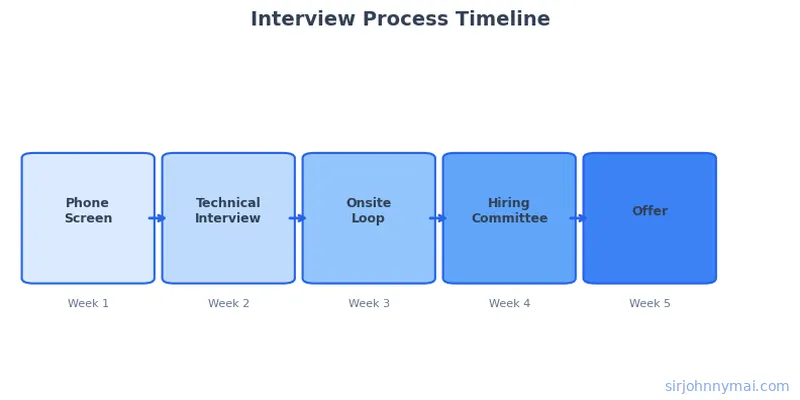
Expect 2-3 dedicated behavioral rounds out of a typical 5-7 round onsite loop, often interspersed with product sense or execution questions. These rounds specifically assess leadership, collaboration, resilience, and your "why" for healthcare. A typical FAANG interview process runs 4-6 weeks from initial screen to offer, with debriefs occurring within days of the onsite.
Should I bring up my personal healthcare experiences in interviews?
Only if it genuinely and succinctly illustrates your passion or provides unique insight into a problem you've solved or wish to solve. A personal narrative can be powerful if it directly connects to your professional motivations and demonstrates specific empathy for healthcare challenges, but it must be brief and professionally framed, not a therapeutic session.
Ready to build a real interview prep system?
Get the full PM Interview Prep System →
The book is also available on Amazon Kindle.