Amazon PM offers are negotiable, but only if you crack the internal banding system first. L5 starts at $180K–$220K TC, L6 at $250K–$300K; the real battle is leveling, not base salary. Comp teams won’t move unless you force a level debate, not a dollar debate.
How much can I negotiate an Amazon PM offer?
The delta isn’t in base—it’s in sign-on and RSU vesting. In a Q2 debrief, a candidate with a Meta L5 offer got Amazon to match TC by accelerating RSU vesting from 4 years to 2, not by adding cash. Amazon’s comp philosophy treats base as market-aligned, so pushing base alone signals you don’t understand the levers. The problem isn’t your ask—it’s your focus on the wrong variable.
> 📖 Related: Google 1on1 Culture vs Amazon 1on1 Culture for PM Career Growth
What’s the difference between L5 and L6 PM compensation at Amazon?
L5 TC: $180K–$220K (Seattle), L6: $250K–$300K. The jump isn’t linear because L6 unlocks 2-year RSU refreshers. A hiring manager once blocked an L6 promotion because the candidate’s impact narrative was “feature delivery,” not “business outcome ownership.” At Amazon, leveling is a scope judgment, not a tenure reward. Not about your past title, but your future scope.
Can I get Amazon to match a competing offer?
Yes, but only if the competitor is FAANG and the offer is in writing. A candidate with a Google L6 offer ($320K TC) forced Amazon to counter with a $300K L6 package by framing it as a retention risk, not a bidding war. Amazon’s comp team will match, but they’ll first verify the offer’s authenticity and your willingness to walk. The issue isn’t the match—it’s the proof.
> 📖 Related: 1on1 Meeting vs Standup at Amazon: Which Is More Effective for PMs?
How do I negotiate RSUs at Amazon?
RSUs are the only lever with real flexibility. A candidate with a $50K sign-on ask was countered with $30K sign-on + $20K RSU front-load. Amazon prefers RSUs because they’re deferred compensation—less visible in Y1 costs. The mistake is treating RSUs like cash; they’re a timing game. Not about the number, but the vesting schedule.
What’s the timeline for Amazon PM offer negotiation?
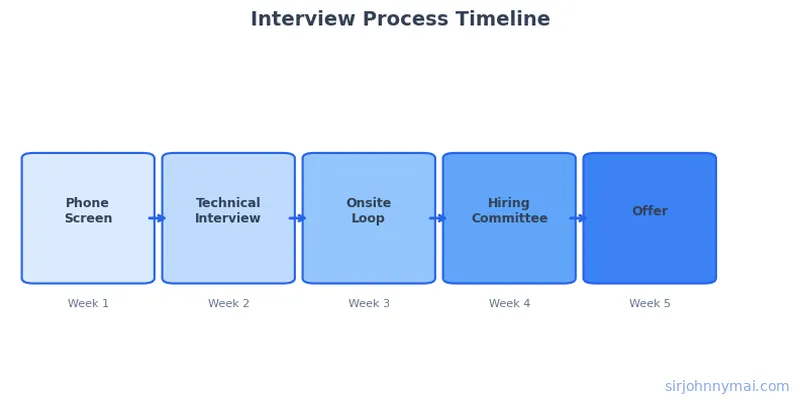
From verbal to signed: 7–10 days. Recruiters will pressure you with “expiring” deadlines, but Amazon’s offers don’t technically expire—they just reset the banding conversation. A candidate who stalled for 14 days lost leverage when the hiring manager’s HC (headcount) was reallocated. Speed matters, but only if you’re driving the narrative. Not about patience, but momentum.
Should I negotiate base salary or sign-on bonus?
Sign-on is easier because it’s a one-time cost to Amazon. Base salary increases require VP approval and trigger internal equity reviews. A candidate who pushed base from $160K to $170K triggered a comp audit that delayed the offer by 3 weeks. Sign-on is the path of least resistance. The problem isn’t the ask—it’s the organizational friction.
Where Candidates Should Invest Time
- Research Amazon’s internal banding (L5: $180K–$220K, L6: $250K–$300K) and align your ask to the level, not the role title
- Secure a competing offer in writing—FAANG only, and ideally with a higher level (e.g., Google L6 vs. Amazon L5)
- Prepare a business impact narrative that justifies the level, not the salary (e.g., “Drove $10M revenue feature” vs. “Shipped 5 projects”)
- Identify your walk-away number and stick to it—Amazon will test your resolve with silence and delays
- Practice the RSU vs. sign-on trade-off conversation; know which you value more (liquidity vs. long-term upside)
- Work through a structured preparation system (the PM Interview Playbook covers Amazon’s comp levers and banding debates with real debrief examples)
- Line up an internal advocate (hiring manager or peer) to escalate your case if the recruiter stonewalls
The Gaps That Kill Strong Applications
BAD: Asking for a $20K base increase without tying it to level justification. Amazon’s comp team will reject it outright because base is market-aligned.
GOOD: Framing the ask as a level correction (“My impact aligns with L6 scope, which commands $250K+ TC”).
BAD: Accepting a 4-year RSU vesting schedule without pushing for acceleration. You’re leaving 50% of your TC on the table.
GOOD: Countering with a 2-year vesting ask, citing competing offers with faster liquidity.
BAD: Letting the recruiter control the timeline. They’ll manufacture urgency to prevent you from gathering competing offers.
GOOD: Setting a 7-day deadline for your response, forcing Amazon to act or lose you.
FAQ
What’s the highest Amazon PM sign-on bonus?
$100K for L7+ candidates with competing offers. anything above requires S-team approval. Not a standard ask, but possible with leverage.
Can I negotiate Amazon PM relocation assistance?
No. Relocation is a fixed policy based on distance, not a variable. The only exception is for executive-level moves. Not negotiable, but non-cash benefits like temporary housing can sometimes be added.
Do Amazon PMs get annual bonuses?
Yes, but they’re tied to company performance and your individual rating. Target bonus is 10–20% of base, but payouts vary. Not guaranteed, and not a negotiation lever.
Ready to build a real interview prep system?
Get the full PM Interview Prep System →
The book is also available on Amazon Kindle.
Related Reading
- [](https://sirjohnnymai.com/blog/amazon-vs-nvidia-pm-role-comparison-2026)
- amazon-pmm-vs-pm-at-company