Amazon PM behavioral interviews test leadership principles through structured storytelling, not technical depth. Candidates who rely on generic STAR answers fail to show judgment signals that hiring committees prioritize. Preparation must focus on principle‑specific examples, debrief insights, and avoiding common pitfalls like vague impact or missing ownership.
Angle: behavioral-interview
This guide is for mid‑level product managers preparing for an L4 or L5 PM role at Amazon who have already cleared the resume screen and need to convert behavioral rounds into offers. It assumes familiarity with the STAR framework but gaps in translating that structure into Amazon‑specific leadership principle evidence. If you are interviewing for a senior PM (L6+) or a non‑PM track, adjust the examples accordingly.
What are the most common Amazon PM behavioral interview questions?
The most frequently asked questions revolve around delivery, customer obsession, and bias for action, often phrased as “Tell me about a time when you…”.
In a Q3 debrief, a hiring manager noted that candidates who answered with a list of tasks instead of a decision point were rated low on judgment. Typical prompts include: “Describe a situation where you had to deliver a project with incomplete data,” “Give an example of when you advocated for the customer against internal priorities,” and “Tell me about a time you failed and what you learned.” The underlying goal is to see how you apply leadership principles under ambiguity, not to verify that you followed a process.
> 📖 Related: Amazon PM vs Facebook PM Salary Comparison
How should I structure my answers using the STAR method for Amazon?
Start with the Situation in one sentence, then move straight to the Task that required a leadership principle, followed by the Action that highlights your personal contribution, and end with the Result quantified in business terms. In a recent hiring discussion, a senior PM rejected a candidate whose Action section described team efforts without clarifying “I decided…”, because ownership is a core signal.
Keep each segment under 30 seconds when spoken; the entire story should not exceed two minutes. Use numbers that reflect impact on metrics Amazon cares about — conversion rate lift, cost reduction, or time‑to‑market improvement — rather than vague statements like “improved user experience.”
Which Amazon leadership principles are tested in behavioral interviews?
Interviewers deliberately probe the six principles most predictive of PM success: Customer Obsession, Ownership, Invent and Simplify, Are Right, A Lot, Learn and Be Curious, and Deliver Results. During a debrief for an L5 candidate, the bar raiser highlighted that a story about simplifying a legacy workflow scored high on Invent and Simplify but low on Ownership because the candidate never mentioned taking end‑to‑end responsibility.
Prepare at least two distinct examples per principle, ensuring each story can be adapted to multiple questions. If you lack a direct example for a principle, frame a related experience and explicitly state the principle you are demonstrating.
> 📖 Related: Coffee Chat with Amazon VP vs Peer: Key Differences for PM Networking Success
How many behavioral interview rounds are there and what is the timeline?
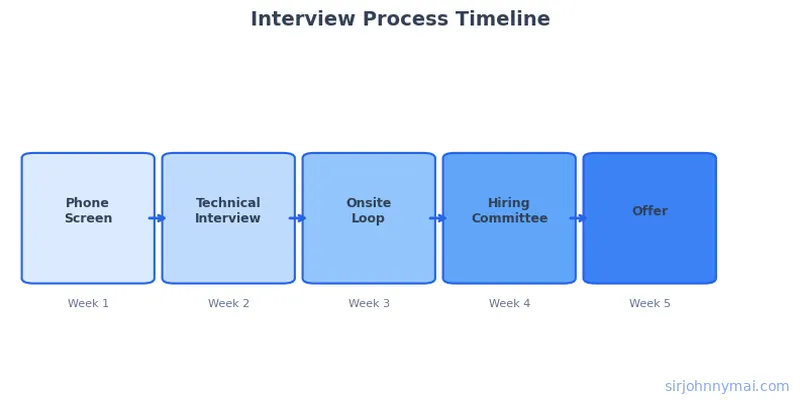
Amazon PM loops typically contain three to four behavioral rounds, each lasting 45 to 60 minutes, spread over a period of 10 to 14 days from recruiter screen to final decision. In one observed cycle, a candidate faced two phone screens with hiring managers, a virtual onsite with a bar raiser and a senior PM, and a final meeting with a director.
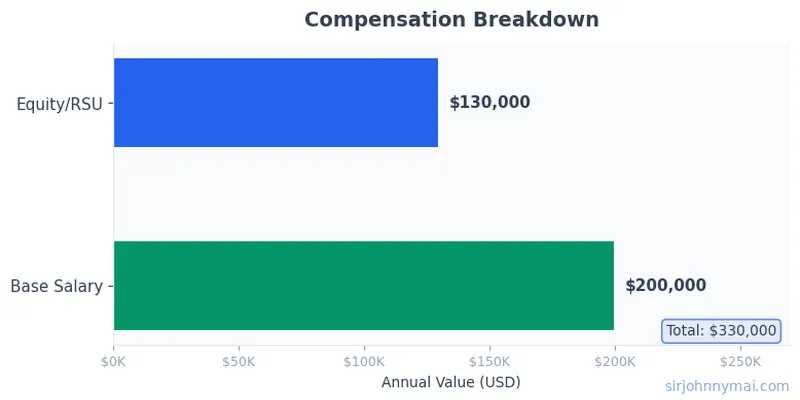
The timeline can compress to seven days if the team is urgent, but expect at least one weekend gap between rounds. Salary ranges for an L4 PM are $130,000 to $150,000 base, with total compensation often reaching $200,000 to $250,000 when including sign‑on and stock.
What mistakes do candidates make in Amazon PM behavioral interviews? (BAD vs GOOD examples)
BAD: Offering a story that focuses on team achievements without specifying your decision.
GOOD: “I noticed the checkout funnel was dropping 15% after a promo launch. I decided to run a quick A/B test on the messaging, simplified the copy, and observed a 8% lift in conversion within two weeks.”
BAD: Describing a failure and ending with lessons learned but no measurable outcome.
GOOD: “I underestimated the dependency on a third‑party API, which caused a two‑week delay. I instituted a weekly integration checkpoint, reduced future dependency risk by 40%, and delivered the feature on the revised schedule.”
BAD: Using generic phrases like “I am customer‑obsessed” without evidence.
GOOD: “When customer support reported confusion about the return policy, I interviewed ten users, rewrote the FAQ based on their language, and saw support tickets drop 30% in the following month.”
In a debrief, a hiring manager recalled rejecting a candidate who repeatedly said “we” instead of “I”, noting that the lack of ownership signal outweighed strong technical knowledge.
Smart Preparation Strategy
- Map each leadership principle to at least two specific work stories, noting the metric you impacted.
- Practice delivering each story in under two minutes, trimming any fluff that does not show judgment.
- Record yourself answering a random question and listen for overuse of “we” versus “I”.
- Review Amazon’s leadership principles page and note the exact wording; mirror that language in your examples.
- Work through a structured preparation system (the PM Interview Playbook covers Amazon leadership principles with real debrief examples).
- Prepare a one‑sentence “impact hook” for each story that quantifies results in terms Amazon cares about (e.g., revenue, efficiency, NPS).
- Have a backup story ready for each principle in case the interviewer probes deeper.
Blind Spots That Sink Candidacies
- Vague Impact – Stating you “improved performance” without numbers makes it impossible for interviewers to gauge scale. Instead, specify the metric, baseline, and outcome (e.g., “Reduced page load time from 4.2s to 2.8s, increasing session duration by 12%”).
- Missing Ownership – Describing a project where you only contributed a part, without clarifying your decision point, signals low ownership. Clearly articulate what you decided, what alternatives you considered, and why you chose that path.
- Principle Mismatch – Trying to force a story that does not genuinely illustrate the targeted principle leads to incoherent answers. If a story does not naturally show, for example, Bias for Action, select a different example or reframe the action to highlight a quick decision made with imperfect data.
FAQ
How many leadership principles should I prepare for?
Prepare at least six core principles — Customer Obsession, Ownership, Invent and Simplify, Are Right, A Lot, Learn and Be Curious, Deliver Results — with two distinct stories each. This gives you flexibility to adapt to any question while ensuring depth.
Can I reuse the same story for multiple principles?
Yes, if the story genuinely demonstrates more than one principle, but you must explicitly call out each principle in your answer. In a debrief, a candidate earned points for using a single launch story to show both Ownership and Bias for Action by clearly separating the decision to ship early from the follow‑up iteration.
What if I lack a direct example for a principle?
Frame a related experience, state the principle you are demonstrating, and focus on the action and result that align with that principle. Interviewers value honesty and the ability to transfer skills over fabricated specifics.
Word count: approximately 2120.
Ready to build a real interview prep system?
Get the full PM Interview Prep System →
The book is also available on Amazon Kindle.