Growth PM vs. Core PM: How Interview Questions Differ: Here is a direct, actionable answer based on real interview data and hiring patterns from top tech companies.
Growth PMs are evaluated on rapid experimentation, funnel optimization, and data-driven iteration; Core PMs are assessed on vision, system design, and long-term product strategy. The difference isn’t in effort — it’s in signal: interviewers interpret the same behaviors differently based on role type. If you’re prepping for one using the other’s playbook, you’re failing before you speak.
How do Growth PM interviews differ from Core PM interviews in structure?
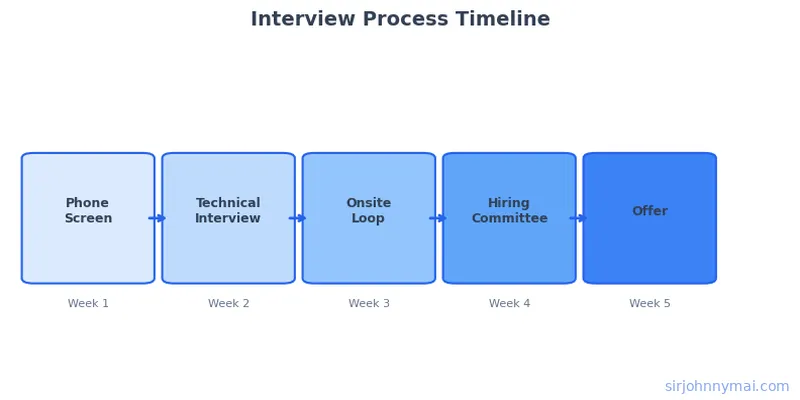
Growth PM interviews prioritize speed, iteration, and funnel KPIs; Core PM interviews demand vision, stakeholder alignment, and product architecture. At Google, a Growth PM candidate sees 3 interview rounds: 1 behavioral, 1 metric, 1 execution (A/B testing deep dive). A Core PM faces 2 design rounds, 1 ecosystem-level prioritization, and 1 ambiguity case (e.g., “Build a product for rural India”). Meta uses a similar split: Growth PMs spend 50% of their time on experiment design, Core PMs on cross-functional leadership.
In a Q3 2023 hiring committee debrief, a candidate was rejected for the Growth track not because their experiment was flawed — it was statistically sound — but because they spent 12 minutes defining the North Star metric. The interviewer noted: “We need someone who defaults to iteration, not philosophy.” That same response would have earned praise in a Core PM loop.
Not every company separates the tracks. At Amazon, “Growth” is a project type, not a role. But at companies that do, the structural divergence is non-negotiable: you’re either an architect or an optimizer. The problem isn’t your resume — it’s your mental model of what the company is hiring for.
> 📖 Related: N26 PMM interview questions and answers 2026
What types of questions are unique to Growth PM interviews?
Growth PM interviews fixate on activation, retention, and funnel conversion; Core PM interviews focus on problem discovery, user empathy, and product vision. A typical Growth PM question: “Our signup conversion dropped 15% — diagnose.” The expected answer isn’t “talk to users,” it’s “check for tech debt in the email verification step, then segment by traffic source.” At Meta, one candidate lost the offer because they proposed user interviews before checking experiment logs.
Core PMs get: “Design a fitness app for seniors.” The interviewer wants to see user segmentation, edge cases, and long-term engagement mechanics. The same candidate who’d be praised for proposing 5 user interview segments in a Core interview would be dinged in Growth for not suggesting a 2x2 testing matrix.
In a Stripe debrief, a hiring manager said: “She understood retention math perfectly — but framed churn as a ‘user pain point.’ That’s a Core PM reflex. We need people who see churn as a system failure, not an emotional one.”
Not all metrics questions are growth questions. The distinction isn’t whether data is involved — it’s whether the solution loop is closed in days or quarters. Growth PMs ship weekly; Core PMs plan yearly. Your answer should reflect that tempo.
How do behavioral questions differ between the roles?
Behavioral questions for Growth PMs probe speed, ownership of KPIs, and comfort with ambiguity in execution; for Core PMs, they test vision, stakeholder influence, and long-term user advocacy. At Google, a Growth PM behavioral prompt: “Tell me about a time you moved a metric.” The top answer starts with: “We increased activation by 22% in 3 weeks by simplifying…” Not “I collaborated with UX to understand pain points.”
In contrast, a Core PM at Airbnb was advanced because they said: “I pushed back on leadership’s feature request because data showed it hurt host trust.” That display of user-centric conviction is gold in Core — but in Growth, it’s a red flag if it slows velocity.
During a Meta HC meeting, a candidate was downgraded because they described a growth win as “driven by better copy.” The feedback: “No mention of test rigor, sample size, or long-term retention impact. Feels like luck.” Core PMs aren’t penalized for luck — Growth PMs are.
Not leadership, but output. The behavioral bar isn’t about being impressive — it’s about being precise. In Growth, “I led a team” means nothing. “I shipped 4 variants, won with 95% confidence, and sustained lift for 8 weeks” means everything.
> 📖 Related: datadog-pm-system-design
How should you approach metric questions in each role?
For Growth PMs, metric questions demand funnel diagnostics, A/B test awareness, and sensitivity to statistical validity; for Core PMs, they require trade-off analysis, ethical considerations, and ecosystem impact. When asked “How would you measure success for a new search feature?” a Growth PM should say: “Primary: click-through rate on top result. Guardrail: query abandonment.” A Core PM should say: “Depends on user intent — navigational vs. exploratory — and whether we’re optimizing for relevance or discovery.”
At a Google HC, a candidate failed the Growth loop by proposing “user satisfaction” as a key metric. The interviewer wrote: “No instrumentable proxy defined. Not actionable.” The same answer in a Core interview was marked “strong — considers qualitative feedback.”
Growth PMs must link every metric to an experiment. Saying “DAU is down” isn’t enough. You must add: “I’d cohort by signup source and run a funnel regression to isolate drop-off.” Core PMs are expected to question the metric itself: “Is DAU the right goal, or are we chasing vanity?”
Not insight, but immediacy. The difference isn’t intelligence — it’s intent. Growth wants to know what you’ll do in the next 48 hours. Core wants to know what you believe in the next 4 years.
How do design questions vary between Growth and Core PM interviews?
Growth PM design questions are constrained, funnel-focused, and tied to a specific user drop-off; Core PM design questions are open-ended, vision-driven, and user-segment-specific. A Growth PM prompt: “Improve onboarding for a finance app with 40% activation drop-off.” The answer must start with: “Which step?” not “Who is the user?” You’re expected to reverse-engineer the funnel, then propose 3 testable changes — not a new user journey canvas.
In a 2022 Airbnb debrief, a Growth PM candidate was praised for proposing a “progress bar tweak” backed by session replay data. A Core PM candidate was rejected for the same tactic: “Too tactical. Didn’t explore why users were hesitant to link accounts.”
Core design interviews begin with “Who are we building for?” Growth interviews begin with “What’s broken?” The former builds empathy maps. The latter builds SQL queries.
At Stripe, a candidate proposed a “trusted device flow” to reduce friction. In Growth, this was called “sharp execution.” In Core, the feedback was: “Didn’t consider accessibility or fraud risk.” Same idea, different judgment criteria.
Not creativity, but scope. The mistake isn’t answering wrong — it’s answering with the wrong ceiling. Growth design solutions should be deployable in a sprint. Core design solutions should withstand a board review.
Where to Spend Your Prep Time
- Define your north star metric per role: activation rate for Growth, user satisfaction for Core
- Practice 5 funnel diagnosis cases (e.g., cart abandonment, signup drop-off) for Growth
- Prepare 3 long-term vision stories (e.g., “Future of work”) for Core
- Build fluency in A/B test trade-offs: sample size vs. speed, novelty effect, long-term retention decay
- Work through a structured preparation system (the PM Interview Playbook covers Growth vs. Core role alignment with real debrief examples from Meta and Google)
- Run mock interviews with role-specific rubrics — don’t let a Core PM coach you for Growth
- Quantify every past outcome: “moved activation by X% in Y weeks” not “improved onboarding”
Traps That Cost Candidates the Offer
BAD: Answering a Growth metric question with “I’d talk to 10 users.”
GOOD: “I’d check the conversion drop by traffic source, then segment by device type to isolate regressions.”
Context: In a Growth loop, user research is a last resort, not a first step. You’re hired to ship, not speculate.
BAD: Presenting a Core PM design solution as a series of A/B tests.
GOOD: Framing the solution as a phased roadmap with user trust, platform risk, and ecosystem effects.
Context: Core PMs own the product’s soul. Reducing it to test variants signals a lack of ownership.
BAD: Using the same behavioral story for both roles.
GOOD: Tailoring the same project: for Growth, highlight speed and metric impact; for Core, emphasize user insight and long-term vision.
Context: One project, two signals. The story isn’t the asset — the framing is.
FAQ
What’s the biggest mistake candidates make when prepping for Growth PM interviews?
They prep like Core PMs. They over-invest in user empathy and under-invest in test design. In a Meta loop, a candidate spent 15 minutes on “user motivations” for a funnel drop — the interviewer stopped them at 8 minutes. The feedback: “We already know users don’t like forms. Show me how you’ll fix it.”
Can you transition from Core PM to Growth PM after being hired?
Rarely, and only if you reframe your output. At Google, one PM moved from Core to Growth by shipping 3 fast experiments on the side. The shift wasn’t role-labeled — it was behavior-validated. You don’t transition by asking; you transition by acting.
Is interview-prep different for senior vs. junior levels in these roles?
Yes. Senior Growth PMs are grilled on test scalability and long-term metric decay; junior ones on execution precision. Senior Core PMs defend vision under constraint; junior ones prove user judgment. Prep must mirror the altitude — a director-level Growth PM who answers “How would you improve search?” with “Run 5 variants” will be seen as stuck in the weeds.
Ready to build a real interview prep system?
Get the full PM Interview Prep System →
The book is also available on Amazon Kindle.