AI PM system design interviews test judgment, not technical depth. Candidates fail not because they lack knowledge, but because they misframe problems, skip trade-offs, or defer to engineers. The goal is not to build a perfect system — it’s to show structured thinking under ambiguity, align decisions with business impact, and communicate constraints clearly.
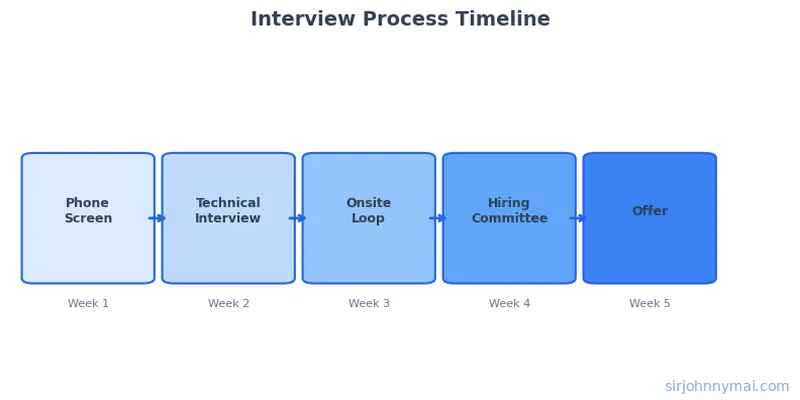
What do AI PM system design interviews actually test?
They test your ability to lead technical trade-off conversations, not your knowledge of transformers. In a Q3 2023 hiring committee at Google, a candidate accurately described BERT’s architecture but failed because she accepted the engineering team’s latency estimate without questioning caching impact on freshness. The debrief note: “She followed, didn’t lead.”
Judgment > memorization. The system isn’t evaluating whether you can regurgitate attention mechanisms. It’s assessing whether you can decide when to use retrieval-augmented generation versus fine-tuning — and justify it based on cost, latency, and maintainability.
Not technical fluency, but translation fluency. Your job is not to explain backpropagation, but to convert business goals into technical constraints. When the head of HC at Meta pushed back on a candidate’s proposal for real-time inference, he said: “You told me what the model does, not why it matters to the user.”
One framework we used in Amazon’s AI org: the Constraint Stack. Rank requirements as:
- Non-negotiable (e.g., PII compliance)
- Threshold (e.g., <500ms latency)
- Optimization (e.g., maximize recall)
Candidates who start here pass. Those who jump to “Let’s use Llama 3” fail.
How is AI PM system design different from general PM interviews?
It forces you to define feedback loops — not just features. In a standard PM interview, you design a notifications system. In an AI PM version, you design a notifications system where the ranking model re-trains weekly, but user behavior shifts daily. The difference isn’t scale — it’s temporality.
Not roadmap planning, but lifecycle ownership. Most PMs prepare for “What would you build?” They fail on “How will it break, and when?” During a Stripe AI PM interview, a candidate proposed a fraud detection model. When asked, “How will accuracy decay over six weeks?” he guessed. The interviewer closed the laptop. That ended the loop.
AI systems are dynamic contracts. They don’t ship once; they drift. The unspoken filter in these interviews is: Do you treat models as products or as one-time deliverables?
At Microsoft’s Copilot team, they use a rubric called Model Decay Risk. Candidates must answer:
- What data will become stale?
- What user behavior will invalidate assumptions?
- How often will you retrain, and who pays?
One PM passed by sketching a dashboard that tracked concept drift alongside customer satisfaction — not because it was technically novel, but because it linked ML health to business KPIs.
How should I structure my answer in an AI PM system design interview?
Start with user outcome, end with operational cost. In a Google HC meeting last year, two candidates designed the same recommendation system. One began with “We’ll use matrix factorization.” The other began with “Users see too many irrelevant results after onboarding.” The second got the offer.
Not components, but constraints. Engineers will build what you frame. If you say “Let’s use embeddings,” they’ll optimize for embedding quality. If you say “Cold-start users must see relevant results in <1s,” they’ll explore hybrid retrieval. Your framing sets the success condition.
A winning structure:
- User need + success metric (e.g., “Reduce false positives in spam detection by 30% in 90 days”)
- Key constraints (latency, data freshness, cost per query)
- High-level approach (ML vs rules, real-time vs batch)
- Critical trade-offs (precision vs recall, model size vs speed)
- Feedback loop (how you measure, monitor, and update)
During an Amazon loop, a candidate proposed a fine-tuned model for customer support routing. When the bar raiser asked, “What if the model misroutes a high-value customer?” she paused, then said: “We’ll run in shadow mode for 30 days, compare to current system, and set a threshold: if confidence <80%, escalate to human.” That was the moment her offer was approved.
What are the most common AI PM system design questions?
Expect variations of:
- Design a content moderation system for a live video platform
- Build a personalized feed for a language learning app using user behavior
- Create a fraud detection model for a neobank with limited historical data
- Reduce hallucinations in a customer-facing chatbot
- Optimize ad relevance for an AI-generated travel planner
These aren’t open-ended. They’re stress tests for edge cases. At Meta, one interviewer said: “Assume your model starts promoting misinformation after retraining. Walk me through your response.” The candidate who won had a playbook:
- Immediate: Roll back to last stable model
- Diagnostic: Audit training data for new domains
- Systemic: Add human-in-the-loop for high-risk categories
Not problem-solving, but problem-scoping. The interviewers aren’t looking for a complete solution. They want to see where you draw the boundary.
For example, “Design a resume-screening AI” seems about fairness. But the real test is whether you ask:
- Who owns the final decision?
- How often will job descriptions change?
- Can recruiters override results, and will they trust the system?
In a recent Stripe interview, a candidate spent 10 minutes on model fairness but never mentioned override workflows. The debrief: “She optimized for a metric no one will measure. The product fails if recruiters ignore it.”
How do hiring managers evaluate AI PM system design responses?
They look for three signals: constraint articulation, trade-off ownership, and feedback anticipation. In a Google HC packet from January 2024, a candidate received “Leans No” because she said, “I’ll leave the latency decision to the engineers.” That single line invalidated her entire response.
Not expertise, but leadership. You’re not being assessed on whether you know the difference between L1 and L2 regularization. You’re being assessed on whether you’ll make a call when data is incomplete.
One meta-pattern: the Deferral Red Flag. When candidates say:
- “I’ll let the team decide”
- “The data scientists will figure that out”
- “We can A/B test both”
…it signals abdication. In Amazon’s leadership principles, this fails Bias for Action and Dive Deep.
At Meta, evaluators use a scoring grid:
- User impact clarity: Did you define success in user terms?
- Technical feasibility framing: Did you set boundaries engineers can work within?
- Operational foresight: Did you plan for monitoring, decay, and cost?
A candidate once proposed a real-time translation feature for Messenger. He scored top marks not because his architecture was perfect — it wasn’t — but because he said: “We’ll cap spend at $50K/month. If usage exceeds that, we’ll fall back to batch processing.” That showed ownership.
Focused Preparation Guide
- Define 5 AI product constraints (latency, cost, accuracy, freshness, compliance) and practice anchoring every design to at least two
- Map common AI architectures (RAG, fine-tuning, ensemble models) to business problems — don’t memorize, understand trade-offs
- Build a decision journal: for every AI product you use, write down how it likely handles feedback loops and failure modes
- Practice whiteboarding with a timer: 5 minutes to frame, 15 to design, 5 to trade-offs
- Work through a structured preparation system (the PM Interview Playbook covers AI PM system design with real debrief examples from Google and Meta)
- Run mock interviews with PMs who’ve passed AI system design loops — focus on pushback responses
- Internalize one full design (e.g., recommendation engine) end-to-end, including monitoring dashboard specs
The Gaps That Kill Strong Applications
- BAD: “We’ll use a state-of-the-art transformer model.”
- GOOD: “Given 300ms latency budget and 10M daily queries, we’ll use a distilled BERT model with cached embeddings for frequent queries.”
The first is a technology assertion. The second is a product decision with constraints.
- BAD: “Accuracy is the most important metric.”
- GOOD: “We’ll optimize for recall in fraud detection, accepting higher false positives, because missing fraud costs 10x more than manual review.”
Vague metrics fail. Tied trade-offs win.
- BAD: “We’ll retrain the model every week.”
- GOOD: “We’ll retrain weekly, but monitor data drift daily; if distribution shift exceeds threshold, we trigger an out-of-cycle retrain with approval from risk team.”
Schedule without monitoring is theater. Real systems adapt.
FAQ
What if I don’t have AI product experience?
Your past domain knowledge is the advantage. In a Google interview, a PM from the healthcare team won by applying FDA validation principles to model auditing. They don’t need AI veterans — they need PMs who can transfer rigor. Show how your background shapes your risk tolerance, decision speed, and user definition.
How long should I spend preparing?
60–90 hours for most candidates. That’s 2 hours/day for 6 weeks. Focus on 5 core scenarios, each practiced 3x with feedback. One PM cleared Apple’s AI loop after 7 mocks — all on the same feed ranking problem. Depth beats breadth. Stop when you can handle “What if your model starts degrading?” without pausing.
Do I need to write code or equations?
No. One candidate at Amazon lost an offer after writing a loss function on the board. The feedback: “You crossed into data science territory. We need a product lens, not a model lens.” You’re evaluated on scoping, trade-offs, and communication — not implementation. Say “We’ll use cross-entropy loss” only if it drives a product decision. Otherwise, skip it.
What are the most common interview mistakes?
Three frequent mistakes: diving into answers without a clear framework, neglecting data-driven arguments, and giving generic behavioral responses. Every answer should have clear structure and specific examples.
Any tips for salary negotiation?
Multiple competing offers are your strongest leverage. Research market rates, prepare data to support your expectations, and negotiate on total compensation — base, RSU, sign-on bonus, and level — not just one dimension.
Ready to build a real interview prep system?
Get the full PM Interview Prep System →
The book is also available on Amazon Kindle.
Related Reading
- [](https://sirjohnnymai.com/blog/consultant-to-pm-transition-adobe-2026)
- pm-tool-comparison-2026
- Medtronic PMM interview questions and answers 2026
- zh-apple-interview-qa-interview-strategy-framework