The a16z PM Portfolio role demands a venture capitalist's judgment and an operator's execution, not simply product management craft. Candidates are assessed for their ability to identify and solve systemic problems across an investment portfolio, signaling founder potential and strategic acumen. Success hinges on demonstrating a unique blend of strategic foresight, operational dexterity, and an understanding of venture economics, far beyond traditional PM skill sets.
The a16z PM Portfolio role is not a typical Product Manager position; it is a highly selective filter for individuals who possess a founder's mindset, demonstrate a venture capital perspective, and can exert outsized influence across multiple early-stage companies.
This guide is for high-performing product leaders and founders who recognize that the a16z PM Portfolio role is a distinct career path, not a lateral move from a large tech company. It targets individuals who possess a demonstrated history of 0-to-1 product creation, startup experience, or significant entrepreneurial efforts, and who are now seeking to leverage their product expertise across multiple early-stage companies. This is not for those looking to manage a single product roadmap or iterate on existing features within a corporate structure.
What is the A16Z PM Portfolio role, really?
The a16z PM Portfolio role is fundamentally a talent acquisition strategy for Andreessen Horowitz, designed to embed deeply experienced product builders within its portfolio companies as advisors, interim leaders, or future founders. It is not a traditional PM job with a single product and team; instead, it is a rotational, strategic resource function that demands a venture-level understanding of market opportunities and organizational dynamics. The firm seeks individuals who can identify critical inflection points for early-stage companies and apply their expertise to accelerate growth or de-risk ventures.
In a Q3 debrief for a PM Portfolio candidate, the lead partner articulated, "This isn't about their ability to write PRDs, it's about their ability to smell disruption and then help our founders navigate it." The discussion wasn't about feature prioritization, but about the candidate's insights into nascent market trends and their capacity to influence founders towards specific strategic pivots. The problem isn't demonstrating product ownership; it's demonstrating venture judgment.
Candidates are expected to act as an extension of the investment team, translating macro market trends and competitive landscapes into actionable product strategies for diverse portfolio companies. This requires a level of autonomy and an ability to operate in ambiguity that far exceeds most corporate PM roles. The role is less about building specific products and more about building companies by providing critical product guidance at pivotal moments. It’s not about shipping features; it’s about shaping entire product strategies and sometimes even entire companies.
> 📖 Related: day-in-the-life-datadog-pm-2026
How does the A16Z PM Portfolio interview process differ from FAANG?
The a16z PM Portfolio interview process is an elaborate filter for venture acumen and founder potential, diverging sharply from the structured, competency-based interviews common at FAANG companies. While FAANG interviews assess your ability to operate within established frameworks, a16z probes your capacity to create new frameworks, identify market white space, and influence founders without direct authority. The process is less about specific product execution and more about strategic foresight and the ability to diagnose systemic issues across diverse business models.
During one hiring committee discussion, a candidate who scored highly on traditional product sense and execution rounds at Google was rejected for the a16z PM Portfolio role because, as one partner noted, "They can build a great house, but can they find the land that no one else sees, and then convince someone to buy it before it's even built?" This highlights a fundamental distinction: the problem isn't a lack of product craft; it's a lack of venture vision. Expect a significantly higher emphasis on case studies involving market analysis, investment theses, and founder-level challenges, rather than typical product design or technical deep dives.
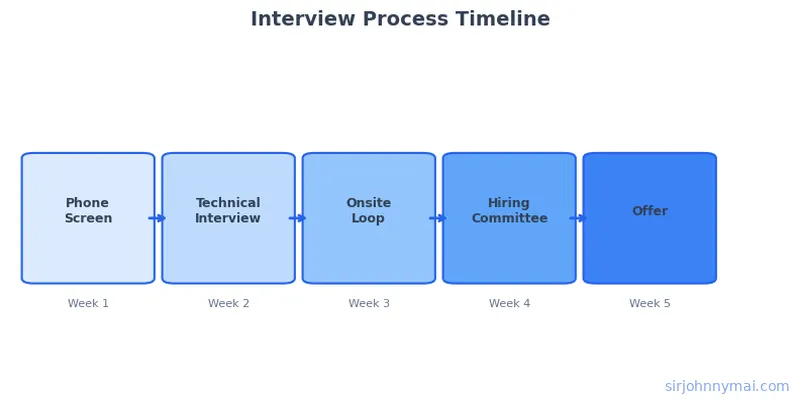
The interview typically spans 4-6 rounds over 6-12 weeks, often involving partners, operating partners, and potentially even portfolio founders. Expect multiple open-ended strategic discussions, where you are evaluated on your ability to articulate a nuanced perspective on industry trends, identify emerging technologies, and propose unconventional solutions to complex business problems. It's not about providing the "right" answer; it's about demonstrating independent, contrarian thinking backed by rigorous logic. The final stages often include a presentation to a panel of partners, where you're expected to pitch a strategic recommendation for a hypothetical portfolio company or an entire market segment.
What specific experience does A16Z look for in PM Portfolio candidates?
A16z seeks candidates with a demonstrable track record of 0-to-1 product creation, often in startup environments, coupled with a founder's instinct and a deep understanding of venture dynamics. This is not a role for those whose primary experience is optimizing existing products or managing large, established teams within a big corporation. The firm prioritizes individuals who have navigated significant ambiguity, built products from inception, and ideally, have experience with fundraising, M&A, or strategic pivots.
In an internal discussion about a candidate's profile, a partner dismissed a resume filled with "scaling X feature to Y million users" at a large public company. The feedback was direct: "That's an incrementalist. We need someone who can identify the next X, not just make the current X bigger." The emphasis is on proving you can generate new value and identify new markets, not just execute within existing ones. This often translates to candidates with prior startup founder experience, early-stage employee roles (especially pre-Series B), or those who have built entirely new product lines within larger organizations.
The ideal candidate possesses a "platform thinking" mindset, capable of identifying common product or go-to-market challenges across various portfolio companies and developing scalable solutions. They must demonstrate an ability to operate with limited resources, make high-stakes decisions with incomplete information, and effectively influence founders and executives. It's not about managing a team; it's about leading through insight and strategic conviction. Candidates are expected to bring a network and a unique perspective on a specific market vertical, proving they can add immediate, tangible value to the portfolio.
> 📖 Related: stanford-to-meta-pm-2026
What is the compensation for an A16Z PM Portfolio role?
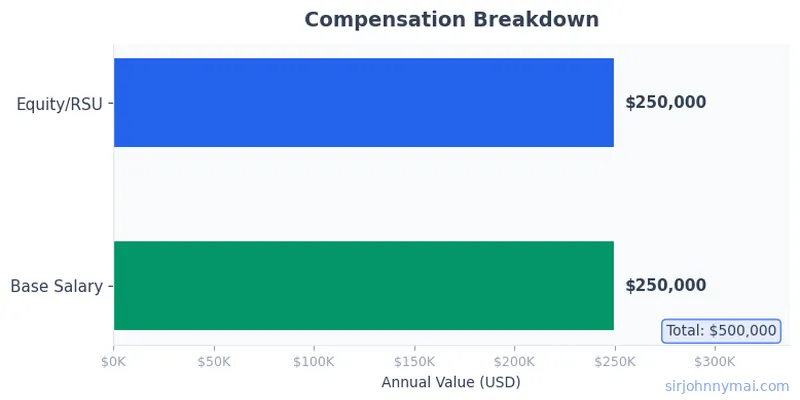
Compensation for an a16z PM Portfolio role is structured to attract top-tier product talent, reflecting the strategic impact and senior-level expectations of the position, and generally falls within the upper echelon of tech compensation, but with a different risk/reward profile than direct startup equity. While exact figures vary based on experience and negotiation, base salaries typically range from $250,000 to $400,000 annually, complemented by a significant bonus component and, critically, carry in the fund. This carry is often the most compelling and opaque part of the compensation package.
The carry allocation, which represents a share of the fund's profits, is the core differentiator from FAANG compensation and aligns the individual with the fund's overall success. It's not direct equity in a single company; it's a long-term incentive tied to the performance of the entire portfolio. In a negotiation debrief, a partner emphasized, "The base and bonus are competitive, but the real value is in the carry. It's how we filter for those who think like owners of the fund, not just employees." This means candidates must understand the long-term, illiquid nature of venture returns.
Total compensation, including base, bonus, and the anticipated value of carry over a 5-10 year horizon, can easily exceed $700,000 to $1,000,000+ for highly experienced individuals, but this is heavily dependent on the fund's performance. The problem isn't just comparing salary numbers; it's evaluating a complex financial instrument that demands a sophisticated understanding of venture capital economics. It's not a guaranteed payout; it's a strategic investment in your own ability to contribute to fund returns.
How to Prepare Effectively
- Deeply research a16z's investment thesis, portfolio companies, and partner publications to understand their core values and strategic focus. This means consuming their content, not just skimming.
- Practice articulating a unique investment thesis for an emerging market or technology. Frame it as if you were pitching a new fund, not just a product idea.
- Develop 3-5 detailed case studies from your past experience where you built a product from 0-to-1, pivoted a strategy, or advised a leadership team through a critical challenge. Focus on impact and the "why."
- Work through a structured preparation system (the PM Interview Playbook covers venture-backed PM roles and how to articulate platform strategy with real debrief examples). This will provide frameworks for analyzing complex, ambiguous business problems.
- Identify common product challenges across different stages of startup growth (seed, Series A, Series B) and formulate potential solutions or diagnostic approaches.
- Prepare to discuss your founder ambitions, entrepreneurial failures, and how you learn from market shifts. Authenticity here is paramount.
- Understand the basics of venture capital fund mechanics, including carry, management fees, and different stages of funding.
The Gaps That Kill Strong Applications
- Treating it like a FAANG PM interview:
BAD: "I would conduct user research, build a PRD, and work with engineering to ship an MVP for the portfolio company." This demonstrates product execution, but not venture judgment.
GOOD: "Given the portfolio company's Series A stage, I'd first assess their critical market assumptions through rapid prototyping with early adopters, rather than immediately building out a full roadmap. My focus would be on de-risking their core value proposition for future funding rounds." This shows strategic thinking within a venture context.
- Focusing solely on your individual contributions without a broader market view:
BAD: "My biggest achievement was scaling our user growth by 20% by optimizing the onboarding flow for my product." This is impactful but limited in scope for this role.
GOOD: "My biggest achievement involved identifying a nascent market shift toward decentralized identity, which led me to pivot our startup's core product strategy, ultimately attracting a strategic acquisition offer. This required convincing the board to abandon a profitable existing product line." This demonstrates foresight and high-stakes leadership.
- Lacking a founder's mentality or entrepreneurial drive:
BAD: "I'm looking for a stable role where I can apply my product skills to help multiple companies." This signals an employee mindset, not an owner.
GOOD: "I view this role as an opportunity to gain unparalleled insight into the venture ecosystem, directly influencing multiple founders, and ultimately accelerating my own path toward building my next company. My motivation is to learn how to identify and scale the next generation of category-defining businesses." This clearly articulates founder ambition and strategic alignment.
FAQ
Is the A16Z PM Portfolio role a stepping stone to becoming a VC partner?
The a16z PM Portfolio role is a demanding operational position, not a direct pipeline to becoming an investment partner; it is designed to leverage product expertise for portfolio support. While some individuals may transition into investment roles over time, the primary function is hands-on product strategy and operational advisory for portfolio companies, requiring deep empathy for founders and a willingness to get into the weeds.
Do I need prior startup founder experience to get into A16Z PM Portfolio?
While not strictly mandatory, prior startup founder or early-stage leadership experience is highly advantageous for the a16z PM Portfolio role, signaling a proven ability to build from zero and navigate extreme ambiguity. Candidates without direct founder experience must demonstrate equivalent entrepreneurial drive, 0-to-1 product success, and a track record of high-stakes decision-making in fast-paced environments.
How much travel is involved in the A16Z PM Portfolio role?
The a16z PM Portfolio role involves significant travel, as it requires direct engagement with diverse portfolio companies, often necessitating on-site presence for strategic workshops, interim leadership, or critical problem-solving. Expect frequent domestic travel, with potential international trips, depending on the geographic distribution of the fund's investments and the specific needs of portfolio companies.
Ready to build a real interview prep system?
Get the full PM Interview Prep System →
The book is also available on Amazon Kindle.