Securing a Product Manager role at Ali Health requires demonstrating an acute understanding of health tech complexities, navigating a regulated environment, and executing within a vast ecosystem. The interview process rigorously evaluates strategic product thinking, operational acumen in a sensitive sector, and an ability to drive health outcomes, not just features. Candidates are judged on their capacity to balance user experience, business goals, and stringent medical and data privacy requirements.
阿里健康PM面试内幕与准备
What does Ali Health look for in a Product Manager?
Ali Health primarily seeks Product Managers who possess a rare blend of strategic foresight, deep operational rigor, and an unwavering commitment to health outcomes, all within a complex regulatory and ecosystem-driven environment. The problem isn't merely building a good product; it's building a trusted and compliant product that seamlessly integrates into Alibaba's broader digital health infrastructure. In a recent Q3 debrief for a Senior PM role focused on chronic disease management, the hiring manager explicitly pushed back on a candidate who presented strong consumer product experience but failed to articulate how they would navigate China's evolving medical policy landscape or integrate with offline clinical pathways. The signal wasn't about a lack of product sense, but a deficit in ecosystem judgment. Ali Health demands PMs who understand that patient data privacy and medical efficacy are not merely features but foundational pillars, and any proposed solution must account for B2C, B2B, and B2G stakeholders.
What are the typical interview rounds for an Ali Health PM role?
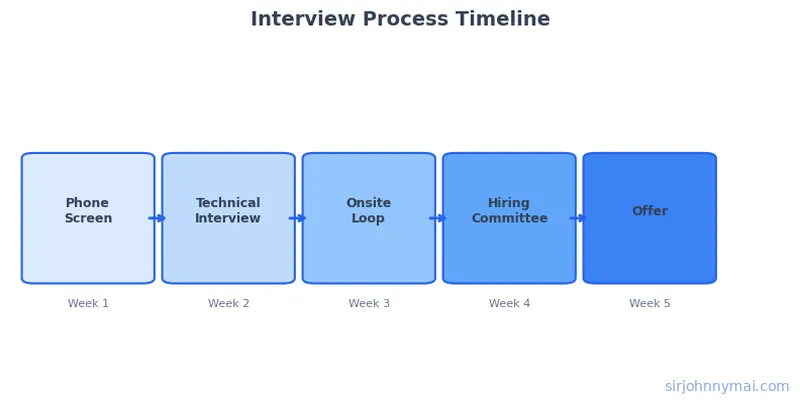
The Ali Health PM interview process is a multi-stage gauntlet designed to comprehensively assess technical depth, product leadership, and cultural fit, typically spanning 5 to 7 rounds over 3 to 6 weeks. It is not just a skills assessment; it's an endurance test for your judgment under pressure. The initial screen by a recruiter (Round 1) focuses on aligning your experience with the role's core responsibilities and salary expectations. Subsequently, you'll encounter the Hiring Manager (Round 2), who probes your strategic thinking, domain expertise, and leadership style. Peer interviews (Round 3) often involve fellow PMs or technical leads, assessing collaboration and execution chops. Cross-functional partners (Round 4) – engineers, designers, data scientists – evaluate your ability to influence and manage complex projects. A senior leader or VP (Round 5), often the hiring manager's skip-level, will gauge your broader vision, impact, and alignment with Ali Health's strategic objectives. Finally, an HR interview (Round 6) often covers cultural fit, compensation, and team dynamics, sometimes followed by a final leadership or hiring committee review (Round 7) for senior positions. The critical insight here is that each round isn't isolated; it's building a cumulative profile, where consistency in demonstrating the "六脉神剑" (Alibaba's core values) alongside specific health tech competence is paramount.
How should I approach Ali Health product sense questions?
Ali Health product sense questions are not simply about ideation; they are about demonstrating structured problem-solving that deeply integrates user empathy, business viability, and the unique constraints of the health sector. The problem isn't generating creative ideas, it's failing to ground those ideas in the realities of medical ethics, regulatory compliance, and Ali Health's existing platform ecosystem. When asked to "design a product for remote patient monitoring," a candidate who merely lists features like video calls and vital sign tracking misses the point. A strong answer, as I observed in a P7 debrief, outlines the specific patient segment, identifies critical unmet clinical needs, proposes core features, and then immediately layers on considerations for data security protocols (GDPR/HIPAA equivalents), doctor-patient liability, reimbursement models, and integration with existing hospital EMR systems or Ali Health's online pharmacy. The judgment signal is not simply "what to build," but "why this, why now, and what are the clinical, regulatory, and business model implications within a platform like Ali Health?" Candidates who frame their solutions by first acknowledging the high-stakes nature of health data and then systematically addressing user trust, clinical workflow, and commercial viability will distinguish themselves.
What execution and leadership signals are critical for Ali Health?
Ali Health values Product Managers who can not only chart a strategic course but also meticulously navigate the operational complexities inherent in a large, regulated health tech organization. The core challenge isn't just managing tasks; it's influencing diverse stakeholders—from clinicians and pharmacists to engineers and government relations—without direct authority, ensuring product delivery aligns with stringent medical standards and business goals. In a recent debrief concerning a candidate for a new digital therapeutics product, the key concern wasn't their project management skills, but their inability to articulate a clear strategy for resolving a hypothetical conflict between clinical accuracy requirements and aggressive market launch timelines. Strong candidates demonstrate a clear understanding of data-driven decision-making specific to health outcomes, articulating how they would define success metrics beyond typical engagement numbers, incorporating clinical endpoints or cost-saving efficiencies. They showcase experience in aligning disparate teams towards a common, patient-centric objective, often requiring difficult trade-offs. The signal isn't "I delivered a feature," but "I drove measurable health impact by navigating complex organizational and regulatory landscapes, balancing diverse stakeholder needs through data-backed judgment and persuasive communication."
What salary expectations are realistic for an Ali Health PM?
Realistic salary expectations for a Product Manager at Ali Health vary significantly by experience level, ranging from approximately 400,000 RMB to over 1,000,000 RMB annually in total compensation, which typically includes base salary, performance bonus, and stock options. For a mid-level PM (P6), a total compensation package might fall between 400,000 - 700,000 RMB. Senior PMs (P7) can expect 700,000 - 1,000,000 RMB+, while Staff or Principal PMs (P8+) command higher. Compensation isn't solely about the base figure; it's about understanding the entire package and its alignment with Alibaba's performance-driven culture and long-term vision. Stock options, usually vested over four years, form a significant portion of senior compensation, tying individual success directly to company performance. Candidates should assess their market value based on their specific health tech domain experience, leadership capabilities, and track record of impact in similarly complex, regulated environments. Negotiating effectively requires a clear understanding of your P-level placement and the full value of the stock component, not just the monthly cash.
Focused Preparation Guide
- Deconstruct the Role: Analyze the job description for specific keywords related to health tech, regulatory compliance, and ecosystem integration. Understand the difference between a general PM role and one within a highly regulated sector.
- Master Ali Health's Products: Deeply research Ali Health's existing product portfolio, target user segments (patients, doctors, pharmacies), and business model. Identify opportunities and challenges.
- Understand China's Health Tech Landscape: Familiarize yourself with key regulations (e.g., data privacy, medical device approval), government policies, and major competitors in the Chinese digital health market.
- Practice Health-Specific Product Sense: Work through scenarios that demand balancing user needs, business goals, and clinical/ethical considerations. Focus on structured frameworks that incorporate regulatory and trust dimensions.
- Refine Execution & Leadership Stories: Prepare specific examples demonstrating how you've driven impact, managed complex stakeholders, and resolved conflicts in high-stakes environments. Quantify your achievements.
- Work through a structured preparation system (the PM Interview Playbook covers product strategy for regulated industries with real debrief examples from similar health tech companies). This will help you articulate your process for navigating ambiguity and making decisions under pressure.
- Prepare for Behavioral Questions: Align your experiences with Alibaba's "六脉神剑" (Six Vein Spirit Sword) values, showing how you embody customer-first, teamwork, embracing change, integrity, passion, and commitment.
Blind Spots That Sink Candidacies
- BAD: Presenting product ideas for a remote patient monitoring solution that focuses solely on features like video calls and vital sign tracking, without mentioning data security, regulatory compliance, or integration with clinical workflows.
- GOOD: When proposing a remote patient monitoring product, systematically outline the target user (e.g., elderly with chronic conditions), core features, then immediately address data privacy (e.g., anonymization protocols, consent mechanisms), regulatory approval pathways (e.g., NMPA considerations), and how the solution integrates with doctors' existing EMR systems and medical liability frameworks.
- BAD: During an execution question about a project delay, blaming external teams or a lack of resources, without articulating proactive steps taken to mitigate risks or influence outcomes.
- GOOD: When discussing a project delay, acknowledge the external factors, but immediately pivot to specific actions taken: "We identified a potential delay due to [external factor]. My approach was to proactively engage the legal team for early feedback, communicate revised timelines to stakeholders with a clear rationale, and concurrently explore an MVP fallback option to de-risk the launch, ultimately delivering 80% of the core value on schedule."
- BAD: Answering "Why Ali Health?" by only praising the company's size or market leadership, without connecting it to your personal career aspirations or specific contributions you aim to make within the health tech sector.
- GOOD: Articulate a clear conviction for Ali Health's mission in transforming healthcare, connecting it to your personal passion for improving health outcomes through technology. For instance: "My experience in [your specific domain, e.g., AI in diagnostics] aligns directly with Ali Health's vision for intelligent healthcare. I believe my skills in [specific skill] can significantly contribute to [specific product area or strategic goal], helping to bridge the gap in access to quality medical services across China."
FAQ
What is the most common reason candidates fail Ali Health PM interviews?
Candidates most frequently fail due to a lack of specific domain judgment in health tech, failing to demonstrate how their product thinking accounts for regulatory constraints, medical ethics, and the complex B2B2C ecosystem. It is not a lack of general PM skills, but an inability to apply them with precision to a high-stakes, regulated industry.
How important is prior health tech experience for an Ali Health PM role?
Prior health tech experience is highly advantageous and often a differentiator, particularly for senior roles, as it signals an understanding of the unique challenges in areas like data privacy, clinical workflows, and regulatory compliance. Lacking it means you must demonstrate exceptional transferable skills and a profound, quick-study capability in healthcare complexities.
Should I prepare for case studies or specific product design questions?
You should prepare for both. Ali Health interviews often include product design questions that function as mini-case studies, requiring you to define problems, propose solutions, and consider implementation details within the health tech context. Focus on structured thinking that addresses the unique constraints of the medical and regulatory landscape.
面试中最常犯的错误是什么?
最常见的三个错误:没有明确框架就开始回答、忽视数据驱动的论证、以及在行为面试中给出过于笼统的回答。每个回答都应该有清晰的结构和具体的例子。
薪资谈判有什么技巧?
拿到多个offer是最有力的谈判筹码。了解市场行情,准备数据支撑你的期望值。谈判时关注总包而非单一维度,包括base、RSU、签字费和级别。
Ready to build a real interview prep system?
Get the full PM Interview Prep System →
The book is also available on 获取完整手册.