Most candidates fail healthcare PM interviews because they treat them like general tech PM roles — the difference isn’t in product sense, but in domain fluency. You need clinical workflows, regulatory frameworks, and payer dynamics, not just agile and OKRs. The top candidates win not by technical depth, but by demonstrating judgment in high-constraint environments where UX can't override HIPAA or FDA rules.
What does a healthcare PM actually do?
A healthcare PM owns product initiatives that navigate clinical, regulatory, and operational constraints — not just user stories and roadmaps. In a typical debrief at a major EHR company, the hiring manager rejected a candidate who built a “seamless patient onboarding flow” because it bypassed informed consent protocols required under 45 CFR 46. The problem wasn’t the flow — it was the ignorance of human subjects research rules.
Healthcare PMs don’t just prioritize features; they triage trade-offs where a 2% UX gain can’t justify violating audit trail requirements in FDA 21 CFR Part 11. Their roadmap isn’t driven by engagement metrics, but by CMS reimbursement changes, Meaningful Use updates, or HIPAA audit cycles.
Not shipping fast, but shipping compliant. Not iterating on adoption, but surviving JCAHO reviews. Not optimizing NPS, but reducing malpractice risk. These aren’t product constraints — they’re non-negotiable guardrails. The best healthcare PMs don’t see them as blockers; they use them to shape better problems.
How is healthcare PM different from other tech PM roles?
Healthcare PM interviews test domain fluency, not abstract product thinking — most candidates miss this and default to consumer frameworks. At a Google Health interview panel last year, three candidates used “How would you improve Maps?” as a warm-up. Two applied standard HEART metrics. The one who won reframed: “In a hospital wayfinding use case, latency isn’t about load time — it’s about whether a nurse reaches the crash cart in under 90 seconds.”
The difference isn’t tools or process. It’s consequence density. A typo in a fintech app might cost $50. In healthcare, it can cost a life — and trigger an FDA Class I recall. That changes how PMs define MVP, scope betas, and handle rollbacks.
Not prioritization, but risk-weighted prioritization. Not user interviews, but clinician shadowing with liability waivers. Not A/B testing, but IRB-approved pilot studies. A consumer PM optimizes for delight. A healthcare PM optimizes for safety, compliance, and operational fit — in that order.
When a hiring committee debates a healthcare PM hire, they’re not asking “Can this person ship?” They’re asking “Would I want this person making trade-offs during an OCR audit?”
What background do you need to break into healthcare PM?
You don’t need a medical degree, but you must speak the language of care delivery — most career changers fail because they rely on transferable PM skills alone. In a hiring committee meeting at Flatiron Health, a senior consultant from McKinsey was dinged because he described oncology workflows using “patient journey” slides — a red flag for anyone who’s worked in clinics. Real clinicians don’t “journey.” They follow NCCN guidelines, order CPT codes, and fight prior auth denials.
Winning candidates had one of three backgrounds:
- Clinical (RN, MD, PA) with technical exposure
- Technical (engineer, data scientist) with healthcare project work
- Operations (hospital admin, payer analyst) with product-adjacent roles
Self-taught transitions work only if you’ve completed a clinical informatics certification (e.g., AMIA 10x), contributed to FHIR implementations, or worked on HL7 integrations.
Not domain-adjacent experience, but domain-immersive output. Not “interested in health tech,” but “built a FHIR server parser for EKG data.” Passion is table stakes. Proof of fluency is what gets you in the room.
How do you prepare for healthcare PM interviews?
You must train for four tracks: behavioral, product sense, system design, and domain-specific scenarios — but 70% of prep time should go to domain. At a recent Amazon Clinic interview, candidates were given a prompt: “Design a virtual care product for diabetic patients on Medicare.” The top performer didn’t jump to features. She asked:
- “Which MIPS category does this fall under?”
- “Are we bundling under Episode-Based Payment models?”
- “What are the 2024 CPT codes for remote monitoring?”
She scored in the top quartile because she anchored to reimbursement — the real driver of adoption in value-based care.
Interviewers aren’t testing memorization. They’re testing whether you can operate in a world where “just build it” doesn’t exist. A product idea is only viable if it’s billable, auditable, and defensible under OCR scrutiny.
Not case frameworks, but care models. Not user personas, but payer incentive structures. Not tech specs, but regulatory classifications. If your answer doesn’t reference CMS, FDA, or ONC at least once, you’re not speaking the right language.
How long does it take to break into healthcare PM?
For candidates with relevant background, the timeline is 3–6 months — not due to interview complexity, but because hiring cycles align with fiscal and regulatory calendars. Most health systems freeze hiring from January to March for budget reconciliation. Tech companies with health arms time launches around HIMSS (March) or ATA (May), creating narrow windows for roles.
In a hiring manager conversation at Epic, I was told: “We don’t hire year-round. We staff for Meaningful Use updates and audit prep. If you miss Q4 planning, you wait 10 months.”
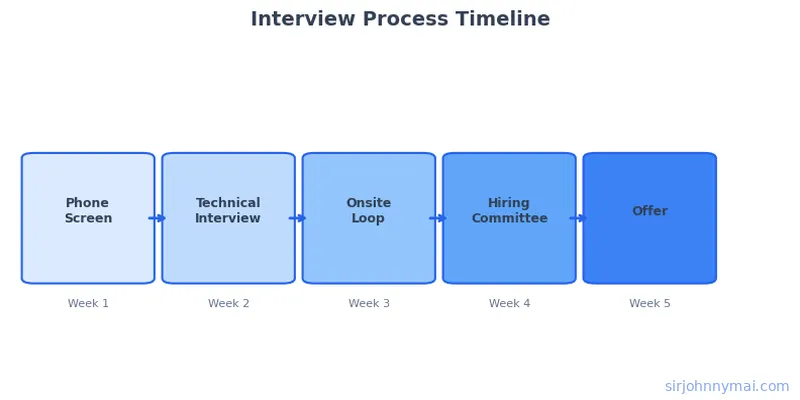
External candidates without internal referrals typically face 6–8 interview rounds, including clinical SME reviews and compliance walkthroughs. Internal transfers move faster — one data engineer at Cerner moved into a PM role in 7 weeks because he’d already passed SOC 2 training.
Not speed of prep, but timing of entry. Not number of mock interviews, but alignment with organizational cycles. Break-ins rarely happen in isolation — they piggyback on policy shifts, funding rounds, or audit deadlines.
Smart Preparation Strategy
- Map your existing experience to clinical, regulatory, or operational impact — e.g., “Led API integration that reduced prior auth turnaround by 40%”
- Study core regulations: HIPAA Privacy & Security Rules, FDA SaMD guidance, 21st Century Cures Act, CMS Interoperability Rule
- Learn healthcare data standards: HL7 v2, FHIR, DICOM, LOINC, SNOMED-CT — know when each applies
- Practice domain-specific cases: EHR usability under MU3, remote monitoring reimbursement, API access for patients under CMS-9115-F
- Work through a structured preparation system (the PM Interview Playbook covers healthcare PM interviews with real debrief examples from Google Health, Epic, and Flatiron)
- Run mock interviews with PMs who’ve sat on healthcare hiring committees — not general tech PM coaches
- Build a portfolio: FHIR sandbox project, policy analysis memo, or workflow audit from a real clinical setting
Common Pitfalls in This Process
- BAD: Framing a product idea as “Uber for telehealth” without addressing who pays for the visit, how it meets MIPS requirements, or whether it triggers Stark Law concerns. This signals you see healthcare as a UX problem.
- GOOD: Starting with “This would fall under CPT 99423 for RPM, so we’d need 20+ minutes of monitoring per day, patient consent, and a care plan reviewed every 30 days.” This shows you think in billable, auditable units.
- BAD: Using consumer metrics like DAU or retention to justify a patient portal feature. In a UnitedHealthcare interview, a candidate was cut after saying “We’ll increase engagement by 30%.” The response: “Engagement doesn’t get us paid. Compliance with HEDIS measures does.”
- GOOD: Tying features to outcomes that matter to payers and providers — e.g., “This reduces no-show rates, improving our performance on HEDIS CAHPS-12, which impacts Star Ratings and bonus payments.”
- BAD: Ignoring clinical workflows. One candidate proposed AI chart summarization but didn’t account for co-sign requirements for NPPs. The physician reviewer said, “That feature would get a nurse practitioner fired.”
- GOOD: Acknowledging handoff points — e.g., “The summary goes to the MD for co-sign within 24 hours, logged in the audit trail with timestamps per Joint Commission standards.”
FAQ
Healthcare PM salaries range from $130K–$160K at health systems and $170K–$220K at tech companies, with band jumps tied to regulatory milestones, not just performance. At Amazon Clinic, Level 5 PMs earn $195K base, but bonuses hinge on audit outcomes and feature clearance timelines — not just OKRs.
You’re not paid more for speed. You’re paid for risk containment.
Transitioning without clinical experience is possible only if you’ve worked on regulated systems — e.g., a backend engineer who handled PHI in a HIPAA-compliant environment. A fintech PM with SOC 2 experience has a better shot than a social media PM with higher traffic metrics.
The hiring committee doesn’t care if you’ve never shadowed a doctor — but they will reject you if you don’t know what a 99213 code is.
Technical PMs break in by owning integrations — HL7 interfaces, FHIR APIs, SSO with Active Directory in hospital networks. The shortcut isn’t an MBA. It’s contributing to open-source healthcare projects like OpenMRS or Argonaut.
Not product sense, but systems sense. Not leadership, but liability awareness. Not innovation, but incrementalism with audit trails. These are the real filters.
What are the most common interview mistakes?
Three frequent mistakes: diving into answers without a clear framework, neglecting data-driven arguments, and giving generic behavioral responses. Every answer should have clear structure and specific examples.
Any tips for salary negotiation?
Multiple competing offers are your strongest leverage. Research market rates, prepare data to support your expectations, and negotiate on total compensation — base, RSU, sign-on bonus, and level — not just one dimension.
Ready to build a real interview prep system?
Get the full PM Interview Prep System →
The book is also available on Amazon Kindle.