Most failed transitions into climate tech PM roles stem from candidates framing sustainability as a mission, not a product constraint. The industry hires for technical fluency in energy systems or carbon accounting, not environmental passion. You need to demonstrate trade-off judgment under real-world physics, not optimism—$130K–$180K base salaries at Series B+ startups reflect that rigor.
What do climate tech PM roles actually do?
Climate tech PMs don’t run sustainability campaigns or ESG dashboards. They own product outcomes where physical limits bind software decisions—like optimizing grid-edge battery dispatch under tariff structures or modeling methane leakage in oilfield IoT systems. In a debrief at a carbon capture startup, the hiring manager rejected a candidate who called it “impact work” because they hadn’t quantified parasitic load trade-offs in their prior energy monitoring product.
Not every climate-adjacent PM role involves hardware or compliance. Some are pure software—like carbon accounting platforms such as Watershed or Persefoni—but even there, PMs must interpret emission factors, audit trails, and third-party verification rules. At one Series C climate analytics company, the product lead had previously managed risk engines in payments; their fintech background mattered more than any environmental coursework.
The deeper insight: climate tech doesn’t need more advocates. It needs operators who treat decarbonization as an engineering-economic constraint, not a values statement. That means prioritizing features based on tCO2e avoided per engineering hour, not media visibility. Judgment isn’t about intent—it’s about marginal impact under real-world bottlenecks.
Is technical depth really required?
Yes, and it’s not negotiable. Climate tech PMs are expected to read P&IDs, understand heat rate curves, or debug sensor calibration drift—depending on the subdomain. At a grid optimization startup, a candidate with a strong enterprise AI background was downgraded because they couldn’t explain why inverter clipping matters for revenue forecasting. The HC wasn’t testing electrical engineering—I was testing whether the candidate could map a technical detail to business impact.
Not product sense, but systems literacy. Climate tech operates in tightly coupled environments: a software delay in a carbon tracking tool can invalidate an entire audit cycle. In one hiring committee, we approved a PM from industrial automation over a stronger communicator from adtech because the former had debugged PLC firmware rollouts. That experience signaled they understood failure modes in distributed physical systems.
You don’t need a PhD in atmospheric science. But you do need to speak the language of the domain. For hardtech, that means understanding CAPEX intensity and uptime SLAs. For carbon accounting, it’s GHG Protocol Scope 3 categories. For agritech, it’s soil carbon sequestration variance. The framework isn’t abstract: it’s which levers move the needle on emissions, and by how much.
Counterintuitive truth: PMs from regulated industries (medical devices, aviation, nuclear) transition more successfully than those from consumer apps—even without “climate” keywords—because they’ve operated under non-negotiable constraints. Their decision logs show rigor, not velocity.
How do I reframe my resume for climate tech roles?
Your resume is not a timeline—it’s a proof statement about transferable judgment. Most candidates from enterprise tech list features shipped. Climate tech hiring managers look for evidence of trade-off decisions under resource scarcity, compliance pressure, or physical limits. In a Q3 debrief, the hiring manager dismissed a candidate’s “launched AI dashboard for energy savings” because they couldn’t articulate the marginal abatement cost curve their model targeted.
Not metrics, but causality. “Reduced server power by 15%” is weak. “Identified cooling setpoint drift in colocation facilities, prioritized HVAC integration over compute optimization due to higher kW/ton leverage” is strong. The latter shows systems thinking and technical prioritization grounded in thermodynamics.
Structure your resume around constraints, not outcomes. Use this pattern:
– “Constrained by [physical, regulatory, or economic limit], I prioritized [X] over [Y] because [quantified impact].”
Example: “Constrained by methane leak detection false positives (>40%), I deprioritized AI classification accuracy in favor of edge-triggered validation workflows, cutting field crew dispatches by 60%.”
Scene from a real debrief: a candidate from a logistics SaaS company listed “optimized route planning engine.” Weak. But when they clarified they’d deprioritized shortest-path algorithms due to reefer container refrigerant GWP impacts—shifting to dwell-time reduction instead—they got the offer. The pivot wasn’t in the work—it was in the telling.
How long does a transition into climate tech typically take?
Six to nine months, if treated as a full-time effort. Half of the successful internal referrals I’ve seen took at least 200 hours of targeted preparation—reading IPCC sectoral mitigation reports, reverse-engineering carbon accounting logic in public SaaS tools, or building basic models of levelized cost of carbon removal (LCOCR). One PM from cybersecurity spent three months simulating DAC (direct air capture) OPEX sensitivity in Excel before passing technical screens.
Not preparation, but immersion. Watching a Net Zero Expo panel isn’t enough. You need to develop first-principles intuition. For example: if you don’t know whether a ton of CO2 is closer in volume to a hot air balloon or a shipping container, you lack spatial intuition for storage and transport bottlenecks.
Timeline breakdown:
– 30 days: domain mapping (pick one subsector—buildings, transport, industrial heat)
– 60 days: technical literacy (study 2–3 core papers, e.g., “Pathways to Carbon Neutral Industry”)
– 30 days: network building (attend 4–6 technical meetups, not “green tech networking” events)
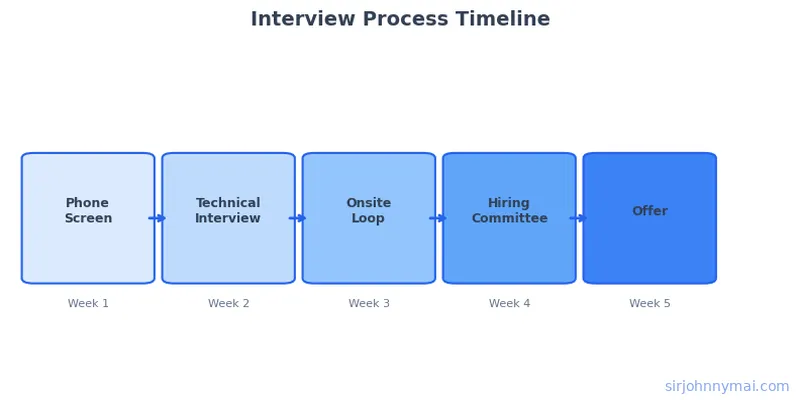
– 60 days: application and interview prep (run 10+ mock cases with climate PMs)
The bottleneck isn’t access—it’s depth. One candidate from fintech applied to 43 roles over 11 months before getting an offer. Their breakthrough came not from volume but from publishing a public analysis of how carbon contracts for difference (CCfDs) could alter project financing for green hydrogen. That demonstrated independent modeling judgment—exactly what hiring managers screen for.
How do climate tech interviews differ from standard PM interviews?
They replace hypothetical product questions with constrained prioritization under physical or regulatory limits. Instead of “design a smart fridge,” you get “prioritize features for a fleet EV charging scheduler where transformer capacity is capped at 2MW.” In a debrief at a grid startup, we rejected a candidate who proposed dynamic pricing as the top solution—because they ignored the utility’s tariff class restrictions that made time-of-use billing impossible.
Not creativity, but constraint navigation. Case studies often include real data: emission factors, energy density tables, or capex/opex breakdowns. You’re expected to use them, not ignore them. At a carbon accounting company, a candidate lost points for building a “user-friendly supplier onboarding flow” without checking whether upstream data met ISO 14064-1 primary data thresholds.
Another difference: stakeholder alignment cases involve regulators, utilities, or class-certified engineers—not just sales or marketing. One case at a building efficiency company asked how to handle a situation where the mechanical engineer refuses to share BMS data due to liability concerns. The right answer isn’t “build trust”—it’s “propose a data anonymization boundary that satisfies PE licensing requirements.”
Final round interviews often include a technical screening: reading a spec sheet for a heat pump, interpreting a PPA term sheet, or debugging a carbon factor mismatch in a spreadsheet. These aren’t pass/fail tests—they’re probes for whether you default to first principles when under pressure.
Focused Preparation Guide
- Map your past experience to climate-relevant constraints: resource scarcity, regulatory compliance, hardware-software integration
- Study one core climate domain deeply: industrial decarbonization, grid modernization, or carbon accounting protocols
- Build a public artifact: a write-up, model, or open-source contribution that shows technical judgment
- Run at least five mock interviews with current climate tech PMs (use communities like Climate People or On Deck Climate)
- Work through a structured preparation system (the PM Interview Playbook covers carbon math, grid basics, and hardware PM cases with real debrief examples)
- Audit your resume for causality: every bullet should show a decision made under constraint, not just an outcome
- Practice explaining trade-offs using real data: e.g., why lithium iron phosphate might win over NMC in stationary storage despite lower energy density
What Separates Passes from Near-Misses
- BAD: “I’ve always cared about the planet, so I want to work in climate tech.”
This frames motivation as sufficient. In a debrief at a carbon monitoring startup, a candidate with strong PM credentials was rejected because they opened with this line. Passion doesn’t scale hardware.
- GOOD: “In my last role, I deprioritized cloud autoscaling features because energy proportional computing gains were <5%, and I focused instead on cold start reduction, which had higher marginal impact on data center PUE.”
This shows constraint-based prioritization and quantified impact.
- BAD: Using consumer PM frameworks (e.g., RICE, HEART) without adapting them to carbon impact.
One candidate scored poorly when they applied RICE scoring to a methane detection roadmap but failed to weight false negative risk—where a missed leak could trigger EPA reporting violations.
- GOOD: “I used a modified Kano model where regulatory non-compliance was the baseline, and features were scored on abatement potential per engineering hour. That shifted priority from UI polish to calibration drift alerts.”
This aligns product process with domain stakes.
- BAD: Citing ESG reports or net zero pledges as product input.
Climate tech PMs know corporate commitments don’t equal technical feasibility. One candidate lost credibility when they referenced their company’s “2030 carbon neutral goal” as validation for a feature.
- GOOD: “I analyzed the marginal abatement cost curve for Scope 1 emissions in manufacturing and found that compressed air leak detection had 5x ROI over lighting upgrades, so we pivoted the roadmap despite lower visibility.”
This shows independent analysis, not borrowed credibility.
FAQ
Is an MBA or sustainability certification necessary for climate tech PM roles?
No. In five hiring committees, not one candidate was selected because they had a sustainability certificate. One was even downgraded for listing a “Green Leadership” badge without technical context. What matters is demonstrated judgment in constrained systems—MBA frameworks like NPV are useful, but only if applied to real capex decisions like electrolyzer sizing.
Can I transition from B2C product management into climate tech?
Rarely, unless you can reframe your experience through resource or compliance constraints. B2C PMs who succeed typically come from regulated verticals (fintech, health apps) or have side projects showing technical depth. One ex-Uber PM got hired at a micromobility startup not for their growth tactics, but for a personal project modeling battery swap station density using cell degradation curves.
Do climate tech startups pay less than standard tech roles?
Not at Series B and beyond. Base salaries range from $130K–$180K in the U.S., with equity packages comparable to late-stage startups. Early-stage pre-seed roles may pay 15–20% below market, but top talent is not taking discounts at Series A+. Compensation reflects the higher bar for technical rigor—not a “mission discount.”
What are the most common interview mistakes?
Three frequent mistakes: diving into answers without a clear framework, neglecting data-driven arguments, and giving generic behavioral responses. Every answer should have clear structure and specific examples.
Any tips for salary negotiation?
Multiple competing offers are your strongest leverage. Research market rates, prepare data to support your expectations, and negotiate on total compensation — base, RSU, sign-on bonus, and level — not just one dimension.
Ready to build a real interview prep system?
Get the full PM Interview Prep System →
The book is also available on Amazon Kindle.