PM career development in 2026 is no longer about climbing a ladder — it’s about building adaptive range. The candidates who succeed aren’t those with the most polished resumes, but those who can signal strategic judgment under ambiguity. Generalist paths are collapsing; specialized, outcome-driven PMs in AI/ML, infra, and regulated tech are commanding 30–50% salary premiums.
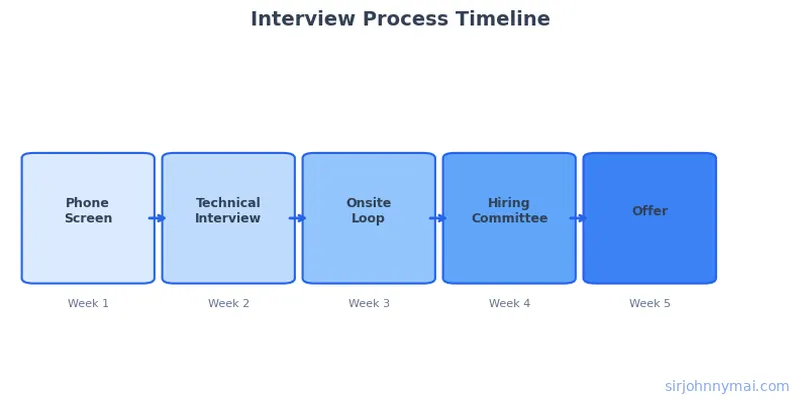
Is PM career development still viable in 2026, or is the role becoming obsolete?
Yes, PM career development is not only viable — it’s accelerating — but only for PMs who stop framing their role as “voice of the customer” and start acting as technical capital allocators. The PM title is bifurcating: high-leverage PMs sit at the intersection of engineering, data, and market risk, while execution-only PMs are being automated or replaced by AI-enhanced engineering leads.
In a Q3 2025 hiring committee meeting at Google DeepMind, a candidate was rejected not for lacking technical depth, but because their resume described features shipped — not bets made. One HC member said, “You don’t get promoted for shipping. You get promoted for reducing uncertainty.” That’s the shift.
Not X, but Y:
- It’s not about how many products you’ve launched, but how much risk you’ve de-risked.
- It’s not about stakeholder management, but about forcing trade-offs when data is incomplete.
- It’s not about roadmap execution, but about defining what “worth building” means when compute costs exceed $2M/month.
At FAANG-level companies, PMs now operate as mini-CEOs of $10M–$50M P&Ls, often with direct ownership of pricing, go-to-market, and retention levers. The role isn’t disappearing — it’s shedding its legacy as a coordinating function and becoming a strategic decision layer.
What are the fastest-growing PM specializations in 2026?
AI/ML infrastructure, developer platforming, and regulated AI (health, finance, defense) are the three PM domains seeing hiring surges — with 40–60% YoY growth in headcount at firms like Anthropic, NVIDIA, and Stripe. Generalist consumer PM roles, meanwhile, have declined 22% since 2023 at public tech firms.
AI/ML PMs are now expected to read model cards, understand inference latency trade-offs, and negotiate SLAs between training and serving pipelines. In a recent Stripe interview loop, a candidate was asked to redesign retry logic for a payments model that hallucinates during fraud classification — not because they needed the answer, but to see if the PM could frame the cost of false positives in dollars, not accuracy points.
Developer platform PMs are another high-growth vector. At Meta in 2025, internal mobility data showed that PMs owning core tooling (CI/CD, observability, dev containers) had 3x faster promotion velocity than those in client-facing roles. Why? Because platform work compounds; every efficiency gains multiples across thousands of engineers.
Regulated AI PMs — those navigating FDA, FINRA, or EU AI Act compliance — are also in demand. These roles command $20K–$40K base premiums and require PMs who can translate audit trails into product constraints without killing innovation. One PM at a health AI startup told me they spent 70% of their time designing “compliance as a feature” — making traceability visible and valuable to users.
Not X, but Y:
- It’s not about UX polish, but about error budget ownership.
- It’s not about user interviews, but about defining what “safe failure” looks like in production.
- It’s not about growth loops, but about cost-per-inference optimization.
The signal isn’t in the title — it’s in the scope. If your roadmap doesn’t include SLOs, capacity planning, or regulatory thresholds, your career trajectory is at risk.
How are top tech companies redefining PM promotion criteria in 2026?
Promotion committees no longer reward delivery velocity — they reward judgment under ignorance. At Amazon’s 2025 Q2 promotion review, 68% of E5-to-E6 PM candidates were denied not for poor performance, but for failing to demonstrate “first-principles reasoning in low-data environments.”
One candidate had shipped a successful LLM-powered support agent but was dinged because they couldn’t explain why they’d chosen a fine-tuning approach over retrieval-augmented generation — not from a technical standpoint, but from a cost-to-accuracy ROI curve. The feedback: “You followed the team’s recommendation. That’s not leadership.”
Another case: a Google PM promoted to L6 had never shipped a consumer-facing feature. Their promotion packet centered on killing three high-burn projects and redirecting $8M in engineering spend to model efficiency work. The HC noted: “They didn’t build. They prevented waste. That’s leverage.”
The new promotion framework at most tier-1 tech firms has three non-negotiables:
- Betting clarity: You must show you made a decision without perfect data — and why it was the right bet.
- Cost ownership: You must quantify the resource impact of your choices — not just headcount, but cloud spend, latency, and opportunity cost.
- Constraint framing: You must demonstrate how you turned a hard boundary (compliance, scalability, ethics) into a design driver.
Not X, but Y:
- It’s not about how much you delivered, but what you chose not to build.
- It’s not about cross-functional collaboration, but about who you overruled — and why you were right.
- It’s not about user satisfaction, but about system sustainability.
If your promotion packet reads like a project log, it will fail. It must read like a capital allocation memo.
What does a successful PM career pivot look like in 2026?
A successful pivot in 2026 isn’t about switching industries — it’s about transferring judgment domains. The most effective pivots move PMs from high-data, low-risk environments (e.g., e-commerce A/B testing) to low-data, high-stakes ones (e.g., autonomous systems, clinical AI).
One PM at Amazon Marketplace pivoted to a Level 5 autonomy startup by reframing their A/B testing experience as “risk surface mapping.” Instead of saying, “I ran 40 experiments on checkout flow,” they argued, “I identified and quantified 12 failure modes in a high-velocity system — the same skill used to model edge cases in self-driving.” That reframe got them the offer.
Another example: a fintech PM moved into defense AI not by learning aerospace systems, but by emphasizing their experience navigating Reg E audits. They positioned compliance not as a sidebar, but as a core product design constraint — a transferable skill in any regulated environment.
The pivot fails when PMs focus on surface-level skills (learning TensorFlow, taking a cloud cert) instead of repositioning their decision-making pedigree. Hiring managers aren’t asking, “Can you use the tools?” They’re asking, “Have you made hard calls with real consequences?”
Not X, but Y:
- It’s not about learning a new domain, but about proving your mental models transfer.
- It’s not about technical fluency, but about risk tolerance calibration.
- It’s not about resume keywords, but about narrative coherence across roles.
The strongest pivot candidates don’t explain gaps — they reframe continuity. They say: “My entire career has been about managing uncertainty. The domain changed. The core skill didn’t.”
How should I prepare for PM interviews in 2026?
You prepare by simulating judgment, not memorizing frameworks. In 2026, top-tier PM interviews have shifted from hypothetical product design (“design a smart toaster”) to constrained trade-off drills — like, “Your model’s accuracy drops 12% after fine-tuning. Training costs $1.2M. Do you retrain, ship with lower accuracy, or scrap it? Justify.”
At OpenAI in 2025, one interview stage required PM candidates to audit a real, anonymized model incident report and propose a product response — not a PR statement, but a product-level fix (e.g., throttling, fallback logic, user notification thresholds). Candidates who focused on “apologizing to users” failed. Those who redesigned the fallback behavior passed.
Another shift: technical interviews for PMs now include live data interpretation. You’ll be handed a dashboard with 7 metrics — some spiking, some flat — and asked, “What’s the first bet you’d make?” The correct answer isn’t “I’d investigate” — it’s “I’d kill Project X because its burn rate exceeds the revenue tail, and here’s the back-of-envelope math.”
Interviewers aren’t assessing your process — they’re assessing your instinct. They want to see you make a call, defend it, and adjust when new data arrives.
Not X, but Y:
- It’s not about structured communication, but about decision velocity.
- It’s not about user empathy, but about cost-aware prioritization.
- It’s not about brainstorming, but about pruning options under pressure.
If your prep consists of 100 product design questions, you’re training for 2020. You need drills that force early commitment and public accountability.
Where Candidates Should Invest Time
- Define your core decision-making domain (e.g., risk mitigation, cost optimization, constraint-driven design) and align all stories to it.
- Build a “judgment portfolio” — 3–5 real examples where you made a call with incomplete data, including the cost of being wrong.
- Practice trade-off interviews using real infrastructure dashboards (use public AWS or GCP samples).
- Quantify every past decision in dollars, latency, or risk reduction — not just user impact.
- Work through a structured preparation system (the PM Interview Playbook covers AI/ML PM interviews with real debrief examples from Google DeepMind and Stripe).
- Identify one specialization gap (e.g., SLO design, regulatory alignment) and complete a project that closes it — even if side work.
- Replace all “collaborated with” language in your resume with “decided against” or “overruled due to.”
What Interviewers Flag as Red Signals
- BAD: A candidate said, “I led the launch of a new onboarding flow that improved activation by 15%.”
This is execution theater. It doesn’t reveal judgment, only results. The HC will assume the team did the work and the PM coordinated it.
- GOOD: “I killed the onboarding redesign after usability testing revealed it reduced activation for low-digital-literacy users — a segment worth 40% of our volume. We reverted and instead invested in progressive onboarding, which took 3 more months but preserved inclusion.”
This shows trade-off awareness, stakeholder courage, and ethical constraint management.
- BAD: “I’m passionate about AI and want to work in cutting-edge technology.”
This is noise. It signals no differentiated understanding. Every other candidate says this.
- GOOD: “I’ve analyzed 14 open-source LLM incident reports and mapped common failure modes to product-level mitigations — like fallback chains and confidence scoring. I applied this to design a safer chatbot at my current company.”
This shows initiative, pattern recognition, and applied systems thinking.
- BAD: Using the word “synergy” or “leveraging” in your answers.
These are red flags for vagueness. They suggest you lack precise mental models.
- GOOD: “We had a 42-hour SLO breach last quarter. I led the postmortem and changed our roadmap to deprioritize feature work until we reduced p99 latency by 60ms.”
This is specific, costly, and shows ownership beyond delivery.
FAQ
Is an MBA still valuable for PM career development in 2026?
No — not as a standalone credential. In a 2025 hiring committee at Meta, an MBA candidate was ranked below a self-taught PM who had shipped a model monitoring framework. The feedback: “The MBA showed strategic frameworks. The other candidate showed strategic action.” MBAs only matter if paired with technical depth or domain-specific risk experience.
Should I switch from consumer to AI/ML PM if I want faster growth?
Yes — but only if you can reframe your past work through a systems lens. Moving to AI/ML for the title won’t work. You must demonstrate that your consumer PM experience taught you how to manage uncertainty, not just run surveys. The pivot succeeds when you position yourself as a decision scientist, not a feature manager.
How long does it take to reposition for a top-tier PM role in 2026?
6–9 months of focused repositioning — not upskilling. That includes rewriting your narrative, building a judgment portfolio, and completing one visible domain-relevant project (e.g., a public write-up on model cost optimization). One PM at a mid-tier SaaS company used that window to publish a framework for “AI product debt,” which directly led to an offer from Anthropic.
What are the most common interview mistakes?
Three frequent mistakes: diving into answers without a clear framework, neglecting data-driven arguments, and giving generic behavioral responses. Every answer should have clear structure and specific examples.
Any tips for salary negotiation?
Multiple competing offers are your strongest leverage. Research market rates, prepare data to support your expectations, and negotiate on total compensation — base, RSU, sign-on bonus, and level — not just one dimension.
Ready to build a real interview prep system?
Get the full PM Interview Prep System →
The book is also available on Amazon Kindle.