The AI PM role demands judgment, not technical regurgitation. Success hinges on aligning model capabilities with user needs, not chasing SOTA metrics. Most candidates fail because they optimize for precision, not product-market fit.
The role of an AI PM is no longer a niche specialization—it’s becoming the default for product leadership in tech. Companies are scrambling to embed AI into every layer of their stack, and those who can ship AI-powered products without getting trapped in technical debt or hype cycles are the ones who rise. Most candidates misunderstand the job: they focus on algorithms, but the real differentiator is judgment under uncertainty.
AI PMs are not data scientists, nor are they traditional product managers with a buzzword slapped on. They sit at the intersection of technical depth, product instinct, and organizational influence. The fastest way to fail is to treat this role like a standard PM job with a machine learning plugin. The fastest way to succeed is to master the feedback loop between model performance, user behavior, and business outcomes.
This isn’t about knowing how transformers work—it’s about knowing when not to build one.
What does an AI PM actually do all day?
An AI PM spends 30% of their time unblocking ML engineers, 25% negotiating with infrastructure teams, 20% defining success metrics that aren’t just accuracy, and 25% cleaning up product debt from overpromising on AI capabilities.
In a typical debrief at Google, a hiring manager killed a candidate’s offer because they said, “I let the ML team decide the evaluation metrics.” That’s not leadership—it’s delegation. The AI PM owns the definition of “good enough” for a model, even if they didn’t train it.
Not execution, but tradeoff navigation. Not backlog grooming, but threshold setting. Not user stories, but error budget allocation.
I’ve seen PMs build flawless user flows only to fail because they didn’t define what a “false positive” meant for the end user. One candidate at Meta described how they reduced model latency by 40%—but only after realizing doctors using their AI diagnosis tool preferred slower results if confidence scores were explainable. That insight came from observing user sessions, not reviewing ROC curves.
The organizational psychology principle at play: the Dunning-Kruger effect reverses in AI teams. The more technically fluent a PM is, the more they recognize how little they know—and the more they rely on structured frameworks to avoid overconfidence.
How is the AI PM interview different from a general PM interview?
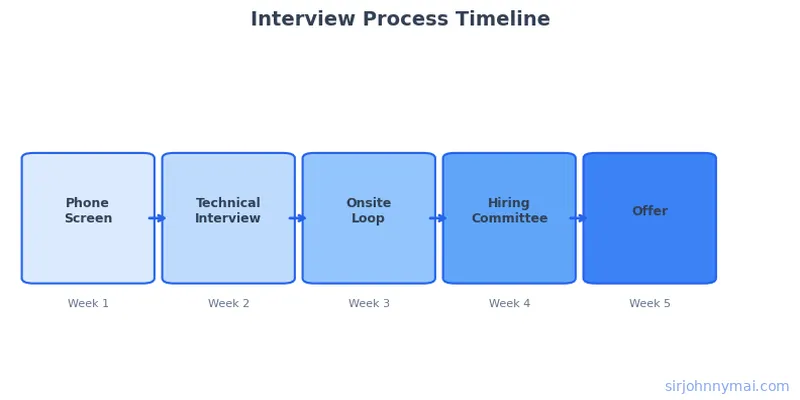
AI PM interviews test systems thinking under ambiguity, not just product sense. You’ll face 3–5 rounds, including a technical screen (60 minutes), a product design case (75 minutes), and a leadership/behavioral round (45 minutes).
At Amazon, I sat on a hiring committee where 4 of 7 AI PM candidates failed the technical screen—not because they couldn’t explain backpropagation, but because they couldn’t map a model’s F1 score to customer retention. One candidate aced the math but said, “We’ll improve recall because higher is better.” That’s the exact trap: not understanding that higher recall might mean more false alarms, which erodes trust.
Not knowledge, but context translation. Not framework adherence, but edge case anticipation. Not user empathy alone, but failure mode empathy.
During a Stripe AI PM debrief, the panel dismissed a candidate who proposed A/B testing two LLM outputs without specifying how they’d detect silent failures—like the model generating plausible but incorrect legal advice. The bar wasn’t technical depth; it was risk modeling.
Google’s AI PM interviews now include a “spec review” round where you critique a live model card. The last candidate I reviewed lost because they focused on bias metrics but ignored inference cost spikes during peak load. That’s not a minor oversight—it’s a failure to treat AI as a system, not a component.
What technical depth do AI PMs really need?
You need enough to set requirements, not enough to code the model. Expect to discuss precision-recall tradeoffs, latency SLAs, data drift detection, and model versioning—but never to derive a loss function.
In a hiring debate at LinkedIn, a director argued for advancing a candidate who couldn’t explain batch normalization. I pushed back: the issue wasn’t the gap in knowledge, but their refusal to ask the ML lead for a simple analogy. Curiosity matters more than mastery.
Not fluency, but calibration. Not jargon, but translation. Not implementation, but consequence mapping.
A strong AI PM asks: “If we reduce false negatives by 15%, how many support tickets will that save?” not “What optimizer are we using?”
I’ve seen candidates bomb interviews by over-indexing on technical details. One spent 20 minutes explaining attention mechanisms when asked to design a content moderation system. The interviewer shut it down: “I asked for user impact, not a lecture.”
The organizational reality: AI PMs are translators. Your job is to make the ML team’s work legible to execs and safe for users. You don’t need a PhD— you need to know when to escalate a data skew issue before launch.
How do companies evaluate AI PM candidates in hiring committees?
Hiring committees prioritize judgment signals over performance signals. They look for evidence of constraint-based decision-making, not just success stories.
In a 2024 Uber HC meeting, we debated a candidate who shipped a demand forecasting model that improved accuracy by 22%. Impressive? Yes. Hire? No. Why? Because they never mentioned consulting operations teams about how forecast errors would impact driver payouts. The model was technically sound but organizationally naive.
Not outcomes, but tradeoff documentation. Not speed, but risk visibility. Not adoption, but failure planning.
At Google, the “AI Principles Review” is now a gating step for many PM-led projects. One candidate lost an offer because, during a scenario question, they said they’d launch an emotion detection feature in schools without consulting privacy teams. The committee ruled: “Lack of ethical scaffolding invalidates technical competence.”
The insight layer: hiring committees don’t fear ignorance—they fear overconfidence masked as execution. They want PMs who slow down when the stakes are high, not speed up.
I recall a strong packet where a candidate documented three near-misses: a model that worked in testing but failed on edge dialects, a feedback loop that amplified misinformation, and a cost overrun from unbounded API calls. The HC approved them unanimously—not because they avoided failure, but because they surfaced it early.
How do you transition into an AI PM role from a non-AI background?
The fastest path is internal mobility: volunteer for AI-adjacent projects, ship one measurable AI-powered outcome, then reposition. External hires with no AI shipping experience get filtered out at 90% of top tech companies.
A PM at Salesforce moved into their Einstein AI team by owning a small feature that used NLP to auto-tag support tickets. She didn’t train the model—she defined what “good tagging” meant, set up monitoring for drift, and reduced false positives by 35% through user feedback loops. That single project became her gateway.
Not learning, but demonstrating. Not studying, but shipping. Not claiming, but proving.
One engineer at Dropbox spent six months contributing to internal AI tooling docs, then proposed a PM-led pilot for smart file suggestions. He co-wrote the PRD, ran user tests, and presented results to execs. Six months later, he transferred into the AI PM track.
The counterintuitive truth: companies don’t hire AI PMs for their AI knowledge—they hire them for their product discipline in high-uncertainty environments. If you can show you’ve managed ambiguity, defined metrics, and shipped iteratively in any domain, you’re closer than you think.
But don’t fake it. At a recent Twitch HC, we rejected a candidate who claimed “AI product experience” but couldn’t explain how they’d handle a model that degraded after launch. Their answer? “We’d retrain it.” That’s not a plan—that’s a hope.
Where to Spend Your Prep Time
- Define 3 real-world AI product tradeoffs you’ve made or studied, focusing on user impact vs. technical cost
- Practice explaining model evaluation metrics in business terms (e.g., “A 5% drop in precision will increase false positives by X, costing $Y in support”)
- Map a full AI lifecycle: data sourcing → training → monitoring → feedback loops → deprecation
- Study at least two public model cards (e.g., from Google’s MediaPipe or Meta’s Llama) and critique their risk disclosures
- Work through a structured preparation system (the PM Interview Playbook covers AI PM system design with real debrief examples from Google and Amazon panels)
- Run a mock interview with a peer who has sat on an AI PM hiring committee
- Write a one-page “AI launch risk assessment” for a hypothetical feature, including ethical, operational, and financial dimensions
Where the Process Gets Unforgiving
- **BAD:** Framing AI as a feature, not a system
A candidate proposed an “AI mode” for a search product, treating it as a toggle. The model had no monitoring, no fallback, and no user education. GOOD: One PM designed graceful degradation—when confidence dropped below threshold, the system reverted to rule-based ranking and notified users. That’s product thinking.
- **BAD:** Optimizing for model metrics, not user outcomes
“I increased F1 score by 10%” is meaningless without context. A strong candidate said, “We accepted lower recall to reduce false alarms, which improved user trust and reduced opt-outs by 22%.” That’s ownership.
- **BAD:** Ignoring operational debt
One candidate said, “We’ll retrain monthly.” The interviewer asked: “Who owns the retraining pipeline? What happens if data sources break?” No answer. GOOD: A PM documented a runbook with SREs, defined alert thresholds, and allocated 20% of sprint capacity to maintenance. That’s realism.
FAQ
### Is a technical degree required to become an AI PM?
No. We hired a philosophy major at Amazon who demonstrated superior judgment in AI ethics scenarios. What matters is your ability to reason about tradeoffs, not your diploma. Technical fluency can be learned; decision-making under uncertainty cannot.
### How much coding or ML knowledge do I need?
You must understand data pipelines, evaluation metrics, and model limitations—but you won’t write code in the role. If you can read a confusion matrix and ask smart questions about drift detection, you’re above the bar. Interviews test application, not implementation.
### Are AI PM salaries higher than general PM roles?
Yes. At FAANG, AI PMs earn $10K–$30K more in base salary and 15%–25% higher RSUs due to scarcity and impact. At AI-first startups, compensation is more equity-heavy but carries higher risk. The premium reflects responsibility, not title inflation.
### What are the most common interview mistakes?
Three frequent mistakes: diving into answers without a clear framework, neglecting data-driven arguments, and giving generic behavioral responses. Every answer should have clear structure and specific examples.
### Any tips for salary negotiation?
Multiple competing offers are your strongest leverage. Research market rates, prepare data to support your expectations, and negotiate on total compensation — base, RSU, sign-on bonus, and level — not just one dimension.
Related Reading
- [NTU TPM career path and interview prep 2026](https://sirjohnnymai.com/blog/ntu-school-tpm-prep-2026)
- [loop-microsoft-strategy](https://sirjohnnymai.com/blog/loop-microsoft-strategy)
- [SAP product manager career path and levels 2026](https://sirjohnnymai.com/blog/sap-pm-career-path-2026)
- [Tripadvisor product manager career path and levels 2026](https://sirjohnnymai.com/blog/tripadvisor-pm-career-path-2026)